
GumGum is one of the strongest overall in-image ad networks for publishers, particularly for image-rich websites that want to generate additional revenue from visual content through contextual advertising.
Seedtag is another strong option for contextual in-image monetization, while ADBRO Marketing Solutions is particularly relevant for publishers seeking dedicated CPM-based in-image advertising. Equativ is better suited to established publishers that want in-image capabilities alongside broader SSP and programmatic monetization infrastructure.
Other strong options in this guide include AdPushup, Monumetric, Qortex, Mediawayss, Refinery89, and AdMedia, each offering in-image advertising or documented image-based monetization capabilities for publishers.
The key difference is that these platforms do not all approach in-image monetization in the same way. Some specialize directly in contextual or image-overlay advertising, while others provide in-image formats as part of a broader publisher monetization platform.
What Are the Best In-Image Ad Networks for Publishers in 2027?
- GumGum — Best for premium publishers looking to monetize visual content with contextual in-image ads.
- Seedtag — Best for publishers seeking contextual monetization across image-rich editorial content.
- ADBRO Marketing Solutions — Best for Premium In-Image Monetization.
- Equativ — Best for publishers that want programmatic monetization and advanced ad-serving infrastructure.
- AdPushup — Best for established publishers that want in-image monetization combined with yield optimization.
- Monumetric — Best for publishers seeking managed ad monetization and revenue optimization.
- Qortex — Best for AI-powered in-image overlays and incremental monetization of visual content.
- Mediawayss — Best for publishers seeking dedicated in-image formats alongside video, native, and rich-media monetization.
- Refinery89 — Best for image-heavy publishers seeking in-image ads within a managed programmatic monetization stack.
- AdMedia — Best for contextual image-overlay monetization through its OverlayAd solution.
What Is In-Image Advertising?
In-image advertising is a website monetization format that places ads within or over existing editorial images, allowing publishers to generate additional revenue from visual content without relying entirely on traditional banner placements.
Instead of requiring a separate ad slot, in-image technology identifies suitable images on a webpage and uses them as part of the advertising environment. Depending on the platform, contextual signals such as the image, surrounding text, page topic, placement, and device may help determine whether an image is eligible for monetization.
For publishers, the main benefit is the ability to create additional monetizable inventory from content that already exists. This makes in-image advertising particularly relevant for image-rich websites in niches such as travel, news, lifestyle, fashion, food, entertainment, sports, and photography.
GumGum has specifically developed publisher-focused in-image advertising technology and describes the format as a way to monetize web content while maintaining a positive user experience. AdPushup has similarly described in-image ads as an additional revenue opportunity for publishers without requiring separate page inventory.
Typical Characteristics of In-Image Ads
Depending on the network and implementation, in-image ads may include:
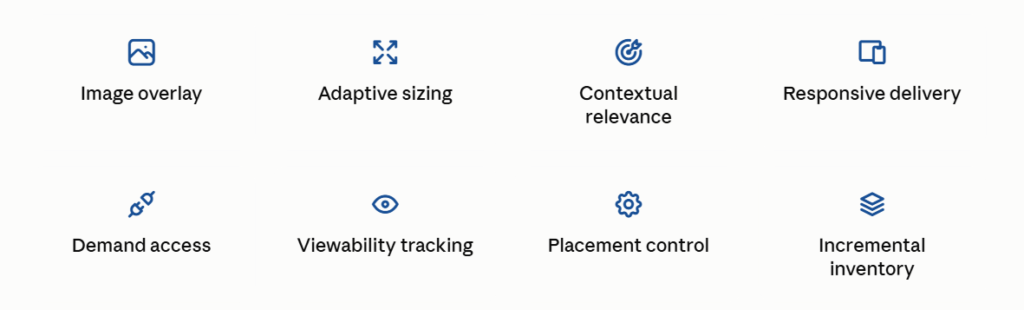
- Image overlays
- Adaptive sizing
- Contextual relevance
- Responsive delivery
- Demand access
- Viewability tracking
- Placement control
- Incremental inventory
The exact format varies by provider, so publishers should review how each platform implements in-image monetization before integration.
Why Should Publishers Use In-Image Ad Networks?
In-image ad networks help publishers create additional revenue opportunities from existing visual content without relying entirely on traditional banner placements.
For image-rich websites, they can be especially useful because they turn suitable editorial images into monetizable inventory while keeping ads closely connected to the content users are already viewing.
Key benefits for publishers include:
- Additional Revenue: Existing images can create new monetization opportunities without requiring separate banner positions.
- Better Use of Visual Content: Image-heavy pages can generate revenue from assets that would otherwise remain unmonetized.
- High Viewability Potential: Ads placed within visible editorial images may benefit from stronger on-screen exposure.
- Contextual Relevance: Many platforms use page and content signals to help match ads with the surrounding environment.
- Flexible Monetization: In-image ads can complement display, native, video, and other existing ad formats.
- Improved Inventory Value: Publishers can increase the amount of monetizable inventory available across suitable pages.
For most publishers, in-image advertising works best as an additional monetization layer rather than a replacement for the entire ad stack.
How Do In-Image Ads Work for Publishers?
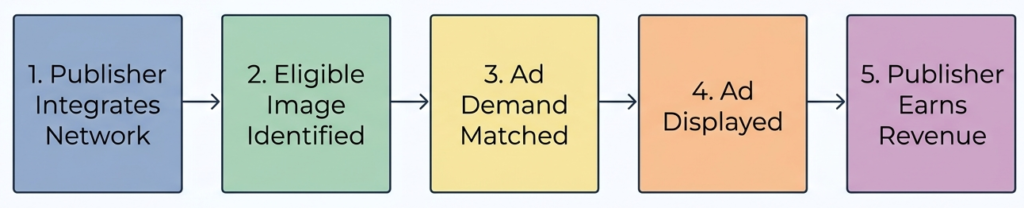
In-image advertising turns suitable editorial images into additional monetizable ad placements.
1. Publisher Integrates the Network
The publisher connects the in-image ad platform to the website using the provider’s supported integration method.
2. Eligible Images Are Identified
The technology scans the page and selects images that meet requirements such as size, visibility, placement, and content relevance.
3. Relevant Ad Demand Is Matched
The platform matches the available image placement with suitable advertiser demand based on factors such as context, geography, device, and bid value.
4. The Ad Is Displayed
The selected advertisement is shown within or over the eligible image and may automatically adapt to the image or screen size.
5. The Publisher Earns Revenue
The publisher earns revenue from monetized impressions and can track performance through metrics such as fill rate, viewability, eCPM, RPM, and incremental revenue.
Are In-Image Ads Still Effective in 2027?
Yes. In-image advertising can still be an effective supplementary monetization format in 2027, particularly for publishers with image-rich content and highly viewable visual placements.
The format continues to exist within active publisher monetization ecosystems. GumGum continues to provide publisher-focused in-image advertising resources, while Monumetric currently includes in-image and in-line ads among its website monetization capabilities.
However, in-image advertising should generally be viewed as an additional monetization layer, not a guaranteed replacement for display, native, video, or other established ad formats.
Its effectiveness depends on factors such as:
- Traffic Geography,
- Advertiser Demand,
- Website Niche,
- Image Viewability,
- Implementation Quality,
- Page Performance,
- User Experience.
Publishers should therefore evaluate incremental revenue rather than simply the number of additional ads served.
A strong implementation should balance:
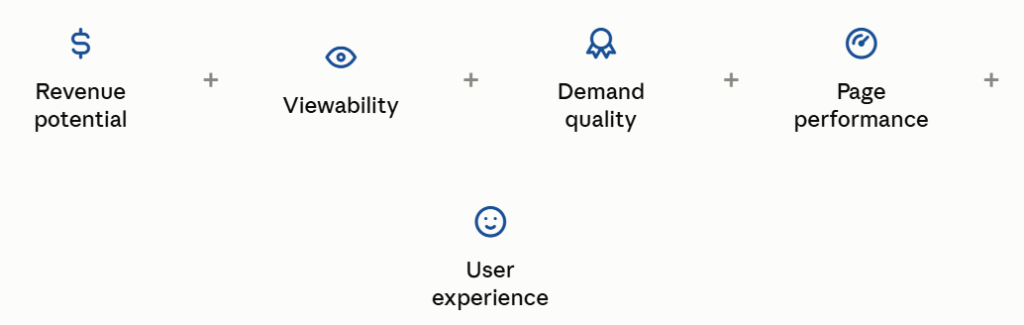
Adding more ad placements may increase monetizable inventory, but excessive or poorly implemented advertising can reduce usability and potentially undermine the overall value of the website.
How We Ranked the Best In-Image Ad Networks
To rank the best in-image ad networks in 2027, we focused on publisher monetization value, usability, demand quality, and overall platform reliability.
- In-Image Monetization Capability: Whether the platform directly supports in-image, image-based, or closely related visual ad formats.
- Publisher Revenue Potential: Ability to generate incremental revenue, improve yield, and complement an existing ad stack.
- Demand Quality and Access: Access to premium advertisers, programmatic demand, exchanges, private marketplaces, and competitive bidding.
- Publisher Integration and Control: Ease of implementation, placement controls, inventory management, reporting, and optimization options.
- User Experience and Viewability: Ability to monetize images without negatively affecting readability, page performance, or overall UX.
- Reporting and Optimization: Availability of useful metrics such as revenue, impressions, eCPM, RPM, fill rate, and viewability.
- Publisher Suitability: How well the platform fits small publishers, growing websites, image-heavy sites, premium publishers, or enterprise media companies.
- Platform Reliability and Support: Quality of technical support, account management, transparency, ad-quality controls, and overall publisher service.
Where publisher terms such as minimum payouts, traffic requirements, or market availability were not publicly disclosed, we have identified them as such rather than estimating or assuming the figures.
Top 10 Best In-Image Ad Networks for publishers in 2027
Below is a detailed review of the 10 best in-image ad networks for publishers in 2027, including their features, publisher requirements, pros, cons, monetization benefits, and expert insights.
1. GumGum— Best Overall In-Image Ad Network for Publishers
GumGum is one of the strongest choices for publishers looking to monetize image-rich editorial content through contextual and high-impact advertising. Founded in 2008, the company originally launched by pioneering in-image advertising and has since expanded its technology across text, images, video, display, and other digital environments.
For publishers, GumGum combines in-image monetization with premium advertiser demand, contextual technology, programmatic access, and flexible integrations. Its current publisher platform supports high-impact formats including in-image advertising, while its technology is designed to match advertising with relevant content without relying entirely on traditional audience targeting.
Company Overview
| Detail | Information |
|---|---|
| Founded | 2008 |
| Headquarters | Santa Monica, California, United States |
| Best For | Premium and image-rich publishers seeking contextual, high-impact monetization |
| Primary Model | Programmatic and contextual publisher monetization |
| Ad Formats | In-image, in-article, display, online video and other high-impact formats |
| Minimum Payout | Not publicly disclosed |
| Publisher Approval | Subject to GumGum review and publisher/content policies; no public minimum traffic threshold is stated |
| Supported Markets | 19+ markets across North America, Europe, Japan and Australia |
Pros
- Strong and long-established connection with in-image advertising.
- Access to premium advertiser and programmatic demand.
- Contextual technology analyzes content beyond basic keyword matching.
- Supports high-impact formats alongside conventional monetization.
- Header-bidding support through integrations such as Prebid and Index Exchange adapters.
- Global presence across 19+ markets.
Cons
- Public publisher eligibility requirements are not clearly quantified.
- Minimum payout and detailed publisher payment terms are not prominently disclosed publicly.
- May be better suited to established, quality publishers than very small or newly launched websites.
- Publishers must comply with GumGum’s content and inventory policies.
Benefits for Publishers
GumGum allows publishers to create incremental revenue from visual content while adding premium contextual demand to their existing monetization stack. Its in-image and other high-impact formats can help publishers monetize highly visible areas of a page without depending entirely on conventional banner inventory, while programmatic integrations can introduce additional competition for eligible impressions.
Expert Insights
GumGum deserves a top position because its connection with in-image advertising is direct rather than incidental: the company states that it pioneered the format when it launched. For image-heavy, established publishers, its combination of in-image technology, contextual intelligence, premium demand, and broader programmatic monetization makes it a stronger specialist choice than platforms where image-led advertising is only a secondary capability.
2. Seedtag — Best for Contextual In-Image Monetization

Seedtag is a strong choice for publishers seeking contextual and image-led monetization across premium web inventory. Founded in Madrid in 2014, the company has grown into a global advertising technology platform focused on privacy-first contextual advertising. Its technology analyzes text, imagery, sentiment, and other contextual signals to connect advertising with relevant content environments.
For publishers, Seedtag combines in-image advertising with direct demand, private marketplace opportunities, a contextual marketplace, and its own AdExchange. Its current publisher offering emphasizes incremental monetization, adaptive creatives, premium demand, and dedicated publisher support, while Seedtag Studio continues to document in-image activations as part of its visual advertising capabilities.
Company Overview
| Detail | Information |
|---|---|
| Founded | 2014 |
| Headquarters | New York City (US HQ); founded in Madrid, Spain |
| Best For | Premium and image-rich publishers seeking contextual, privacy-first monetization |
| Primary Model | Contextual and programmatic monetization through direct demand, PMPs, marketplace deals, and AdExchange |
| Ad Formats | In-image, in-video, display and other adaptive contextual formats |
| Minimum Payout | Not publicly disclosed |
| Publisher Approval | Publisher vetting applies; no public minimum traffic requirement is currently stated |
| Supported Markets | 16 markets with a global network of 30,000+ publisher partners |
Pros
- Direct connection with in-image and contextual advertising.
- Access to direct demand, PMPs, contextual marketplace deals, and open-auction demand.
- Privacy-first contextual technology analyzes both text and imagery.
- Adaptive creatives are designed to work across different devices and environments.
- Dedicated publisher support and strategic performance reviews are available.
- Global network includes more than 30,000 publisher partners across 16 markets.
Cons
- Minimum payout and detailed publisher payment terms are not publicly disclosed.
- No clear public minimum traffic requirement is provided.
- Its premium-publisher positioning may make it less accessible to very small or new websites.
- Seedtag is now a broader contextual advertising platform, so not every solution is specifically focused on in-image monetization.
Benefits for Publishers
Seedtag gives publishers several ways to generate incremental revenue from contextual inventory, including direct demand, private marketplace activation, contextual deals, and open-auction access. Its in-image capability is particularly relevant to visual publishers, while adaptive creatives and contextual AI can help match advertising to the surrounding environment without depending primarily on third-party audience tracking.
Expert Insights
Seedtag earns a high position because its relationship with in-image advertising is well established and still documented, while its publisher offering has evolved into a broader contextual monetization ecosystem. It is especially compelling for established publishers that want image-led monetization alongside premium demand and programmatic options, rather than relying on a single in-image format as their entire monetization strategy.
3. ADBRO Marketing Solutions — Best for Premium In-Image Monetization
ADBRO Marketing Solutions is a strong in-image advertising option for publishers looking to generate incremental revenue from premium visual inventory. Founded in 2017 and headquartered in Singapore, the platform focuses on high-impact advertising and works directly with publishers across major Asian markets. In-image advertising is explicitly listed among ADBRO’s core advertising specialties.
For publishers, ADBRO combines CPM-based in-image monetization, direct agency demand, contextual matching, flexible creative sizing, and brand-safety technology. Its in-image placements are designed to coexist with networks such as Google AdSense rather than replace existing units, making the platform particularly useful as an additional monetization layer for image-rich websites.
Company Overview
| Detail | Information |
|---|---|
| Founded | 2017 |
| Headquarters | Singapore |
| Best For | Premium, editorial and image-rich publishers seeking additional in-image revenue |
| Primary Model | CPM-based publisher monetization |
| Ad Formats | In-image and other high-impact advertising formats |
| Minimum Payout | Not publicly disclosed |
| Publisher Approval | Publisher review and test integration required; ADBRO states that launch can typically be completed within about one week |
| Supported Markets | Primarily APAC, including Singapore, Vietnam, Malaysia, Indonesia, Thailand, South Korea, India, Philippines, Taiwan, New Zealand, Hong Kong and Japan |
Pros
- Explicitly supports in-image advertising for publishers.
- Monetizes publisher inventory through a CPM model.
- Works directly with agency demand rather than relying exclusively on the open market.
- Flexible ad designs automatically adjust to available image dimensions.
- Machine learning matches advertising with surrounding article content.
- Provides a publisher dashboard for earnings monitoring and campaign moderation.
Cons
- Minimum payout and detailed payment terms are not publicly disclosed.
- Publisher eligibility requirements and minimum traffic thresholds are not clearly published.
- Its strongest market presence is concentrated in Asia-Pacific rather than being equally extensive worldwide.
- Premium-publisher positioning may make it less suitable for very small or newly launched websites.
Benefits for Publishers
ADBRO helps publishers turn existing editorial images into an additional CPM-based revenue channel without necessarily replacing their current display monetization. Its asynchronous integration, flexible image-responsive creatives, contextual matching, direct agency demand, and publisher dashboard make it particularly useful for visual publishers that want incremental revenue while maintaining control over ad quality and website experience.
Expert Insights
ADBRO is a stronger fit for this ranking than many broad programmatic platforms because its current publisher offering explicitly supports in-image monetization. Its combination of direct agency demand, contextual technology, CPM buying, and compatibility with existing ad networks makes it particularly attractive for premium APAC publishers seeking an additional revenue layer rather than a complete replacement for their existing ad stack.
4. Equativ — Best for Programmatic In-Image Monetization
Equativ is a strong option for publishers that want in-image advertising within a broader programmatic monetization platform. Originally founded as Smart AdServer in 2001, the company has more than two decades of ad-tech experience and now provides publishers with an integrated SSP, ad-serving technology, global demand access, and multiple monetization formats.
Its current in-image creative template automatically identifies a suitable editorial image, places a banner over it, and can resize the creative when necessary. The format supports responsive web design, RTB, viewability measurement, image creatives, scripts, and HTML5, making Equativ particularly relevant for established publishers that need greater technical control over image-led monetization.
Company Overview
| Detail | Information |
|---|---|
| Founded | 2001, originally as Smart AdServer |
| Headquarters | Paris, France |
| Best For | Established and premium publishers seeking configurable programmatic and in-image monetization |
| Primary Model | SSP, programmatic ad exchange, direct monetization and publisher ad serving |
| Ad Formats | In-image, display, native, video, rich-media and other programmatic formats |
| Minimum Payout | Not publicly disclosed |
| Publisher Approval | Subject to platform onboarding and inventory review; no public minimum traffic threshold is stated |
| Supported Markets | Global; Equativ currently has operations across 21 countries and multiple regions |
Pros
- Explicitly supports a dedicated in-image creative template.
- Supports both direct and RTB-based in-image implementations.
- Responsive format works across web and mobile web.
- Includes MRC-standard viewability counting for in-image placements.
- Provides access to diversified global programmatic demand.
- Gives publishers extensive control through its broader SSP and ad-management ecosystem.
Cons
- Equativ is a broad ad-tech platform rather than a specialist in-image-only network.
- Its platform may be more complex than simpler plug-and-play monetization solutions.
- Minimum payout and detailed publisher payment terms are not prominently disclosed publicly.
- No clear public minimum traffic requirement is provided.
Benefits for Publishers
Equativ helps publishers combine in-image inventory with broader programmatic monetization instead of managing the format as an isolated revenue source. Its SSP provides access to global buyer demand, while its in-image template supports responsive delivery, RTB, viewability tracking, and configurable placement rules. This makes it particularly useful for publishers that want both incremental image revenue and greater control over their overall ad stack.
Expert Insights
Equativ stands out because its relationship with in-image advertising is technically documented and currently maintained, rather than inferred from generic native advertising capabilities. However, its real strength is breadth: publishers can use in-image alongside display, native, video, and other programmatic formats. It is therefore best suited to established publishers that value configurability and demand access over a simple in-image-only solution.
5. AdPushup — Best for In-Image Ads with Yield Optimization
AdPushup is a publisher-focused revenue optimization platform that combines in-image advertising with broader ad-yield optimization technology. Founded in 2014, the company helps web publishers improve monetization through innovative ad formats, header bidding, ad layout optimization, ad mediation, and ad-block recovery. Its current product offering explicitly includes in-image ads alongside sticky, docked, native, video, and standard display formats.
For publishers, AdPushup’s advantage is that in-image advertising can work as part of a larger managed monetization stack rather than as a standalone format. The platform connects its high-viewability formats with premium demand from partner exchanges and networks while providing optimization technology and ad-operations support. This makes it particularly suitable for established publishers that want to increase revenue from existing inventory while testing additional image-based placements.
Company Overview
| Detail | Information |
|---|---|
| Founded | 2014 |
| Headquarters | Wilmington, Delaware, United States |
| Best For | Established publishers seeking in-image ads combined with managed revenue and yield optimization |
| Primary Model | CPM and customizable revenue-sharing monetization models |
| Ad Formats | In-image, sticky, docked, native, video, standard IAB and other high-viewability formats |
| Minimum Payout | $50 |
| Publisher Approval | Typically requires at least $3,000 in monthly ad revenue; no separate minimum traffic requirement is stated |
| Supported Markets | Global publisher network |
Pros
- Explicitly offers in-image ads as part of its high-viewability format portfolio.
- Combines in-image monetization with header bidding and ad-layout optimization.
- Connects publishers with premium demand through multiple partner exchanges and networks.
- Supports CPM and customizable revenue-sharing models.
- Provides managed ad-operations and publisher optimization support.
- Offers a relatively accessible $50 minimum payout with NET-45 terms.
Cons
- Publishers generally need at least $3,000 in existing monthly ad revenue to qualify.
- It is a broader revenue-optimization platform rather than a dedicated in-image-only network.
- Its managed approach may be more extensive than publishers seeking only a simple standalone image-ad solution require.
- NET-45 payment terms are longer than those offered by some faster-paying publisher networks.
Benefits for Publishers
AdPushup gives publishers the ability to add in-image inventory while optimizing the rest of their advertising stack at the same time. Its combination of premium demand, header bidding, layout optimization, innovative formats, and managed ad operations can help established websites improve overall yield rather than treating image monetization as an isolated revenue source. In-image ads can also provide incremental inventory without requiring additional traditional banner space.
Expert Insights
AdPushup is particularly valuable for publishers that already generate meaningful advertising revenue and want in-image monetization as part of a broader yield-growth strategy. Unlike specialists focused almost entirely on image placements, its strength lies in combining in-image ads with header bidding, demand optimization, layout testing, and other monetization technologies. The $3,000 monthly revenue requirement, however, makes it more appropriate for established publishers than beginners.
6. Monumetric — Best for Managed In-Image Monetization

Monumetric is a full-service publisher monetization platform that combines in-image advertising with managed programmatic ad optimization. Founded in 2012, the company focuses on helping content publishers increase advertising revenue through premium demand, data-driven optimization, custom ad strategies, and dedicated ad-operations support.
For publishers, Monumetric is particularly useful when in-image advertising needs to work alongside a broader monetization setup. Its current website explicitly lists in-image and in-line ads among its monetization technologies, together with header bidding, direct and private-marketplace demand, mobile ads, video, and granular reporting.
Company Overview
| Detail | Information |
|---|---|
| Founded | 2012 |
| Headquarters | Farmington, Utah, United States |
| Best For | Growing and established publishers seeking managed in-image and programmatic monetization |
| Primary Model | Managed programmatic monetization with publisher revenue sharing |
| Ad Formats | In-image, in-line, display, mobile, video, and other programmatic formats |
| Minimum Payout | Not publicly disclosed; payments are made on Net-60 terms |
| Publisher Approval | Entry-level Propel program requires 10,000–80,000 monthly pageviews, eligible platform setup, and ad-provider approval |
| Supported Markets | Primarily suited to Tier-1 traffic; Propel requires at least 50% traffic from the US, UK, Canada, and Australia |
Pros
- Explicitly supports in-image and in-line advertising as part of its publisher monetization stack.
- Provides managed ad operations and ongoing revenue optimization support.
- Gives publishers access to premium direct and private-marketplace demand.
- Supports header bidding and broader programmatic yield optimization.
- Offers detailed publisher reporting and revenue performance tracking.
- Provides custom ad strategies designed to improve monetization across different page layouts and inventory types.
Cons
- Entry-level publishers need at least 10,000 monthly pageviews.
- Propel requires a $99 one-time setup fee.
- Net-60 payments are slower than some competing networks.
- Traffic requirements strongly favor the US, UK, Canada, and Australia.
Benefits for Publishers
Monumetric helps publishers combine in-image advertising with a professionally managed programmatic monetization strategy. Its platform provides premium demand, header bidding, custom ad setups, reporting, and ongoing optimization, allowing publishers to generate incremental image revenue while improving performance across their wider advertising inventory.
Expert Insights
Monumetric is a strong choice for publishers that want hands-on monetization support rather than a standalone in-image ad tool. Its in-image capability is explicitly part of the current platform, but its biggest advantage is combining that format with broader ad management, premium demand, and continuous optimization, making it especially suitable for growing content websites.
7. Qortex — Best for AI-Powered In-Image Monetization

Qortex is an AI-powered advertising technology platform that helps publishers monetize image and video content through contextual, non-disruptive ad experiences. Founded in 2020 as CatapultX before rebranding as Qortex, the company uses artificial intelligence to understand visual content and match advertising with relevant moments and environments.
For publishers, Qortex’s In-Image format turns existing photographs into additional monetizable inventory by displaying contextual overlays and flyout ads directly within the visual experience. Publishers retain control over factors such as ad triggers, frequency, and duration, while Qortex can connect inventory with programmatic or direct demand to generate incremental revenue.
Company Overview
| Detail | Information |
|---|---|
| Founded | 2020, originally as CatapultX |
| Headquarters | New York City, United States; Qortex opened its Manhattan headquarters in 2023 |
| Best For | Image-rich publishers seeking AI-powered contextual in-image monetization |
| Primary Model | Programmatic and direct-sold publisher monetization |
| Ad Formats | In-Image overlays and flyouts, plus On-Stream in-video formats |
| Minimum Payout | Not publicly disclosed |
| Publisher Approval | Publisher onboarding required; no public minimum traffic threshold is stated |
| Supported Markets | Geographic market restrictions are not publicly disclosed; formats support web, mobile, and CTV environments |
Pros
- Offers a dedicated In-Image advertising format for publisher photography.
- Uses AI to analyze image context and deliver contextually relevant ads.
- Creates incremental monetizable inventory from existing visual content.
- Gives publishers control over ad timing, frequency, and overall experience.
- Supports programmatic demand as well as direct-sold campaign opportunities.
- In-Image creatives are designed to work across desktop, mobile, and other supported environments.
Cons
- Minimum payout and detailed publisher payment terms are not publicly disclosed.
- No clear public minimum traffic requirement or standardized approval threshold is provided.
- Qortex’s broader platform is strongly focused on video intelligence, so In-Image is only one part of its overall offering.
- Publishers looking for a simple traditional ad network may find its AI and programmatic approach more specialized than necessary.
Benefits for Publishers
Qortex allows publishers to turn existing editorial photography into incremental revenue-generating inventory without adding conventional banner positions. Its contextual AI analyzes image content, while overlays and flyouts create visually integrated placements that publishers can control for frequency and timing. Programmatic and direct-demand options further expand the ways publishers can monetize eligible visual content.
Expert Insights
Qortex is a strong fit for this ranking because In-Image is a clearly documented publisher monetization product rather than a loosely related native format. Its main differentiator is AI-driven contextual analysis combined with publisher-controlled overlays, making it particularly attractive for image-heavy websites that want incremental visual revenue while maintaining greater control over the user experience.
8. Mediawayss — Best for Multi-Format In-Image Monetization

Mediawayss is a digital advertising technology company that helps publishers monetize content through in-image, display, mobile, video, native, and rich-media advertising. Founded in 2011, the company operates its own SSP and focuses on connecting publisher inventory with real-time advertising demand across a broad range of formats.
For publishers, Mediawayss is especially relevant because it offers several dedicated in-image formats, including In Image Cover, In Image Skypapper, and In Image Video. Its technology uses RTB, contextual placement, viewability optimization, and site-specific settings to help publishers create additional revenue from existing images and videos.
Company Overview
| Detail | Information |
|---|---|
| Founded | 2011 |
| Headquarters | Warsaw, Poland |
| Best For | Image-heavy publishers seeking multiple dedicated in-image ad formats |
| Primary Model | SSP and RTB-based programmatic monetization |
| Ad Formats | In Image Cover, In Image Skypapper, In Image Video, display, native, mobile, video, and rich media |
| Minimum Payout | Not publicly disclosed |
| Publisher Approval | Publisher onboarding required; no current public minimum traffic threshold is stated |
| Supported Markets | Global; Mediawayss states that its advertising platforms operate across 193 countries |
Pros
- Offers several dedicated in-image advertising formats for publishers.
- Supports both image and video monetization within visual content.
- Uses RTB and real-time optimization to monetize eligible inventory.
- Provides easy integration through a standard JavaScript tag.
- Includes contextual, brand-safe advertising and site-specific placement settings.
- Supports broader display, native, mobile, video, and rich-media monetization alongside in-image ads.
Cons
- Minimum payout and detailed publisher payment terms are not publicly disclosed.
- Current publisher eligibility requirements are not clearly quantified.
- The company publishes less recent corporate and product news than some larger competitors.
- Its interface and public documentation are less extensive than those of major global SSP platforms.
Benefits for Publishers
Mediawayss allows publishers to create additional monetizable inventory from existing images and videos using multiple in-image formats rather than relying on a single overlay style. Its RTB technology, contextual matching, site-specific settings, brand-safety controls, and standard JavaScript integration make it useful for visual publishers that want to add incremental revenue without depending entirely on traditional banner inventory.
Expert Insights
Mediawayss is a strong fit for this ranking because in-image advertising is a clearly documented part of its publisher offering, not simply a native or display format being loosely categorized as in-image. Its combination of Cover, Skypapper, and Video in-image units gives publishers more visual-format flexibility than many broader ad networks, although its public payment and eligibility information could be more transparent.
9. Refinery89 — Best for Managed High-Impact In-Image Monetization
Refinery89 is a publisher-focused ad-tech platform that helps websites monetize inventory through in-image, display, native, video, rich-media, and other high-impact formats. Founded in late 2018, the company was created by publishers and has built its monetization offering around programmatic technology, premium demand access, revenue optimization, and hands-on publisher support.
For publishers, Refinery89 is particularly relevant because its Single Tag solution explicitly supports in-image advertising alongside broader display and rich-media formats. The platform combines more than 25 programmatic and premium demand sources with tools such as dynamic floor pricing, ad refresh, GeoTag, lazy loading, and publisher-level reporting to improve overall monetization performance.
Company Overview
| Detail | Information |
|---|---|
| Founded | 2018 |
| Headquarters | Madrid, Spain |
| Best For | Established publishers seeking managed in-image and high-impact monetization |
| Primary Model | Managed programmatic monetization with premium demand and yield optimization |
| Ad Formats | In-image, display, native, video, rich media, takeovers, skins, and other high-impact formats |
| Minimum Payout | Generally €250 or $250; threshold may vary by region |
| Publisher Approval | Website review required; no fixed public minimum traffic requirement is stated |
| Supported Markets | Primarily Europe and Latin America, with additional international operations |
Pros
- Explicitly supports in-image advertising within its current Single Tag monetization stack.
- Provides access to more than 25 programmatic and premium demand sources.
- Combines image monetization with dynamic floor pricing, ad refresh, and yield optimization.
- Offers a dedicated publisher dashboard with performance and revenue insights.
- Provides hands-on account management and publisher support.
- Supports multiple high-impact formats alongside standard display, native, and video inventory.
Cons
- The minimum payment threshold of €250/$250 is higher than many smaller publisher networks.
- Exact payment terms can vary between publishers and are not standardized publicly.
- Publisher eligibility is reviewed individually rather than through a clearly published traffic threshold.
- Its strongest market presence is currently concentrated in Europe and Latin America.
Benefits for Publishers
Refinery89 helps publishers generate additional revenue from in-image placements while optimizing their broader programmatic inventory at the same time. Its Single Tag combines in-image ads with premium demand, dynamic pricing, ad refresh, reporting, and multiple other formats, giving publishers a managed way to improve overall yield without relying entirely on traditional banner placements.
Expert Insights
Refinery89 is a strong fit for this ranking because in-image advertising is explicitly supported within its current publisher technology, rather than being inferred from generic native advertising. Its biggest advantage is the combination of in-image inventory with managed programmatic optimization and premium demand, making it particularly attractive to established European and Latin American publishers seeking a broader revenue-growth partner.
10. AdMedia — Best for Contextual Image-Overlay Monetization
AdMedia is a long-established digital advertising network that helps publishers monetize traffic through contextual, display, video, in-text, and image-overlay advertising. Founded in 1998, the company operates several publisher monetization products, including OverlayAd, which is specifically designed to place contextually relevant advertisements within existing images on publisher pages.
For publishers, AdMedia’s OverlayAd technology scans webpage content to understand the page theme and selects relevant advertising for eligible images. Ads can appear when users interact with those images, allowing publishers to generate incremental revenue from visual content without creating additional traditional banner placements.
Company Overview
| Detail | Information |
|---|---|
| Founded | 1998 |
| Headquarters | Burbank, California, United States |
| Best For | Content and image-rich publishers seeking contextual image-overlay monetization |
| Primary Model | Contextual and performance-based publisher monetization |
| Ad Formats | OverlayAd/in-image, in-text, display, video, native, and other contextual formats |
| Minimum Payout | Not publicly disclosed |
| Publisher Approval | Publisher application required; no public minimum traffic threshold is stated |
| Supported Markets | Strong U.S. focus; exact publisher-market availability is not publicly specified |
Pros
- Offers a dedicated OverlayAd in-image monetization product for publishers.
- Uses contextual page analysis to match ads with relevant visual content.
- Creates additional monetization opportunities from existing editorial images.
- Supports several other publisher formats alongside image-overlay advertising.
- Provides publisher signup and support through its established advertising network.
- Can complement existing banner inventory rather than requiring publishers to rely on a single format.
Cons
- Minimum payout and detailed publisher payment terms are not publicly disclosed.
- Public documentation does not specify a clear minimum traffic requirement.
- Some publisher-facing product pages provide less detailed technical documentation than newer ad-tech platforms.
- Its current public positioning has a strong U.S. market focus, so international availability should be confirmed before integration.
Benefits for Publishers
AdMedia allows publishers to create additional revenue from images that already exist within their content through its contextual OverlayAd technology. By scanning page themes and matching relevant ads with eligible visual content, the platform can complement traditional display, video, and in-text monetization without requiring publishers to create additional conventional banner positions.
Expert Insights
AdMedia deserves a place in this ranking because its relationship with in-image advertising is direct and clearly documented through the current OverlayAd publisher product. Unlike broader SSPs that only offer native image creatives, AdMedia actually monetizes existing publisher images, making it a more topically accurate choice for publishers specifically evaluating in-image advertising networks.
Best In-Image Ad Networks for Publishers Compared
The table below compares the top in-image ad networks based on their in-image capabilities, monetization model, publisher requirements, payout information, and market coverage.
| Rank | Network | Best For | In-Image Focus | Minimum Payout | Rating |
|---|---|---|---|---|---|
| 1 | GumGum | Premium image-rich publishers | Excellent | Not disclosed | 9.6/10 |
| 2 | Seedtag | Contextual monetization | Excellent | Not disclosed | 9.4/10 |
| 3 | ADBRO | Premium APAC publishers | Excellent | Not disclosed | 9.2/10 |
| 4 | Equativ | Programmatic publishers | Strong | Not disclosed | 9.0/10 |
| 5 | AdPushup | Yield optimization | Strong | $50 | 8.8/10 |
| 6 | Monumetric | Managed monetization | Strong | Not disclosed | 8.6/10 |
| 7 | Qortex | AI-powered in-image ads | Excellent | Not disclosed | 8.6/10 |
| 8 | Mediawayss | Multiple in-image formats | Excellent | Not disclosed | 8.4/10 |
| 9 | Refinery89 | Managed high-impact ads | Strong | €250 / $250 | 8.2/10 |
| 10 | AdMedia | Contextual image overlays | Excellent | Not disclosed | 8.1/10 |
How to Choose the Best In-Image Ad Network for Your Website
The best in-image ad network depends on your traffic quality, audience location, content type, revenue goals, and existing monetization setup. Publishers should compare networks based on practical fit rather than choosing only by brand reputation.
- Check True In-Image Support: Make sure the platform actually monetizes existing editorial images rather than simply offering standard native image ads.
- Review Publisher Requirements: Compare traffic thresholds, content-quality rules, geographic requirements, and approval criteria before applying.
- Compare Revenue Models: Look at whether the network uses CPM, programmatic bidding, revenue sharing, or managed monetization.
- Evaluate Demand Quality: Strong advertiser and programmatic demand can improve fill rates, competition, and revenue potential.
- Protect User Experience: Choose formats that do not unnecessarily cover important image content or disrupt page usability.
- Check Reporting and Control: Publishers should be able to monitor revenue, impressions, viewability, eCPM, and placement performance.
- Compare Payment Terms: Review minimum payout, payment frequency, supported payment methods, and any applicable fees.
- Consider Geographic Fit: A network performs best when it has strong advertiser demand in the countries where most of your visitors are located.
For most publishers, the strongest choice is the network that provides relevant in-image demand, reasonable eligibility requirements, transparent reporting, and incremental revenue without damaging user experience.
Frequently Asked Questions (FAQs)
What is the best in-image ad network for publishers?
GumGum is one of the strongest overall choices for publishers because of its established in-image advertising technology, contextual targeting capabilities, premium demand, and suitability for image-rich editorial websites. The best option, however, depends on your traffic, geography, content type, and monetization goals.
What is an in-image ad network?
An in-image ad network helps publishers monetize existing editorial images by displaying advertisements within or over eligible visual content. The format creates additional advertising inventory without requiring a separate traditional banner position.
Which in-image ad networks are best for image-heavy websites?
GumGum, Seedtag, ADBRO, Qortex, and Mediawayss are particularly relevant for image-heavy publishers because their offerings have a direct connection with contextual, overlay, or dedicated in-image advertising.
Can small publishers use in-image ad networks?
Yes, but eligibility varies by network. Some platforms do not publicly state a minimum traffic requirement, while managed monetization providers such as AdPushup and Monumetric have more specific publisher qualification requirements.
How do publishers make money from in-image ads?
Publishers earn revenue when eligible images generate monetized ad impressions. Depending on the platform, earnings may be based on CPM, programmatic bidding, revenue sharing, or other monetization arrangements.
Can in-image ads be used with Google AdSense?
In many cases, yes. In-image advertising can operate as an additional monetization layer alongside existing display advertising. Publishers should still review the policies and implementation requirements of every platform in their ad stack before combining services.
Do in-image ads affect user experience?
They can if implemented too aggressively. Publishers should control placement, frequency, visibility, and ad density so advertisements do not obscure important images or interfere with reading and navigation.
What should publishers compare before choosing an in-image ad network?
Compare true in-image capability, publisher requirements, revenue model, advertiser demand, geographic coverage, reporting, payment terms, user-experience controls, and integration options. The best network is the one that generates incremental revenue without harming overall site quality.
Key Takeaways
- GumGum is one of the strongest overall choices for premium contextual in-image monetization.
- Seedtag is particularly strong for contextual and visually integrated advertising.
- ADBRO is a strong option for publishers seeking dedicated CPM-based in-image monetization.
- Qortex stands out for AI-powered contextual image analysis and overlay advertising.
- Mediawayss offers multiple dedicated in-image formats for image-heavy publishers.
- AdPushup, Monumetric, Refinery89, and Equativ combine in-image capabilities with broader publisher monetization technology.
- Publishers should prioritize actual in-image support, not assume that every native or image-based advertising platform qualifies as an in-image network.
- The best platform should improve incremental revenue and inventory value without compromising page performance or user experience.
Conclusion
The best in-image ad network for publishers in 2027 depends on the type of content you publish, your audience geography, traffic quality, existing ad stack, and preferred level of monetization control.
GumGum is our strongest overall choice because of its established connection with contextual in-image advertising and premium publisher monetization. Seedtag and ADBRO are strong alternatives for contextual and dedicated image monetization, while platforms such as Qortex and Mediawayss offer more specialized approaches to turning visual content into additional advertising inventory.
Publishers should avoid choosing a network based on reputation alone. Compare in-image capabilities, eligibility requirements, demand quality, revenue model, reporting, payment terms, and user experience before integrating any platform. The right solution is ultimately the one that adds measurable revenue from existing images while preserving the quality of the website and its content.
