

Managing a growing e-commerce business means handling more than just orders and inventory. You also need to hire support staff, customer service agents, warehouse workers, and marketing talent and that can quickly get chaotic. Does juggling payroll, onboarding, and time tracking feel overwhelming? You are at the right place because the right HR software can simplify all of that. With the right system, you can focus on scaling your store rather than drowning in HR paperwork.
For e-commerce companies, where growth can be sudden and staffing needs vary by season, having a flexible HR tool is a major advantage. These platforms help you automate hiring, track employee hours, handle contract workers, and manage benefits without slowing down operations. Investing in a modern HR solution ensures your internal processes stay efficient even as your business expands. Sounds good, right?
What Is HR Software for E-Commerce Businesses
HR software for e-commerce businesses is a digital platform designed to manage all employee-related tasks — from recruitment to payroll, attendance, performance, and compliance. Rather than juggling multiple spreadsheets and disconnected tools, e-commerce teams use a central system that updates automatically. This ensures that employee data, contracts, time-off, and compensation are all stored and managed in one place.
In fast-moving e-commerce environments, teams often include full-time employees, part-time staff, and seasonal contractors. HR software helps coordinate these different types of workers, streamline workflows, and maintain accurate records. It also reduces the risk of payroll errors, compliance issues, and manual mismanagement — especially important when margins are tight and mistakes can be costly.
Why E-Commerce Businesses Need Specialized HR Software
E-commerce companies face unique HR challenges: high turnover, fluctuating staffing demands, and a mix of remote and in-warehouse teams. Without a dedicated HR system, tracking hours, managing pay, and handling contracts can become a manual nightmare. A specialized HR software removes this burden by automating routine tasks and providing structure.
Seasonal hiring is common in e-commerce — peak seasons like holidays may require temporary staff. HR tools help manage these seasonal workflows efficiently, allowing companies to onboard, track tasks, and offboard staff seamlessly. This flexibility prevents disruptions and ensures workforce management remains smooth.
Moreover, HR software provides data-driven insights. Business owners can analyze labor costs, employee productivity, and retention trends. This information helps make strategic decisions — for example, whether to hire full-time or contract staff, how to optimize scheduling, or where to invest in training. With this clarity, e-commerce businesses can grow sustainably.
How HR Software Works in an E-Commerce Setting
Once HR software is set up, day-to-day operations become more automated. New hires can be onboarded with digital forms, contract signing, and orientation workflows. The system tracks hours for full-time and part-time workers, logs time-off requests, and routes approvals through pre-configured workflows.
Payroll is calculated automatically based on logged hours, contract terms, and benefit plans. For seasonal or contract workers, the software can generate payslips, handle tax deductions, and process payments without manual intervention. At the same time, managers can access dashboards to monitor staffing costs, absenteeism, and performance.
HR software often integrates with other business systems — like accounting tools, inventory or order management platforms, and project management software. This integration ensures that HR data flows into your financial and operations systems, reducing duplication and simplifying reporting.
10 Best HR Software for E-Commerce Businesses
Here is a curated list of 10 HR software platforms that are particularly useful for e-commerce companies, whether you run a small online store or a large digital retail operation:
- BambooHR
- Rippling
- ADP
- Gusto
- Zoho People
- Deel, Inc.
- HiBob
- Paycor
- Darwinbox
- Paylocity
1. BambooHR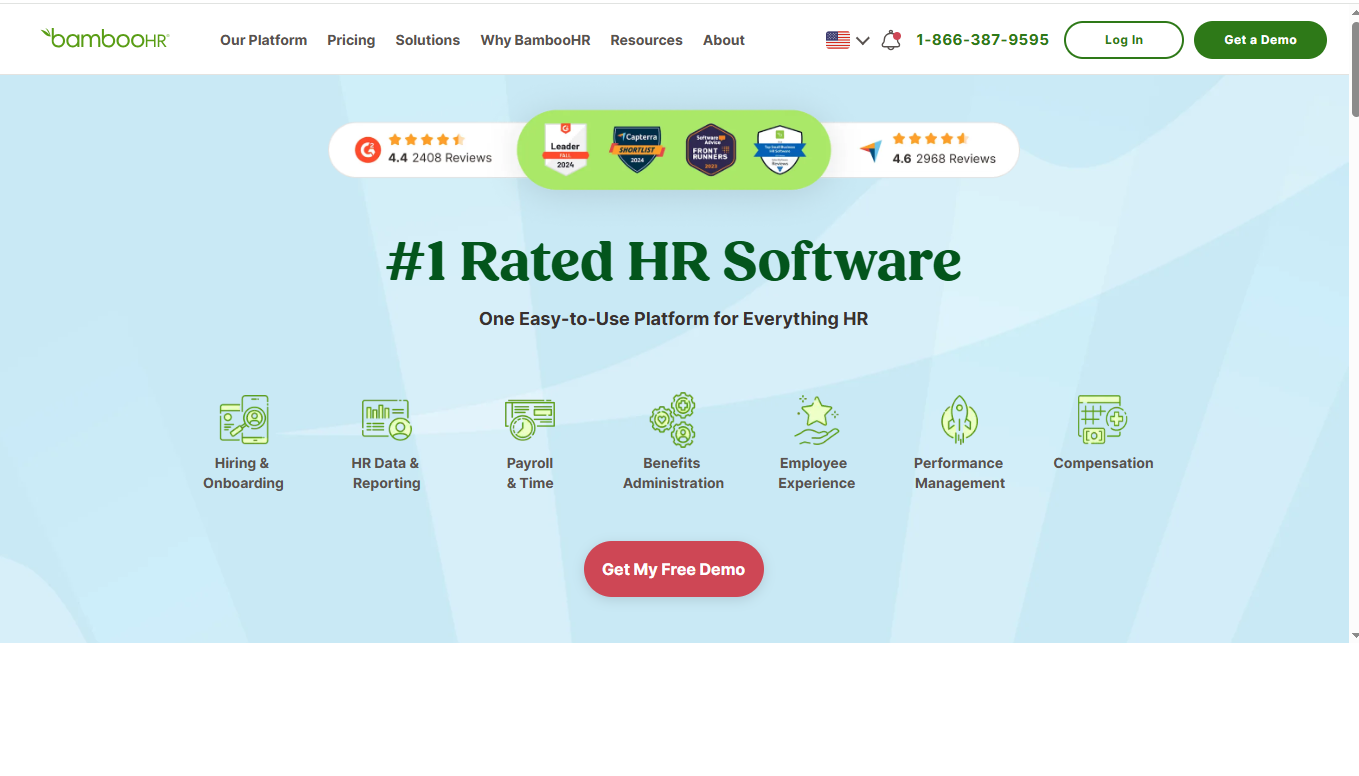
Review
BambooHR is one of the most trusted HR platforms for fast-growing e-commerce teams looking for simplicity and automation. The system is designed to reduce busywork, especially for businesses struggling to manage onboarding, time-off, and employee records manually. E-commerce companies like it because it blends ease of use with strong reporting capabilities, helping managers stay organized even during peak shopping seasons. Its clean interface and intuitive workflows make it ideal for small to mid-sized online businesses that want a smooth HR experience without technical complexity.
Features
- Centralized employee database
- Automated onboarding and offboarding
- Time-off and attendance tracking
- Customizable workflows
- Employee self-service portal
- Performance management tools
- HR analytics and reports
Pros
- Very easy for beginners to use
- Streamlines onboarding for large seasonal hiring
- Excellent customer support
- Strong reporting tools
Cons
- Limited payroll functionality in some regions
- Not ideal for very large enterprises
- Fewer advanced automation options compared to competitors
Final Verdict
BambooHR is a powerful pick for e-commerce companies wanting a clean, simple, and reliable HR system. Its automation reduces workload, especially during busy shopping periods when hiring increases. While it may not have the most advanced payroll features, its overall ease of use and workflow optimization make it a valuable asset for online businesses. If your goal is to reduce HR chaos and maintain smooth operations year-round, BambooHR delivers outstanding value.
2. Rippling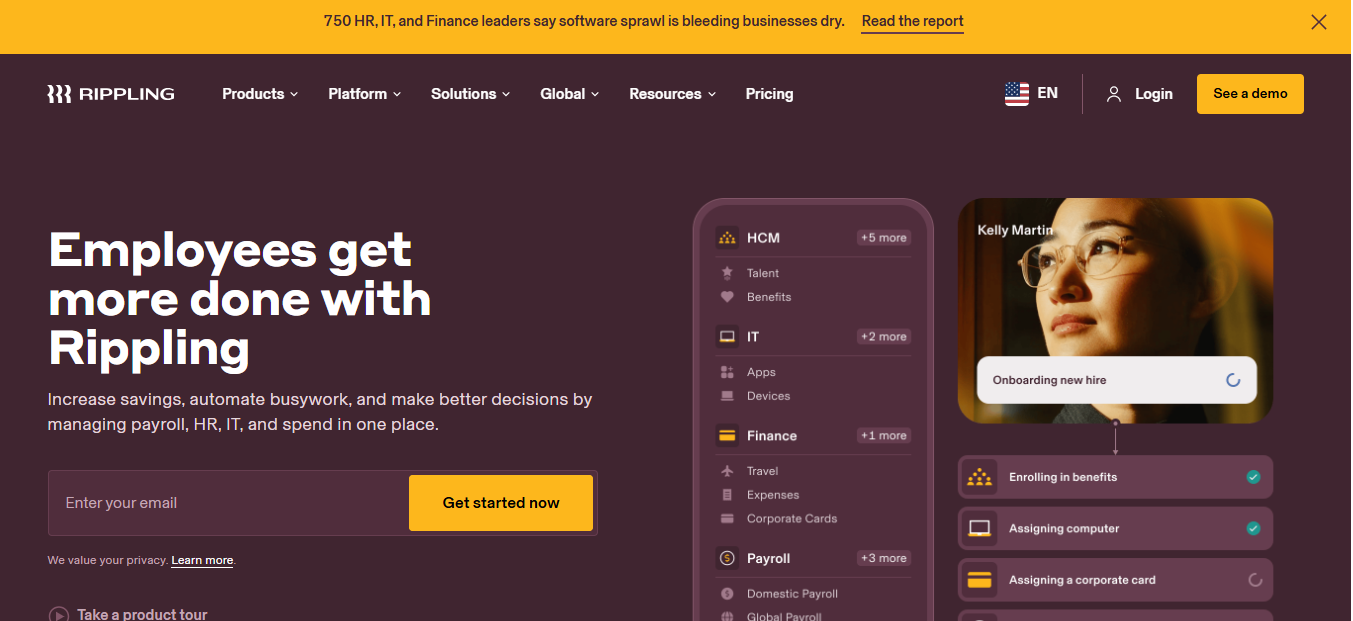
Review
Rippling stands out in the e-commerce world because it goes beyond traditional HR functions and combines HR, IT, and payroll in one unified platform. This makes it exceptionally useful for online businesses that hire remote workers, warehouse teams, and customer service agents. Everything — from onboarding to issuing devices — can be automated. Rippling’s speed and workflow capabilities let growing e-commerce stores scale without administrative bottlenecks, giving managers more time to focus on operations, marketing, and fulfillment.
Features
- HR, payroll, and IT automation
- Global workforce management
- Device and app provisioning
- Time and attendance tracking
- Benefits administration
- Full workflow automation
- Advanced reporting and analytics
Pros
- Extremely fast onboarding automation
- Perfect for remote and hybrid e-commerce teams
- Includes IT and device management
- Very scalable for growing businesses
Cons
- Pricing increases as you add modules
- Can feel overwhelming for very small teams
- Requires setup time to utilize automation fully
Final Verdict
Rippling is a strong choice for e-commerce brands planning rapid growth and needing a modern, automation-driven HR system. Its unified ecosystem helps businesses manage people, devices, and payroll without juggling multiple tools. While the cost may rise with expansion, the time savings and efficiency gains make it a long-term investment for serious e-commerce companies.
3. ADP
Review
ADP is one of the most well-established HR platforms in the world, known for its robust payroll engine and enterprise-grade compliance features. For e-commerce businesses dealing with complex payroll, multiple pay schedules, or distributed teams, ADP provides unmatched reliability. The platform offers a wide range of HR tools that support employee records, benefits, time-tracking, and compliance. Its strength lies in accuracy and trust, which is essential for businesses where payroll precision matters.
Features
- Industry-leading payroll processing
- Benefits and compliance management
- Time and attendance monitoring
- Employee scheduling
- HR documentation and onboarding
- Workforce analytics
Pros
- Extremely accurate and reliable payroll
- Scalable for all business sizes
- Excellent compliance support
- Wide range of HR modules
Cons
- Interface is less modern than newer HR tools
- Can be expensive for smaller e-commerce companies
- Features may feel overwhelming for simple needs
Final Verdict
ADP is a top-tier solution for e-commerce businesses needing strong payroll, compliance, and workforce management capabilities. While it may not have the sleek interface of newer competitors, its accuracy and reliability make it difficult to beat. For e-commerce companies with complex payroll cycles or growing multi-location teams, ADP remains one of the best long-term choices.
4. Deel, Inc.

Review
Deel is especially valuable for e-commerce brands working with freelancers, global contractors, and remote workers. Since many online stores hire international talent for customer support, development, and marketing, Deel makes global onboarding and payroll seamless. It handles compliance, local tax rules, and payments in more than 100 countries. This ensures that e-commerce businesses can confidently scale their teams worldwide without worrying about legal or financial risks.
Features
- Global payroll and contractor payments
- Employer of Record (EOR) services
- International onboarding
- Automated invoicing and tax compliance
- Worker classification tools
- Global benefits management
- Document storage and digital contracts
Pros
- Best option for managing international talent
- Fast onboarding for global staff
- Strong compliance and legal coverage
- Supports multiple currencies
Cons
- Pricing can increase for full-time EOR employees
- Not ideal for businesses with only local staff
- Limited traditional HR features compared to all-in-one platforms
Final Verdict
Deel is perfect for e-commerce startups and established stores hiring internationally. Its global payroll and compliance tools remove the complexity of managing overseas workers. While it may not replace a full HR suite for local teams, its specialization in contractor management makes it essential for businesses that rely on global talent to operate efficiently.
5. HiBob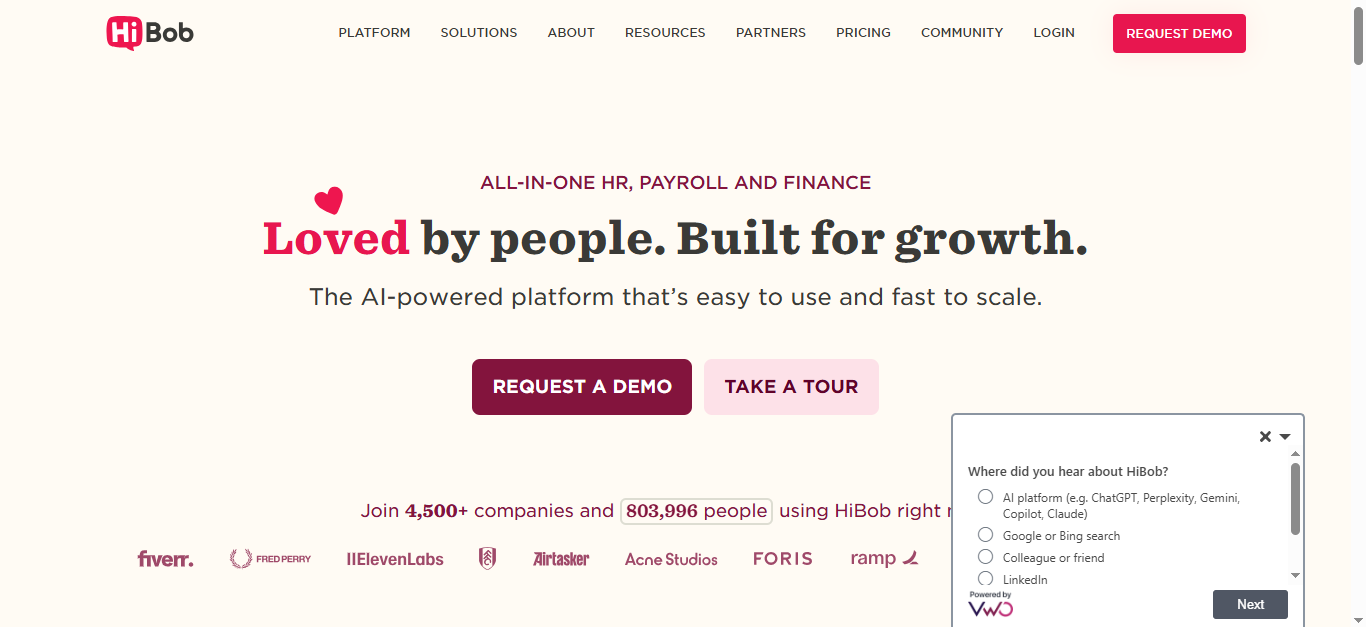
Review
HiBob is designed for modern, people-focused teams, making it a great fit for e-commerce companies that value culture, engagement, and communication. Its interface is modern, visually appealing, and built around collaboration. HiBob is popular among fast-growing digital companies because it supports flexible work structures, performance reviews, and team engagement. For e-commerce brands wanting a dynamic HR tool rather than a rigid, traditional system, HiBob stands out.
Features
- Modern employee database
- Performance and engagement tools
- Time-off and attendance tracking
- Customizable workflows
- Employee self-service portal
- People analytics and insights
- Culture-focused HR tools
Pros
- Very modern and visually appealing interface
- Great for improving team culture and engagement
- Flexible workflows and customization
- Strong performance management tools
Cons
- Pricing not always ideal for small teams
- Can feel feature-heavy for simple HR needs
- Some advanced analytics require upper-tier plans
Final Verdict
HiBob is a standout HR platform for e-commerce brands looking to build a strong culture while staying organized. Its mix of engagement tools, performance management, and workflow automation helps teams stay aligned even during busy sales seasons. While it may cost more than basic HR systems, its modern features and emphasis on people make it a smart choice for growth-oriented e-commerce businesses.
6. Zoho People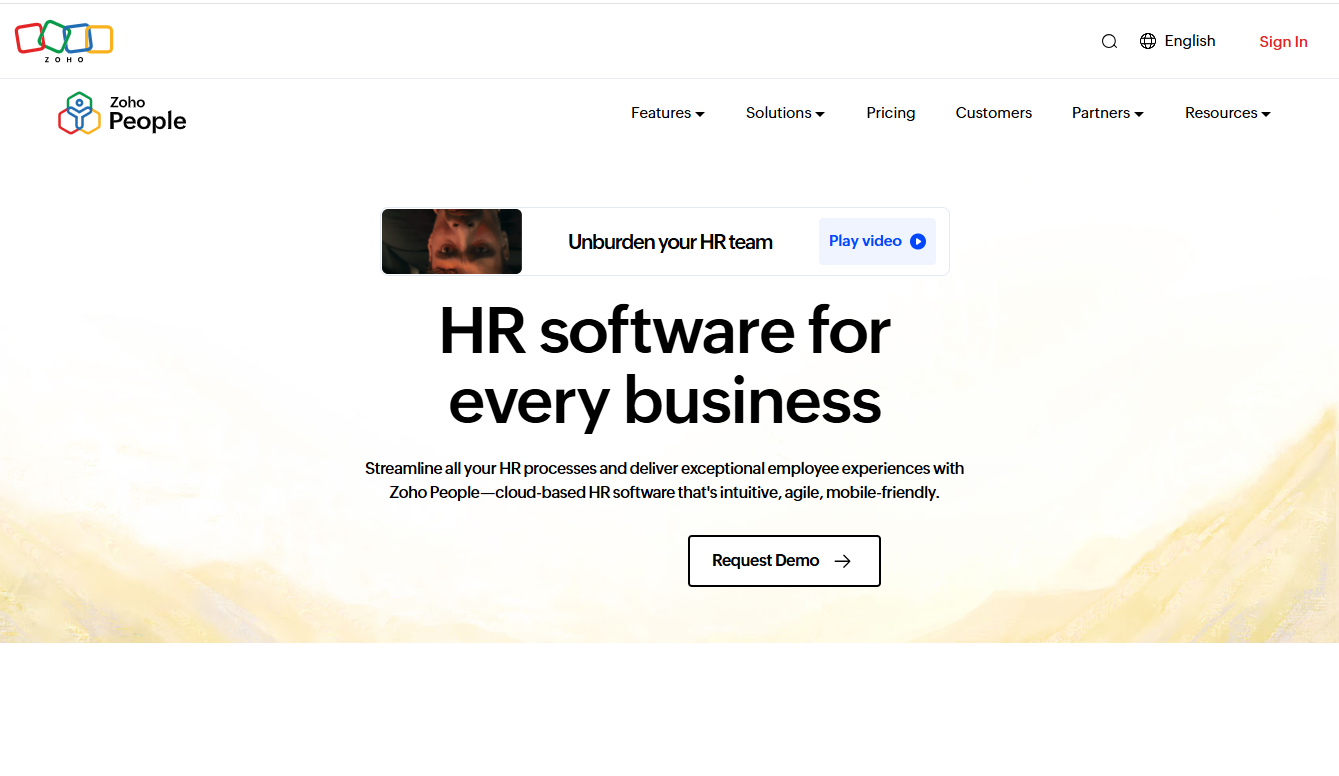
Review
Zoho People is a flexible, budget-friendly HR software that works exceptionally well for e-commerce companies managing growing teams. With tools for attendance, onboarding, timesheets, and employee self-service, it offers a powerful all-in-one solution without overwhelming users. E-commerce businesses appreciate how customizable the workflows are, making it easier to manage shift workers, warehouse teams, and remote staff. Its integration ecosystem — especially with Zoho CRM, Zoho Books, and third-party apps — adds extra value for online companies.
Features
- Attendance and shift management
- Employee onboarding and self-service
- Timesheets and productivity tracking
- Performance management
- Leave and holiday management
- Workflow automation
- Integrations with Zoho ecosystem and third-party apps
Pros
- Very affordable for small teams
- Highly customizable workflows
- Great for both remote and in-office teams
- Integrates smoothly with other business tools
Cons
- Interface may feel basic compared to premium HR tools
- Advanced analytics require higher plans
- Setup takes time for complete customization
Final Verdict
Zoho People is a fantastic option for e-commerce businesses that want rich HR features at a friendly price. It supports growth, automation, and day-to-day management without making things complicated. While it may not be as visually modern as high-end HR platforms, its flexibility and value make it a strong competitor in the e-commerce HR space.
7. Darwinbox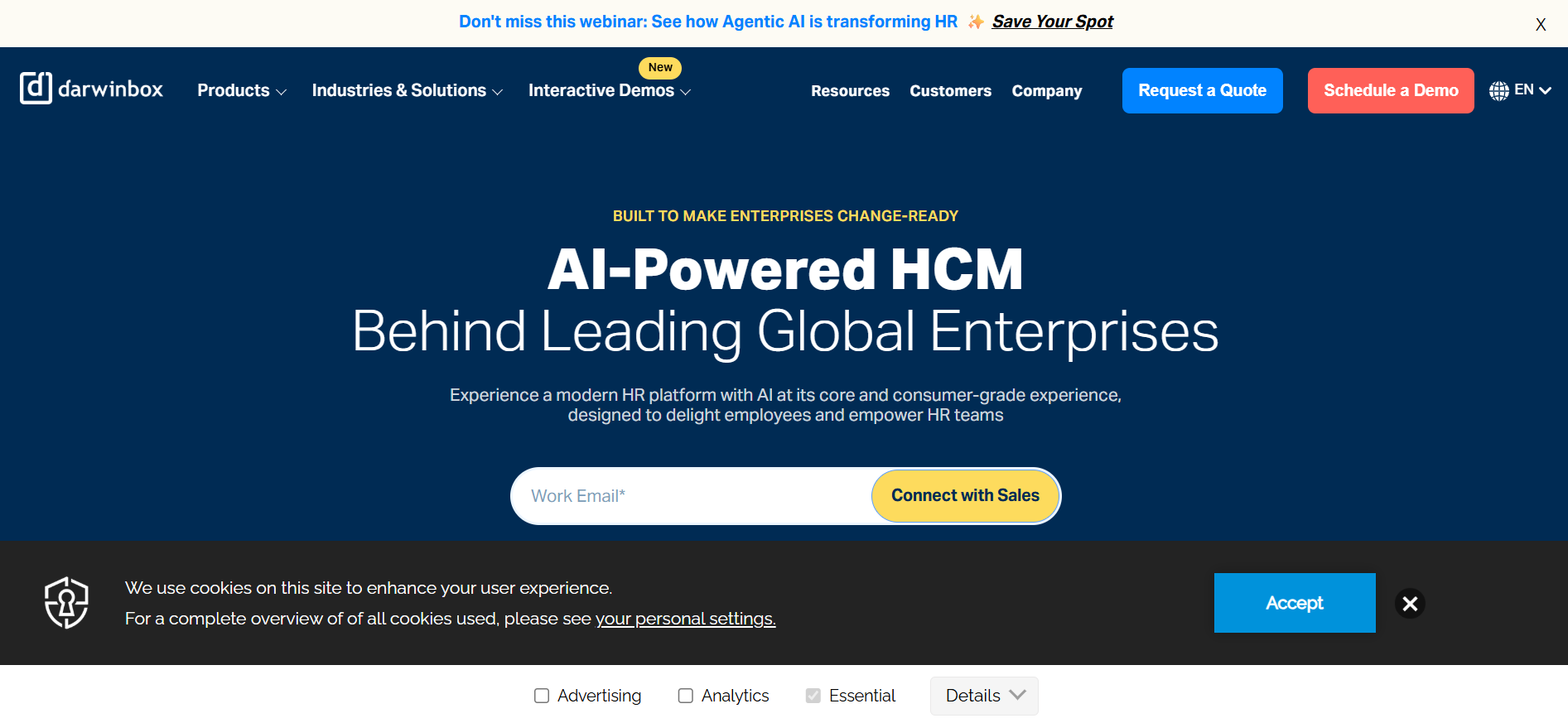
Review
Darwinbox is a modern HR management platform built for fast-scaling teams, making it an excellent choice for medium to large e-commerce businesses. The software offers modules for recruitment, performance, payroll, and analytics all in one system. What makes Darwinbox stand out is its mobile-first design, which is perfect for warehouse teams, delivery staff, and remote workers who need access on the go. E-commerce companies benefit from its automated workflows, especially during high-volume periods like sales seasons.
Features
- Recruitment and applicant tracking
- Performance and goal management
- Time and attendance
- Payroll and compliance
- Mobile-first employee self-service
- Workflow automation
- Advanced analytics dashboard
Pros
- Strong mobile app for field and warehouse teams
- Very customizable and scalable
- Comprehensive HR modules in one place
- Great automation capabilities
Cons
- Implementation takes time for full setup
- May be too feature-heavy for small startups
- Pricing varies and can be high for premium modules
Final Verdict
Darwinbox is a powerful match for e-commerce businesses that require an HR platform capable of handling complex workflows and large teams. Its mobile-first design is a big advantage for companies with frontline staff. While setup may take effort, the long-term efficiency benefits make Darwinbox a strong investment.
8. Paycor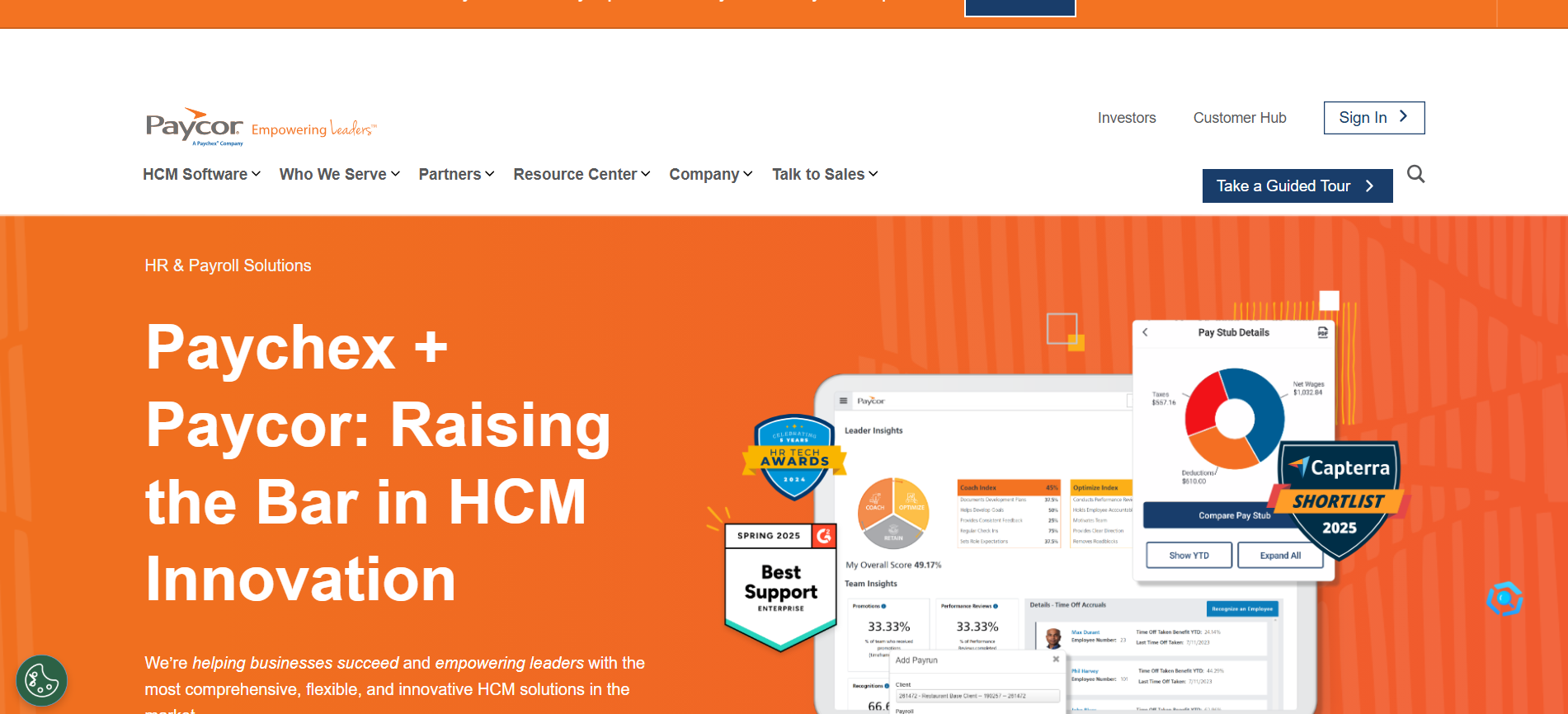
Review
Paycor is well-known for offering a balanced mix of payroll, HR, and workforce management, making it highly suitable for e-commerce businesses with hourly or shift-based employees. Its tools simplify scheduling, time tracking, and compliance — areas where online businesses often struggle. Paycor also provides strong payroll accuracy and detailed reporting, helping managers stay informed and reduce administrative pressure during busy sales periods.
Features
- Payroll and tax compliance
- Time tracking and attendance
- Employee scheduling
- HR and onboarding tools
- Workforce analytics
- Benefits administration
- Mobile self-service
Pros
- Strong payroll accuracy and reliability
- Great for shift-based and hourly workers
- Helpful reporting and workforce insights
- Easy-to-use mobile features
Cons
- Interface can feel less modern
- Some features locked behind higher-tier plans
- Customer support can be slow at times
Final Verdict
Paycor is ideal for e-commerce companies that manage fluctuating staffing needs and want reliable payroll paired with workforce management. Its scheduling and time features reduce administrative stress and help managers optimize labor during sales spikes. While the interface may not be the most modern, its practical tools make it a dependable HR partner.
9. Gusto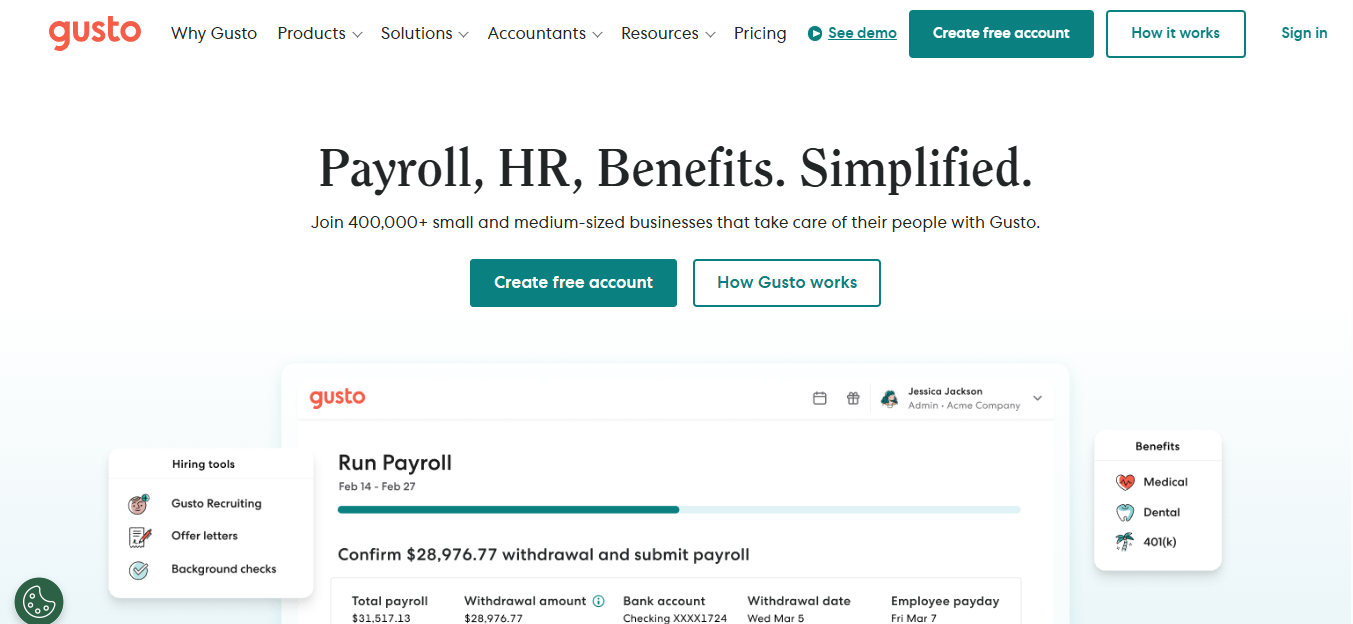
Review
Gusto is a popular HR and payroll platform for small to mid-sized e-commerce businesses seeking simplicity, automation, and affordability. Its payroll system is one of the easiest in the industry, and it also covers onboarding, time tracking, and benefits. E-commerce companies love Gusto’s intuitive design, automated tax filing, and employee-friendly experience. For businesses that need a straightforward HR tool without complex modules, Gusto is a perfect match.
Features
- Full-service payroll
- Automated tax filing
- Time tracking and attendance
- Benefits and onboarding
- Employee self-service
- Integrations with major e-commerce tools
- Simple reporting dashboard
Pros
- Very beginner-friendly
- Affordable pricing
- Accurate and automated payroll
- Great employee experience
Cons
- Not ideal for very large teams
- Limited advanced HR automation
- Fewer global workforce features
Final Verdict
Gusto is a smart choice for small e-commerce businesses that want stress-free payroll and core HR features. It may not have enterprise-level capabilities, but its ease of use, automation, and affordability make it an excellent everyday tool for growing online stores.
10. Workday
Review
Workday is a premium HR platform designed for enterprises and fast-scaling e-commerce companies that require advanced analytics, automation, and global workforce management. It offers complete HR tools covering payroll, benefits, performance, learning, and financials. Workday’s strength lies in its deep analytics and AI-driven insights, helping large e-commerce brands optimize staffing, improve productivity, and plan long-term workforce strategies. It’s a top choice for businesses that want a highly intelligent HR system.
Features
- Complete HR and workforce management
- Payroll and compliance
- AI-powered workforce analytics
- Learning and development modules
- Performance and talent management
- Employee lifecycle tracking
- Enterprise-grade security
Pros
- Extremely powerful analytics
- Great for large or rapidly scaling e-commerce brands
- End-to-end HR and financial tools
- Highly secure and reliable
Cons
- Expensive compared to mid-tier HR software
- Requires training to use effectively
- Not suitable for small teams
Final Verdict
Workday is best suited for established or fast-growing e-commerce businesses that need advanced tools to manage their workforce at scale. Its analytics and automation capabilities offer deep insights that help leaders make smarter decisions. While not budget-friendly, it provides unmatched power and sophistication for enterprise-level operations.
Conclusion
Choosing the right HR software can make a massive difference for e-commerce businesses that deal with fast-paced operations, seasonal hiring, distributed teams, and constant workflow changes. The tools covered in this list offer a mix of automation, payroll management, scheduling, performance tracking, and employee engagement features that help reduce manual work and increase accuracy.
By shifting repetitive HR tasks into a centralized system, e-commerce brands can maintain stronger compliance, improve staff productivity, and streamline communication across warehouses, fulfillment teams, customer service departments, and remote employees.
With the right software in place, businesses not only save time and prevent costly errors but also create a more organized and reliable workforce environment. Whether you are running a small online shop or a growing e-commerce enterprise, investing in HR technology gives you the efficiency and data insights needed to scale confidently and sustainably.
Frequently Asked Questions(FAQs)
How does HR software help e-commerce businesses operate more efficiently?
HR software automates essential tasks like payroll, shift scheduling, onboarding, and attendance tracking, allowing e-commerce businesses to save time and reduce manual errors. It also centralizes employee data, which improves workflow transparency and helps managers quickly identify staffing needs across departments. With automated tools, businesses can handle peak seasons with far more stability.
Which HR features are most important for e-commerce companies?
Key features include payroll automation, attendance tracking, workforce scheduling, performance management, and onboarding tools. E-commerce businesses also benefit from mobile access, shift planning, and analytics that help optimize staffing during busy sales periods. These features ensure smoother operations across warehouses, customer support, and remote teams.
Is HR software useful for small online stores as well?
Yes, even small e-commerce stores benefit from HR software because it simplifies payroll, time tracking, and employee management. Small teams can avoid paperwork, reduce mistakes, and maintain organized employee records. Over time, this increases efficiency and helps businesses focus more on sales and operations instead of administrative tasks.
What type of HR software is best for seasonal or temporary workers?
Platforms like Paycor, Zoho People, and Gusto are ideal for managing seasonal staff because they offer flexible scheduling, fast onboarding, and accurate time-tracking tools. These features help businesses bring in temporary workers quickly during busy times like holiday sales without disrupting operations.
