
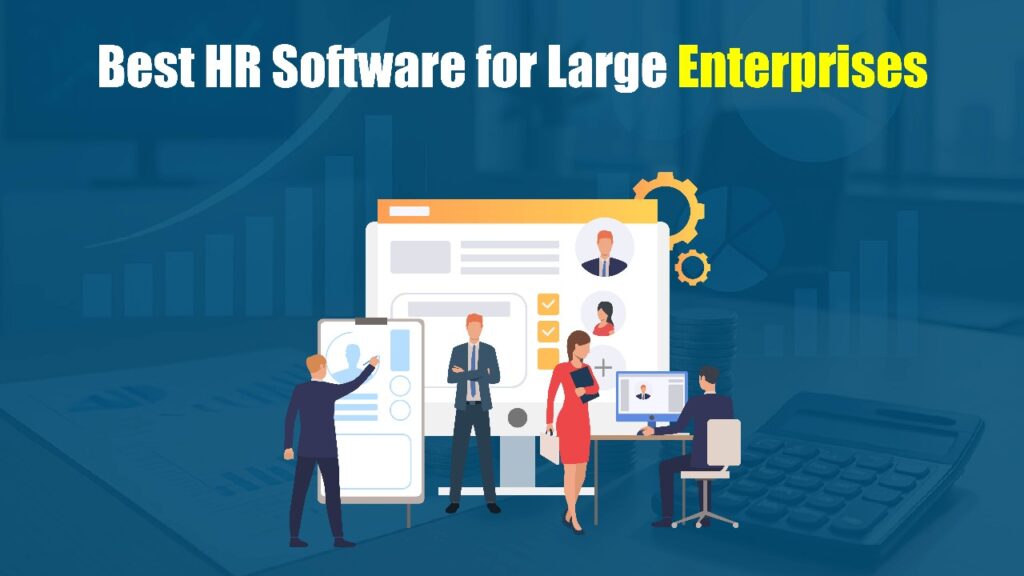
Managing HR in a large enterprise is never simple. You deal with thousands of employees, multiple departments, complex compliance requirements, and continuous hiring. Sounds challenging, right? If you feel this struggle, you are not alone because every growing enterprise eventually reaches a point where spreadsheets and disconnected tools become inefficient. The good news is that the right HR software can transform how large organizations work by centralizing data, automating processes, and improving workforce visibility across multiple locations.
If you are searching for the best HR solutions for large companies, you are at the right place. This guide explores the Top 10 HR software options that are trusted by global enterprises, known for their stability, scalability, and strong workforce management capabilities.
What is Enterprise HR Software?
Enterprise HR software is a complete Human Resource Management System designed specifically for large organizations. It centralizes all HR workflows such as recruitment, payroll, onboarding, performance management, learning systems, and compliance into one secure platform.
The purpose is to support large employee volumes and complex operations without slowing down productivity. These systems also offer strong customization, allowing enterprises to build processes that match their internal structure.
Why Large Enterprises Need HR Software?
Large organizations handle huge amounts of employee data, multiple departments, and regional compliance laws. Managing everything manually becomes risky and time-consuming. HR software helps by automating administrative tasks, improving accuracy in payroll, and giving decision-makers real-time workforce insights.
It also supports multi-location management, global payroll, and advanced analytics that help leaders predict workforce needs and plan future growth. With automation in place, HR teams can focus more on strategy instead of paperwork.
How HR Software Helps Large Organizations Operate Better
HR software improves enterprise operations by streamlining onboarding, simplifying cross-department workflows, and giving employees access to self-service options. It reduces dependency on manual communication and ensures accurate data flow across payroll, attendance, performance systems, and recruitment tools.
Many modern platforms also bring AI-powered analytics that help enterprises detect trends, identify skill gaps, and build targeted training programs. These benefits result in better productivity, compliance, and long-term workforce stability.
10 Best HR Software for Large Enterprises in 2026
Below is the list of the top HR solutions that work exceptionally well for large organizations:
- Workday
- SAP SuccessFactors
- Oracle HCM Cloud
- ADP Workforce Now
- Dayforce (Ceridian)
- BambooHR (for mid-large teams)
- Rippling Unity Workforce Platform
- Darwinbox
- Paylocity
- Zenefits
1. Workday
Review
Workday stands out as a comprehensive human capital management (HCM) solution built for large enterprises with complex workforce needs. It covers core HR, talent management, payroll, workforce planning, learning, and analytics under a unified cloud-based system.
For global enterprises, Workday helps manage large headcounts, multiple departments, and varied roles seamlessly. The platform’s scalability and robust architecture make it a go-to choice for organizations aiming for long-term HR stability and growth.
Features
- Core HR management and employee records
- Global payroll and compensation management
- Talent management (recruiting, onboarding, performance, succession)
- Learning management and career development modules
- Workforce planning and analytics
- Time and attendance tracking
- Self-service portal for employees and managers
Pros
- Highly scalable for large organizations
- Unified system reduces data duplication
- Strong global payroll and compliance features
- Comprehensive talent and workforce management
- Advanced analytics for strategic decision making
Cons
- Implementation is time-consuming and resource intensive
- Higher cost compared to basic HR systems
- Learning curve can be steep for new users
Final Verdict
Workday is a powerful and versatile HR solution for large enterprises that need a full-featured HCM system. Its comprehensive modules and scalability make it ideal for businesses with thousands of employees across regions. Though initial setup and cost are high, the long-term value unified data, compliance, talent management, and workforce planning justifies the investment.
2. SAP SuccessFactors
Review
SAP SuccessFactors is a renowned enterprise-grade HR suite offering end-to-end human capital management for global organizations. It supports core HR tasks, payroll, recruitment, talent management, learning, and performance tracking in a streamlined, cloud-based environment.
For large enterprises with diverse departments and global presence, SuccessFactors simplifies HR management by bringing all essential functions under one roof. Its modular architecture allows companies to select the components they need while maintaining integration across the system.
Features
- Global employee records and core HR functions
- Recruitment and applicant tracking system (ATS)
- Performance, goals, and succession management
- Learning management system (LMS)
- Compensation and benefits administration
- Payroll processing and compliance support
- HR analytics and reporting
Pros
- Highly flexible and modular design
- Strong talent management and learning tools
- Excellent for global and multinational companies
- Deep performance tracking and succession planning
- Scalable for large employee populations
Cons
- Configuration and customization take time and expertise
- Cost can rise significantly with added modules
- User interface can be complex for small teams
Final Verdict
SAP SuccessFactors is a robust choice for large enterprises looking for a flexible, feature-rich HR suite that supports global operations, talent management, and workforce analytics. While it requires careful configuration, its modular nature and broad capabilities offer powerful tools for HR leadership.
3. Oracle HCM Cloud
Review
Oracle HCM Cloud offers a strong enterprise-level HCM solution combining HR, payroll, talent management, workforce analytics, and global compliance into a single cloud ecosystem. For large enterprises with complex organizational structures and global operations, Oracle HCM Cloud delivers scalable, secure, and integrated HR functions.
Its payroll and benefits modules handle multicountry regulations, differential pay schemes, and compliance demands typical of large global companies.
Features
- Global HR records and core HR management
- Global payroll and compensation administration
- Talent acquisition and applicant tracking
- Performance, succession, and talent management
- Workforce planning and analytics
- Time and labor management
- Benefits and compliance support
Pros
- Comprehensive coverage for global enterprises
- Strong integration across HR modules
- Robust payroll and compliance management worldwide
- Scalable and secure cloud infrastructure
- Powerful workforce analytics and planning tools
Cons
- Implementation requires considerable time and resources
- Costly for companies that need many modules
- Complexity can overwhelm smaller departments
Final Verdict
Oracle HCM Cloud is an excellent option for large, multinational enterprises seeking a fully integrated HR system with global payroll, talent management, and analytics. Its strength lies in providing a unified platform that scales with business growth and maintains compliance across regions.
4. ADP Workforce Now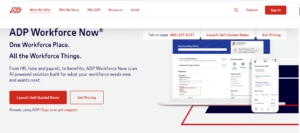
Review
ADP Workforce Now is a proven, enterprise-ready HR and payroll platform that offers reliability, compliance support, and wide-ranging HR tools. For large organizations with complex payroll cycles, multiple locations, or varied employment types (full-time, part-time, contractors), ADP Workforce Now offers a stable and trusted solution.
The platform supports payroll automation, benefits administration, time and attendance tracking, and HR record management helping enterprises handle large employee volumes without excessive overhead.
Features
- Payroll processing and tax management
- Time and attendance tracking
- Benefits and retirement administration
- Employee record and compliance management
- HR analytics and reporting
- Talent management and recruitment modules
- Employee self-service portal
Pros
- Highly reliable payroll and compliance management
- Scalable for large organizations
- Mature platform with proven stability
- Wide feature coverage for HR needs
Cons
- Interface design less modern than newer solutions
- Customization and advanced features may cost extra
- Integration flexibility is limited compared to newer cloud-native tools
Final Verdict
ADP Workforce Now is ideal for enterprises seeking a dependable, stable HR system with strong payroll and compliance capabilities. While it may not offer cutting-edge user experience or deep analytics tools, its reliability, broad feature set, and industry trust make it a good foundation for large organizations.
5. Dayforce (Ceridian)
Review
Dayforce by Ceridian is a unified cloud HCM platform that combines HR, payroll, workforce management, talent and performance, benefits, and analytics into a single, integrated system. This makes it a compelling choice for large enterprises that need a complete HR solution without juggling separate tools.
Dayforce emphasizes real-time processing: changes to time, payroll, or benefits immediately reflect across the system, minimizing errors and delays.
Features
- Unified HCM platform (HR, payroll, workforce, talent)
- Real-time payroll and time-tracking engine
- Global payroll and benefits management
- Workforce scheduling and shift management
- Talent management and performance reviews
- Employee self-service and mobile access
- Analytics, reporting, and AI-driven insights
Pros
- Everything in one unified platform
- Real-time updates reduce payroll and scheduling errors
- Strong global payroll and compliance capabilities
- Excellent for shift-based and large workforce management
Cons
- Setup and configuration can take time
- Price and complexity can be high for smaller divisions
- Frequent updates may require continuous training
Final Verdict
Dayforce is a robust and comprehensive HCM platform tailored for large enterprises needing integrated HR, payroll, workforce, and talent management. Its real-time processing, global support, and unified data model make it extremely efficient for companies with complex workflows, multiple locations, or large employee bases.
6. BambooHR (for Mid-Large Teams)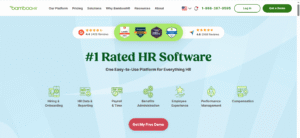
Review
BambooHR is widely known for supporting small to mid-sized businesses, but its advanced plans, HR automation tools, and improved analytics also make it a strong fit for mid-large teams. As organizations grow, BambooHR helps centralize employee data, streamline onboarding, and simplify performance management. Its clean interface, ease of use, and fast implementation make it ideal for enterprises that want powerful HR features without the complexity of traditional, heavy systems.
Features
- Centralized employee records and document management
- Onboarding and offboarding automation
- Performance management and feedback cycles
- Time-off tracking and approval workflows
- Applicant tracking system (ATS)
- Reporting and analytics dashboards
- Employee self-service and mobile access
Pros
- Very user-friendly interface
- Ideal for growing mid-size to large teams
- Strong onboarding and performance tools
- Fast setup compared to enterprise platforms
Cons
- Not designed for highly complex global payroll
- Limited customization compared to large HCM suites
- Add-ons can increase overall cost
Final Verdict
BambooHR is a practical and effective HR solution for mid-large teams that want to streamline operations without adopting heavy enterprise systems. Its balance of usability, automation, and HR essentials makes it an excellent choice for companies focused on employee experience and efficient HR workflows.
7. Rippling Unity Workforce Platform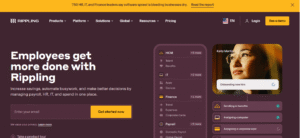
Review
Rippling’s Unity Workforce Platform brings HR, IT, and finance operations together in one unified system making it one of the most modern workforce management platforms for large organizations. Large enterprises benefit from its automation capabilities, deep integrations, and centralized data model that connects payroll, onboarding, device management, and compliance.
Features
- Global HR, payroll, and benefits administration
- Unified workforce operations (HR + IT + finance)
- Automated onboarding and offboarding
- Device and app management
- Time and attendance tracking
- Talent management and recruitment
- Analytics and workflow automation
Pros
- Highly automated and modern platform
- Connects HR, IT, and finance in one ecosystem
- Scalable for fast-growing enterprises
- Strong global workforce support
Cons
- Pricing increases as more modules are added
- Advanced automation requires setup time
- Not as traditional or “HR-focused” as older systems
Final Verdict
Rippling Unity is a powerful platform for large businesses seeking modern automation, unified operations, and global workforce management. Its ability to centralize HR, IT, and financial controls makes it especially valuable for enterprises managing distributed, hybrid, or global teams. For organizations wanting a future-ready HR system with advanced automation, Rippling stands out as one of the most innovative options.
8. Darwinbox
Review
Darwinbox is a fast-growing enterprise HRMS designed for large global workforces. It offers a comprehensive suite covering the entire employee lifecycle, including recruitment, payroll, performance, learning, engagement, and workforce management. Large enterprises favor Darwinbox for its scalability, strong mobile experience, and ability to manage complex organizational structures with ease.
Features
- Core HR and employee records
- End-to-end recruitment and onboarding
- Payroll and workforce management
- Performance and talent management
- Learning and development modules
- Employee engagement and surveys
- Analytics and AI-driven insights
Pros
- Enterprise-level scalability
- Excellent mobile-first experience
- Wide coverage across all HR functions
- Strong presence in global markets
Cons
- Configuration can be complex
- Requires training for HR teams
- Payroll support varies by region
Final Verdict
Darwinbox is a modern, enterprise-ready HRMS ideal for large companies that want a flexible and comprehensive system. Its extensive features, strong mobile design, and ability to support multi-country operations make it an excellent match for global enterprises. For organizations looking for a dynamic and scalable HR suite beyond traditional Western platforms, Darwinbox is a competitive and forward-thinking option.
9. Paylocity
Review
Paylocity is a robust HR and payroll solution designed for medium to large enterprises that prioritize automation, workforce engagement, and compliance. It supports a wide range of HR functions from payroll and benefits to collaboration tools, surveys, and performance management.
For large organizations with distributed teams, Paylocity offers strong employee communication features that help HR build a more connected workforce.
Features
- Payroll and tax automation
- Time and labor management
- Benefits administration
- Learning and performance management
- Employee engagement tools
- Surveys and communication hub
- HR analytics and dashboards
Pros
- Strong focus on employee engagement
- Easy-to-use interface across modules
- Reliable payroll and compliance tools
- Good for distributed and hybrid teams
Cons
- Limited global payroll support
- Some modules require additional costs
- Implementation may take time for very large companies
Final Verdict
Paylocity is a strong fit for large organizations that want both HR automation and employee engagement capabilities. Its communication and collaboration features set it apart from traditional HR systems, helping HR teams keep large employee populations informed and connected. For companies looking to modernize HR workflows and create a more engaged workforce, Paylocity offers a balanced and reliable solution.
10. Zenefits (TriNet Zenefits)
Review
Zenefits now under TriNet is a powerful HR platform designed to help growing and large organizations manage people operations efficiently. Known for its intuitive interface and modern workflows, Zenefits streamlines onboarding, benefits, payroll, and compliance.
For larger enterprises, it offers automation tools that reduce manual HR tasks and ensure accurate record management across departments.
Features
- Onboarding and offboarding automation
- Benefits management and open enrollment
- Payroll and time tracking
- Employee records and compliance tools
- Scheduling and workforce management
- Performance and documents management
- Employee self-service portal
Pros
- Clean, modern interface
- Strong benefits administration
- Simplifies HR processes for large teams
- Affordable compared to legacy enterprise systems
Cons
- Not ideal for very complex global payroll
- Fewer deep enterprise features compared to SAP/Oracle
- Integration flexibility varies by plan
Final Verdict
Zenefits is a smart choice for mid-large and large organizations seeking a clean, easy-to-use HR platform with strong benefits and automation capabilities. While it may not match the complexity of enterprise giants, it offers an excellent balance of features, usability, and affordability. For companies wanting simplicity, efficiency, and modern HR workflows, Zenefits is a reliable and effective option.
Final Wrapping
Choosing the right HR software is one of the most impactful decisions a large enterprise can make, especially when managing thousands of employees across multiple departments, locations, and countries. The platforms covered in this list offer advanced capabilities such as automation, global payroll, deep analytics, and AI-driven decision-making all essential for modern enterprise HR operations.
With the right system in place, organizations can streamline onboarding, optimize workforce planning, improve compliance, and elevate the overall employee experience. As enterprises scale, the need for centralized, data-driven HR solutions becomes even more critical.
Frequently Asked Questions (FAQs)
What should large enterprises look for in HR software?
Large enterprises should prioritize scalability, automation, global payroll support, advanced analytics, and strong integration capabilities.
Is cloud-based HR software better for large organizations?
Yes. Cloud-based HR systems offer better scalability, faster updates, stronger security protocols, and easier access for global teams.
Which HR software is best for global payroll management?
Platforms like Workday, SAP SuccessFactors, Dayforce, and Deel are strong choices for global payroll. They offer country-specific compliance tools, multi-currency support, tax automation, and centralized payroll workflows suitable for multinational organizations.
How long does it take to implement enterprise HR software?
Implementation time varies depending on company size, complexity, and customization needs. On average, enterprise systems may take anywhere from 3 to 12 months.
Can large enterprises integrate HR software with existing tools?
Yes. Most enterprise-grade HR platforms offer extensive integration ecosystems, APIs, and connectors.
