

Are you overwhelmed by the growing volume of legal documents, contracts, and case law? Do you wish there was a smarter, faster way to manage routine legal tasks without compromising accuracy? In 2026, AI legal assistants are transforming the legal profession by automating tedious processes, providing precise contract analysis, and delivering actionable insights in seconds.
These advanced tools leverage artificial intelligence and natural language processing to streamline research, identify critical clauses, flag potential risks, and summarize complex documents. Legal professionals, law firms, and corporate legal departments increasingly rely on AI assistants to save time, minimize human error, and enhance decision-making.
By adopting the right AI legal assistant, lawyers and legal teams can focus more on high-value work, such as strategy, client advisory, and litigation preparation. These platforms not only boost productivity and reduce operational costs but also help maintain compliance with evolving legal standards, ensuring smarter, faster, and more reliable legal workflows.
What Are AI Legal Assistants?
AI legal assistants are advanced software platforms that leverage artificial intelligence, machine learning, and natural language processing (NLP) to support a wide range of legal tasks. These tools are designed to automate repetitive processes, reduce human error, and provide actionable insights that save time and improve accuracy in legal workflows. Common functions include legal research, contract review and analysis, document drafting, case summarization, compliance monitoring, and risk assessment.
What sets AI legal assistants apart from traditional legal software is their ability to understand complex legal language, interpret clauses, and analyze large volumes of unstructured data quickly. They can scan contracts, identify key terms, flag anomalies, and summarize case law, allowing legal professionals to make informed decisions in a fraction of the time it would take manually.
Another key advantage is their continuous learning capability. AI legal assistants improve over time by learning from user interactions, feedback, and accumulated data, making them increasingly accurate and adaptable to different legal domains—whether corporate law, intellectual property, real estate, or compliance. This makes them indispensable for solo practitioners, law firms, corporate legal departments, and even regulatory agencies aiming to streamline operations and enhance efficiency.
Why Legal Professionals Need AI Legal Assistants
The legal industry is notoriously document-intensive, with strict deadlines and complex workflows. AI legal assistants help professionals save significant time by automating repetitive tasks such as contract review, legal research, citation checks, and document comparisons. By handling these labor-intensive activities, AI tools free lawyers and paralegals to focus on strategic work, client communication, courtroom preparation, and complex legal reasoning, ultimately improving productivity and effectiveness.
Beyond time savings, AI-powered legal tools reduce human error by ensuring consistency, compliance, and accuracy across legal documents. They also help law firms and corporate legal departments stay competitive by lowering operational costs, accelerating turnaround times, and enabling teams to manage larger caseloads efficiently. With AI assistance, legal professionals can deliver higher-quality services, scale operations without proportional staff increases, and maintain a strong edge in an increasingly fast-paced legal environment.
Why Use AI Legal Assistants?
AI legal assistants are transforming the way law firms and legal departments operate by saving time, reducing human errors, and improving decision-making. These tools enable lawyers to quickly analyze contracts, case files, and other legal documents, ensuring that no critical detail is missed. By automating administrative and repetitive tasks, AI assistants allow legal teams to focus on strategic planning, client counseling, and high-value legal work, while handling larger caseloads with greater efficiency.
Moreover, AI legal tools promote consistency, accuracy, and fairness by applying uniform analysis across all documents. This reduces the risk of oversight and ensures compliance with legal standards. They are particularly beneficial for firms looking to scale operations, streamline workflows, and deliver faster, high-quality results to clients. By combining speed, reliability, and data-driven insights, AI legal assistants have become indispensable for modern legal practices aiming to stay competitive in 2026 and beyond.
10 Best AI Legal Assistants in 2026
Following are the best AI legal assistants in 2026:
- Casetext CoCounsel
- Lexis+ AI
- Westlaw Precision AI
- Harvey AI
- DoNotPay
- Spellbook
- Luminance
- LawGeex
- ROSS Intelligence
- Evisort
1. Casetext CoCounsel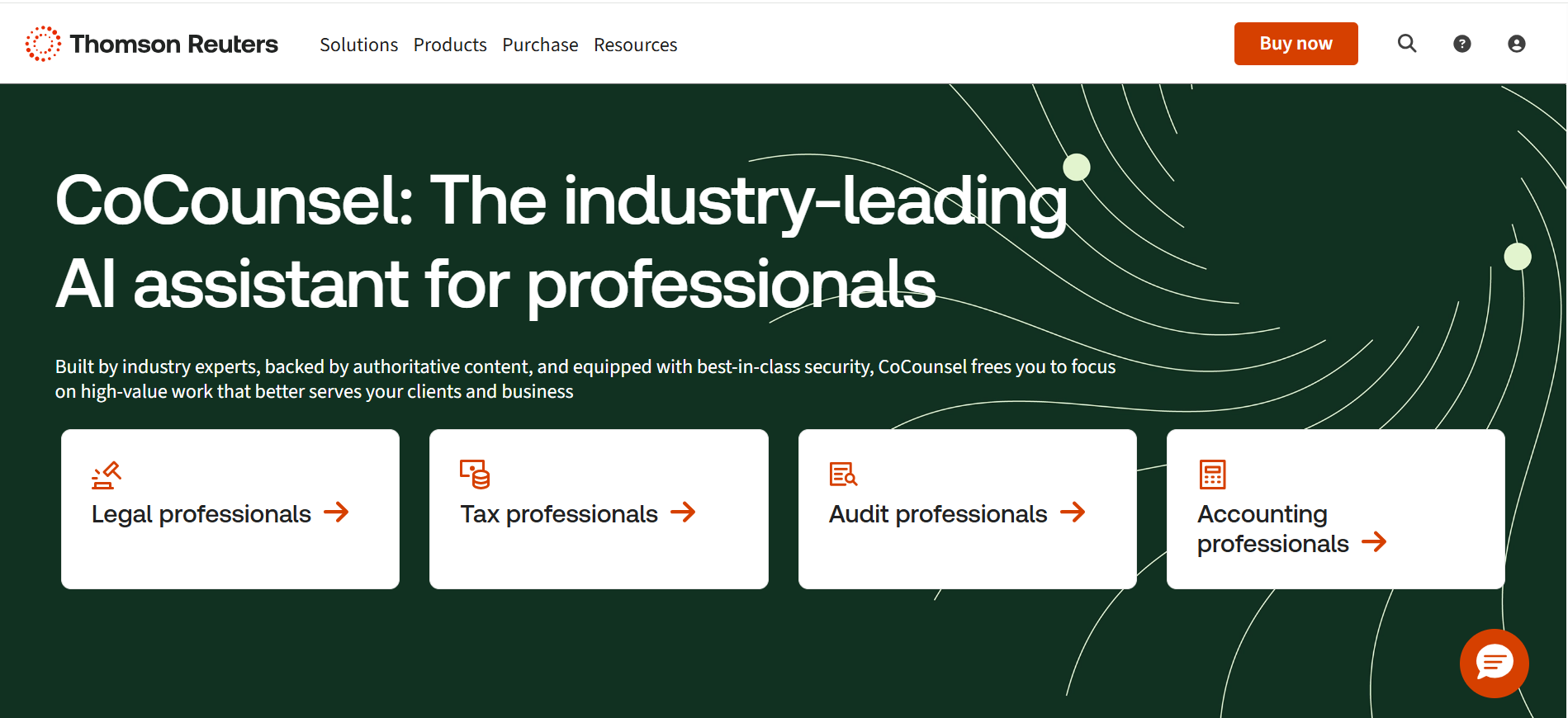
Review
Casetext CoCounsel is an advanced AI-powered legal assistant designed to streamline legal research, contract review, and case analysis. Leveraging cutting-edge language models, CoCounsel enables lawyers and legal teams to analyze large volumes of case law, statutes, and contracts in minutes, saving hours of manual work. Its AI understands natural language queries, allowing users to ask complex legal questions and receive precise, actionable insights.
Law firms and corporate legal departments widely adopt CoCounsel to accelerate research tasks, improve document accuracy, and enhance overall productivity. The platform’s ability to highlight key clauses, summarize cases, and identify relevant precedents makes it a valuable tool for both litigation and transactional work. By combining speed, precision, and legal expertise, Casetext CoCounsel helps legal professionals focus on strategy, client advising, and high-value tasks rather than repetitive document review.
Features
- AI-powered legal research and case law analysis
- Contract review and document summarization
- Natural language legal queries
- Litigation support and memo drafting
- Citation verification and legal insights
Pros
- Highly accurate legal research results
- Saves significant time on document review
- Easy-to-use interface for legal professionals
Cons
- Pricing may be high for small firms
- Requires high-quality legal input for best results
- Limited customization for niche legal practices
Final Verdict
Casetext CoCounsel is ideal for law firms and corporate legal teams looking to accelerate research and case preparation. Its AI-driven insights and document analysis save time while maintaining accuracy. Firms seeking a reliable, fast, and intelligent legal research assistant will benefit greatly from Casetext CoCounsel.
2. Lexis+ AI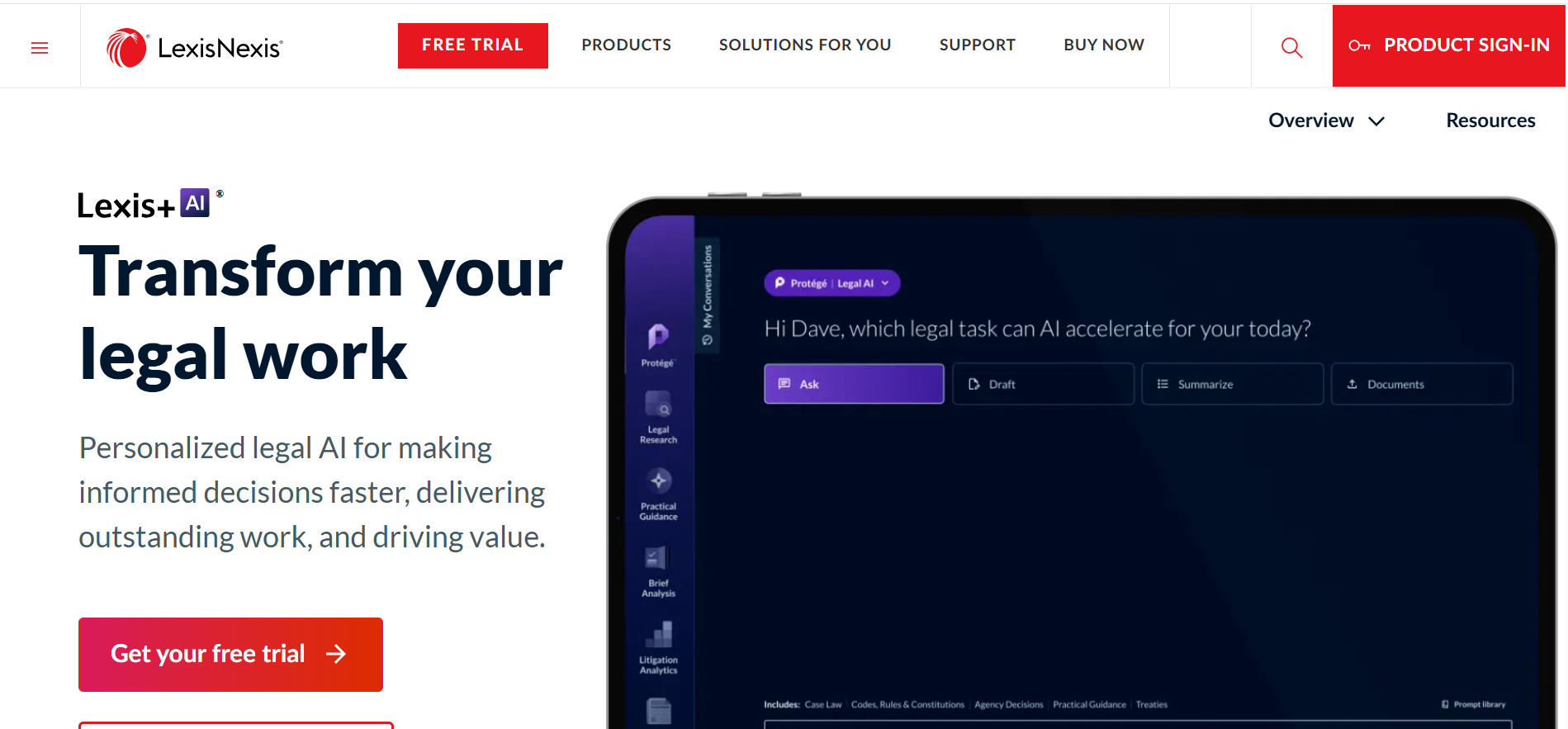
Review
Lexis+ AI is a powerful AI-driven legal research platform that combines the extensive databases of traditional LexisNexis with cutting-edge artificial intelligence. Designed for attorneys, law firms, and corporate legal teams, it streamlines the process of finding relevant case law, analyzing statutes, and summarizing complex legal documents. Its AI capabilities allow users to perform context-aware searches, highlight critical insights, and uncover precedents that might be missed through manual research.
The platform is widely adopted by large law firms, in-house legal departments, and compliance teams to increase research accuracy, reduce human error, and save valuable time. Lexis+ AI also provides document summarization, citation checks, and predictive analysis, enabling legal professionals to make informed decisions quickly. By integrating traditional legal research with AI-driven insights, Lexis+ AI empowers lawyers to focus on strategy, client advising, and high-value tasks rather than routine data gathering.
Features
- AI-driven legal research with cited sources
- Natural language legal question handling
- Drafting assistance for legal documents
- Access to extensive LexisNexis databases
- Insight generation with source validation
Pros
- Trusted and authoritative legal sources
- Strong citation and compliance reliability
- Ideal for complex legal research tasks
Cons
- Premium pricing structure
- Can feel complex for new users
- Best suited for larger firms and enterprises
Final Verdict
Lexis+ AI is perfect for firms that need a reliable, in-depth, and AI-augmented legal research tool. Its combination of AI analysis and traditional research ensures accuracy and efficiency. Law departments seeking a comprehensive solution for case law research and document analysis will benefit from Lexis+ AI.
3. Westlaw Precision AI
Review
Westlaw Precision AI is an advanced AI-powered legal research platform that combines the authoritative Westlaw database with state-of-the-art artificial intelligence. Designed for attorneys, law firms, and corporate legal teams, it streamlines case law research, contract analysis, and precedent discovery, delivering precise and contextually relevant results in a fraction of the time required by traditional methods.
The platform is widely used by large law firms, corporate legal departments, and litigation teams that demand detailed, accurate, and up-to-date legal information. Its AI features include predictive analytics, smart search suggestions, and document summarization, allowing lawyers to identify critical legal points quickly and reduce research errors. Westlaw Precision AI also supports efficient workflow integration, making it easier to collaborate, track research findings, and maintain consistency across legal teams.By leveraging AI-driven insights alongside Westlaw’s trusted database, Precision AI empowers legal professionals to make informed decisions, enhance productivity, and stay competitive in fast-paced legal environments.
Features
- AI-enhanced legal research engine
- Predictive case analysis
- KeyCite citation checking
- Contextual legal insights
- Advanced filtering and search tools
Pros
- Highly accurate and reliable results
- Strong citation validation system
- Trusted by legal professionals worldwide
Cons
- Expensive subscription plans
- Steep learning curve for beginners
- Limited use outside research-focused tasks
Final Verdict
Westlaw Precision AI is ideal for firms needing precise legal research and case insights. Its AI-driven search and analysis capabilities save time while maintaining high accuracy. Attorneys handling large caseloads and complex legal issues will find Westlaw Precision AI indispensable.
4. Harvey AI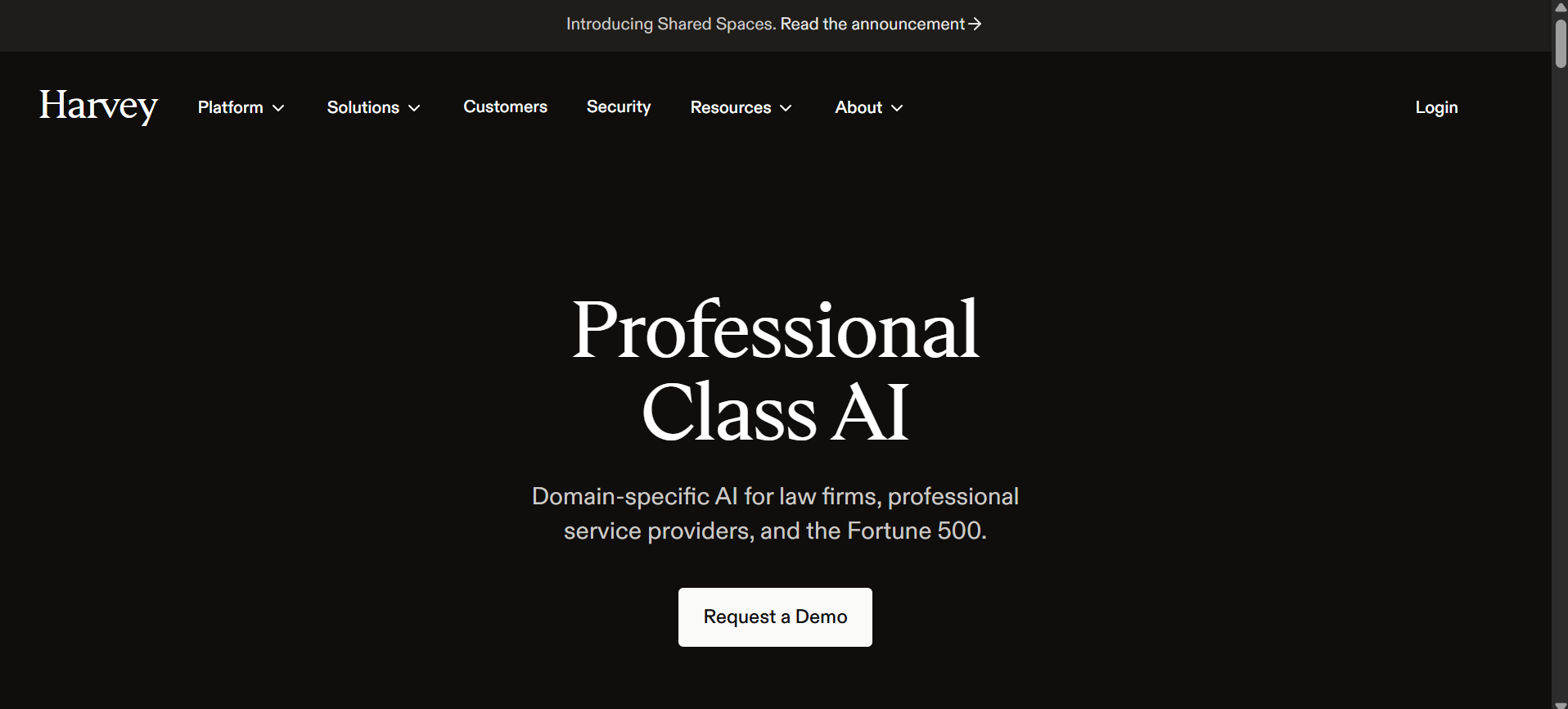
Review
Harvey AI is a generative AI legal assistant designed specifically for law firms and enterprise legal teams. The platform leverages advanced artificial intelligence to automate legal drafting, contract review, and strategic analysis, significantly reducing the time spent on repetitive tasks. Harvey AI is highly customizable, allowing organizations to tailor its workflows and outputs to their specific legal processes and compliance standards.
Many top-tier law firms and corporate legal departments rely on Harvey AI to streamline internal operations, improve accuracy, and maintain consistency across legal documents. Its secure deployment options ensure that sensitive client and corporate data remains protected, meeting the strictest standards for confidentiality and compliance.By combining AI-driven efficiency with enterprise-grade security and customization, Harvey AI empowers legal teams to focus on higher-value work, enhance productivity, and accelerate decision-making. Its integration into daily workflows ensures smoother collaboration, faster document turnaround, and smarter legal analysis for complex cases.
Features
- AI-powered legal drafting and editing
- Contract analysis and summarization
- Legal strategy support
- Secure enterprise-grade environment
- Custom workflow configuration
Pros
- Strong drafting and analysis capabilities
- Designed specifically for legal use cases
- High-level security and compliance standards
Cons
- Limited availability for smaller firms
- Requires onboarding and training
- Pricing not publicly transparent
Final Verdict
Harvey AI is best suited for legal teams prioritizing efficient contract review and risk management. Its AI-powered analysis reduces manual effort while improving accuracy. Organizations handling large volumes of contracts will benefit from Harvey AI’s speed and precision.
5. DoNotPay
Review
DoNotPay is an AI-powered legal assistant tailored for consumers and small businesses, offering automated legal document creation and dispute resolution. The platform helps users quickly generate contracts, appeal fines, contest parking tickets, and manage other straightforward legal tasks without hiring a lawyer.
DoNotPay simplifies legal processes by providing step-by-step guidance, ensuring that even users with no legal background can complete tasks accurately and efficiently. Its AI-powered document generation creates legally sound forms, contracts, and letters in minutes, reducing errors and saving time.Ideal for individuals and small organizations, DoNotPay provides a cost-effective alternative to traditional legal services, making it easier to handle everyday legal matters. By automating repetitive tasks and offering practical legal solutions, it empowers users to resolve disputes and manage documents confidently, all from a convenient digital platform.
Features
- Automated legal form generation
- Consumer rights assistance
- Subscription and bill dispute tools
- Small claims filing support
- Simple conversational interface
Pros
- Extremely user-friendly
- Affordable compared to enterprise tools
- Great for basic legal tasks
Cons
- Not suitable for complex legal work
- Limited professional legal depth
- Not designed for law firms
Final Verdict
DoNotPay is a practical AI legal assistant for individuals and small businesses handling everyday legal issues. While it lacks advanced professional features, it excels in accessibility and simplicity. It’s best viewed as a consumer-focused legal helper rather than a full legal research tool.
6. Spellbook
Review
Spellbook is a powerful AI legal assistant built to streamline contract drafting, clause review, and document optimization. The platform leverages advanced artificial intelligence to analyze legal text, highlight potential errors, and suggest precise edits, ensuring contracts are clear, compliant, and legally sound.
Designed for law firms, corporate legal teams, and contract managers, Spellbook helps professionals save time, reduce manual errors, and maintain consistency across legal documents. Its AI-powered suggestions improve accuracy in drafting while minimizing the risk of omissions or ambiguous language.With an intuitive and user-friendly interface, Spellbook is accessible to both junior associates and experienced lawyers. By combining efficiency, accuracy, and ease of use, the platform allows legal teams to focus on higher-value tasks such as strategy, negotiations, and client advisory, rather than repetitive document editing.
Features
- AI-powered contract drafting assistance
- Clause suggestions and risk detection
- Microsoft Word integration
- Contract language optimization
- Context-aware legal recommendations
Pros
- Excellent for contract-focused legal work
- Works directly within Word
- Saves time on drafting and revisions
Cons
- Limited use outside contract law
- Not ideal for litigation research
- Subscription cost may be high for solo lawyers
Final Verdict
Spellbook is ideal for legal teams focused on document drafting and contract management. Its AI-powered suggestions save significant time and reduce human errors. Firms looking to streamline contract workflows and improve document quality will benefit most from Spellbook’s capabilities.
7. Luminance
Review
Luminance is a cutting-edge AI-powered legal platform designed for contract review, due diligence, and comprehensive document analysis. By leveraging advanced machine learning and natural language processing, Luminance can quickly highlight key clauses, identify potential risks, and categorize contracts and legal documents with high accuracy.
The platform is especially valuable for corporate legal teams, law firms, and compliance departments that manage large volumes of contracts or complex agreements. Its AI continuously learns from prior reviews and firm-specific practices, adapting to organizational workflows and improving predictive accuracy over time.Luminance’s intuitive interface and intelligent document analysis reduce manual workload, minimize human error, and allow legal professionals to focus on strategic decision-making, risk mitigation, and client advisory. By combining speed, precision, and adaptability, Luminance streamlines legal operations for both small and enterprise-scale organizations.
Features
- AI-powered contract analysis
- Due diligence and compliance review
- Risk detection and anomaly identification
- Visual dashboards and reporting
- Secure document handling
Pros
- Ideal for large-scale document review
- Strong due diligence capabilities
- Reduces manual review time significantly
Cons
- Complex setup for small teams
- Expensive for individual users
- Requires training for best results
Final Verdict
Luminance is perfect for organizations that handle extensive contract portfolios and require accurate review. Its AI-driven analysis accelerates workflows while reducing risk. Legal teams focused on compliance and efficiency will benefit significantly from Luminance’s capabilities.
8. LawGeex
Review
LawGeex is a leading AI legal assistant designed to streamline contract review and compliance processes. Using advanced artificial intelligence and machine learning, it automatically evaluates contracts against predefined legal standards, regulatory requirements, and company policies. This ensures that agreements adhere to organizational and legal guidelines while reducing the risk of human error.
The platform is especially beneficial for in-house legal teams, corporate counsel, and compliance departments that handle high volumes of contracts. LawGeex significantly reduces review time, allowing legal professionals to focus on strategic decision-making rather than repetitive tasks. Its AI-driven approach highlights discrepancies, flags potential risks, and provides actionable recommendations to maintain contract consistency across the organization.By automating routine contract evaluations, LawGeex improves operational efficiency, enhances accuracy, and strengthens compliance protocols. Its user-friendly interface and powerful AI capabilities make it an essential tool for businesses looking to scale legal operations while minimizing errors and turnaround time.
Features
- Automated contract review
- Policy and compliance comparison
- Risk flagging and issue detection
- Approval workflow management
- Analytics and reporting tools
Pros
- Speeds up contract approval processes
- Improves compliance consistency
- Easy to use for in-house teams
Cons
- Limited flexibility for custom legal scenarios
- Not suitable for litigation work
- Best for standardized contracts
Final Verdict
LawGeex is ideal for companies seeking efficient contract review and compliance assurance. Its AI capabilities reduce approval times and improve document accuracy. Legal teams handling repetitive contract processes will find LawGeex particularly valuable.
9. ROSS Intelligence
Review
ROSS Intelligence is an advanced AI legal research assistant designed to streamline case law analysis and legal queries for law firms and corporate legal teams. Leveraging natural language processing (NLP), ROSS can interpret complex legal questions and retrieve the most relevant statutes, case precedents, and legal insights quickly, saving attorneys hours of manual research.
The platform continuously updates its AI engine to reflect the latest legal developments, ensuring that users have access to current and accurate information. ROSS Intelligence provides contextual analysis, highlighting the most pertinent cases and legal arguments, which helps legal professionals make informed decisions efficiently.Ideal for law firms, corporate legal departments, and legal researchers, ROSS Intelligence enhances productivity, reduces human error, and improves the speed and accuracy of legal research. Its user-friendly interface and AI-driven search capabilities make it an essential tool for legal teams aiming to stay competitive in today’s fast-paced legal environment.
Features
- Natural language legal research
- Case law discovery and analysis
- Contextual search results
- Legal question answering
- Research efficiency optimization
Pros
- Easy-to-use research interface
- Reduces legal research time
- Helpful for everyday case law searches
Cons
- Limited database compared to major platforms
- Fewer advanced features
- Not ideal for enterprise-level research
Final Verdict
ROSS Intelligence is ideal for legal teams needing a powerful research assistant. Its AI-driven search and summarization save time while improving accuracy. Law firms and corporate departments focused on efficient case law research will find ROSS Intelligence invaluable.
10. Evisort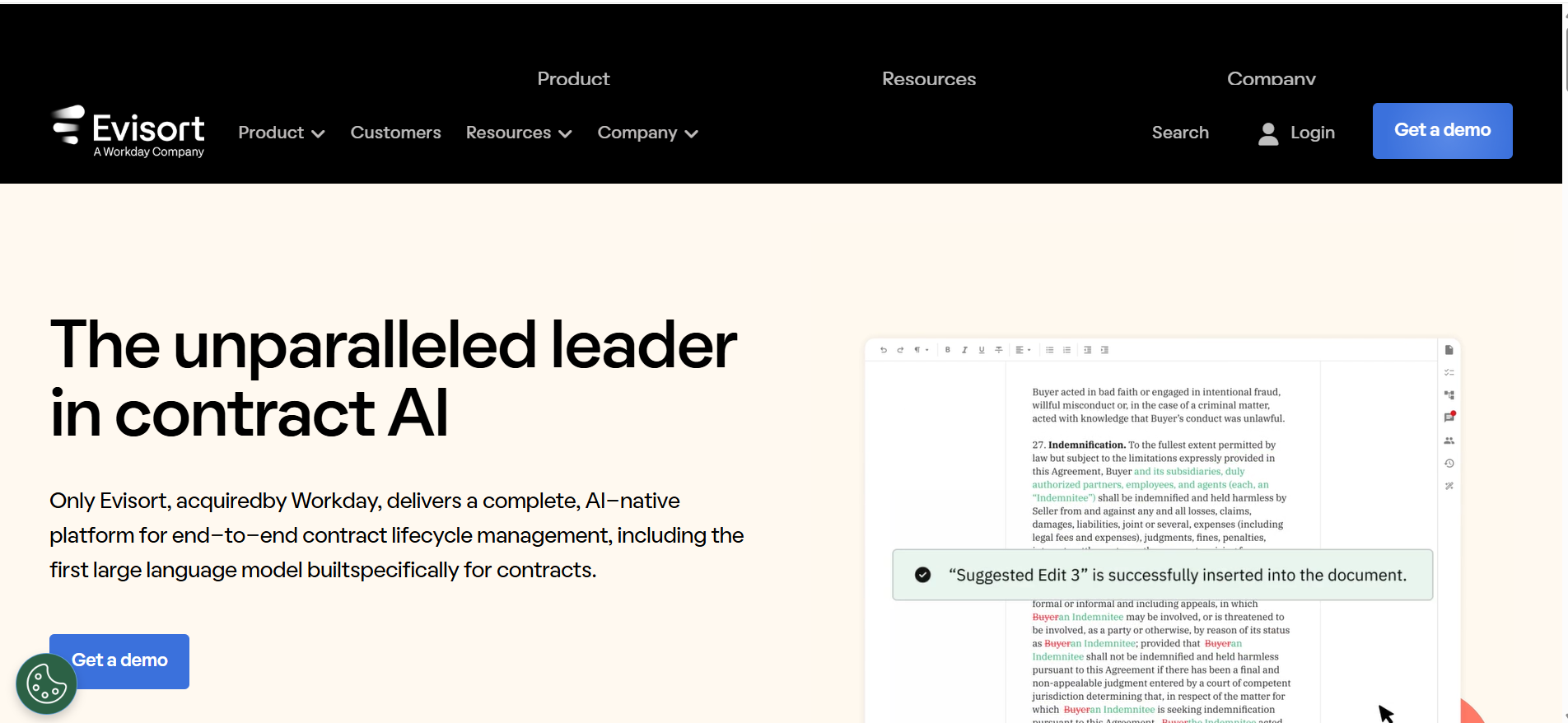
Review
Evisort is a powerful AI legal assistant designed to simplify contract management, document analysis, and workflow automation for law firms and corporate legal teams. Using advanced machine learning algorithms, Evisort can automatically categorize contracts, extract critical clauses, and track compliance obligations, reducing the time spent on manual contract review.
The platform provides real-time insights into contract data, allowing teams to quickly identify risks, ensure regulatory compliance, and make informed, data-driven decisions. Evisort’s AI engine continuously learns from user interactions, improving accuracy in clause extraction and document categorization over time.Widely used by corporate legal departments and law firms, Evisort streamlines the entire contract lifecycle, from creation and review to approval and compliance monitoring. Its intuitive interface and automation features help legal teams save time, reduce human error, and improve operational efficiency in managing large volumes of contracts.
Features
- AI-powered contract categorization
- Key clause extraction and analysis
- Compliance and risk monitoring
- Workflow automation for approvals
- Integration with document management systems
Pros
- Accelerates contract review and approvals
- Improves accuracy and compliance
- Scales well for large legal teams
Cons
- May be expensive for small teams
- Requires initial setup and training
- Focused mainly on contracts, less on general research
Final Verdict
Evisort is ideal for organizations handling large contract volumes and seeking automation in document management. Its AI-driven insights reduce manual effort, improve compliance, and speed up approvals. Legal teams aiming for efficiency and accuracy in contract processes will benefit most from Evisort.
Choosing the Right AI Legal Assistant
Selecting the right AI legal assistant depends on your firm’s size, workflow, and primary objectives. Some platforms excel at contract management, others at legal research, and some focus on compliance and automation. Comparing features, integration options, and pricing ensures that firms choose a tool aligned with their needs.
Best Tools for Legal Research
For research-focused tasks, ROSS Intelligence, Lexis+ AI, and Casetext CoCounsel stand out. These platforms provide accurate case law retrieval, natural language queries, and predictive insights. They are best suited for law firms that handle complex litigation or require extensive legal research.
Best Tools for Contract Review and Drafting
Platforms like LawGeex, Spellbook, Harvey AI, and Luminance specialize in contract analysis, clause review, and compliance checks. They are ideal for corporate legal teams or firms handling large contract volumes. Automation reduces errors, accelerates approvals, and ensures adherence to company policies.
Best Tools for Small Firms or Consumers
Tools such as DoNotPay provide simple legal assistance and document automation. These platforms are suitable for individuals, freelancers, or small businesses seeking affordable and easy-to-use solutions. They simplify basic legal tasks without requiring extensive expertise.
Integration and Workflow Compatibility
Many AI legal assistants, including Lexis+ AI, Westlaw Precision AI, and Luminance, integrate with existing databases, document management systems, and workflow tools. Integration ensures smoother processes, reduced duplication, and efficient collaboration across legal teams.
Conclusion
AI legal assistants are rapidly becoming essential tools for modern legal professionals who want to improve efficiency without compromising accuracy. From legal research and contract drafting to compliance checks and document analysis, these tools reduce repetitive workload and allow lawyers to focus on high-value legal strategy. Firms that adopt AI-driven solutions early often gain a competitive edge by delivering faster and more consistent results.
Choosing the right AI legal assistant depends on your practice area, firm size, and workflow requirements. While some tools specialize in contract automation, others focus on legal research or enterprise-level compliance. By evaluating features, limitations, and scalability, legal professionals can select a solution that aligns with their long-term goals and enhances overall productivity.
Frequently Asked Question (FAQs)
What is the main purpose of AI legal assistants?
AI legal assistants automate tasks like legal research, contract review, drafting, and compliance checks. They help lawyers work faster and reduce manual effort. This allows legal professionals to focus more on strategy and client-related work.
Are AI legal assistants suitable for small law firms?
Yes, many AI legal assistants are ideal for small firms and solo practitioners. They reduce administrative workload and improve productivity without hiring extra staff. Cost and feature relevance should still be evaluated before choosing a tool.
Can AI legal assistants replace human lawyers?
No, AI legal assistants are designed to support lawyers, not replace them. They handle repetitive and data-heavy tasks efficiently. Human expertise is still required for legal judgment, strategy, and decision-making.
How secure are AI legal assistant platforms?
Most reliable platforms use encryption, access controls, and data protection compliance standards. Legal data security is a top priority for these tools. Firms should always review privacy policies before adoption.
What should be considered before choosing an AI legal assistant?
Legal professionals should assess their use case, budget, integrations, and scalability needs. Ease of use and customer support are also important factors. Free trials or demos can help in making the right decision.
