
Artificial Intelligence (AI) is rapidly reshaping the global translation industry, making language barriers easier to overcome than ever before. As businesses, creators, and professionals operate in an increasingly interconnected world, the demand for fast, accurate, and scalable translation solutions continues to grow across hundreds of languages.
Modern AI-powered translation tools play a critical role not only for everyday users but also for translators, marketers, developers, and multinational teams who depend on advanced machine learning models to communicate clearly and efficiently. These tools go beyond basic word-for-word conversion, using context, tone, and linguistic patterns to deliver more natural and reliable translations.
Before exploring the best AI translation software and tools available today, it’s essential to understand what machine translation actually means. Machine translation refers to the automated process of converting text, images, audio, or video from one language into another using artificial intelligence and language models—enabling real-time, accurate communication at a global scale.
What Is AI Translation Software?
AI translation software is an advanced digital solution that uses artificial intelligence, machine learning, and neural networks to convert content from one language into another with high accuracy and contextual understanding. Unlike older rule-based translation systems that relied on fixed grammar rules and direct word replacements, modern AI-powered translators analyze meaning, intent, tone, and sentence flow to deliver translations that feel natural and human-like.
These tools are capable of translating a wide range of formats, including plain text, websites, documents (PDFs, Word files), audio recordings, videos, and even live conversations. By leveraging neural machine translation (NMT) and natural language processing (NLP), AI translation software understands how words function within a sentence and adapts translations based on cultural and linguistic context rather than literal phrasing.
In 2026, AI translation software has become an essential tool for businesses, content creators, educators, travelers, SaaS platforms, and international teams. Companies use it to localize websites and apps, translate marketing materials, legal documents, and product descriptions, and provide multilingual customer support at scale. Content creators rely on AI translation to reach global audiences through subtitles, blogs, and social media content, while educators and students use it to access learning materials in multiple languages.
One of the biggest advantages of AI translation software is its continuous learning capability. These systems are trained on massive multilingual datasets and improve over time by learning from user corrections, new language patterns, and industry-specific terminology. As a result, modern AI translators can handle complex fields such as healthcare, finance, technology, and law, where accuracy, terminology, and context are critical.
How AI Translation Software Works
AI translation software relies on Neural Machine Translation (NMT) combined with Natural Language Processing (NLP) and deep learning models trained on billions of multilingual data points. The translation process typically follows several intelligent stages:
First, the system analyzes the input text or speech to detect language, tone, and sentence structure. It then breaks content into meaningful segments rather than translating word by word. This allows the AI to understand context, idioms, and grammar rules unique to each language.
Next, neural models generate the translated output by predicting the most accurate phrasing based on context and historical data. NLP algorithms refine the translation by adjusting punctuation, tense, and sentence flow. Advanced tools also apply industry-specific glossaries, brand terminology, and regional language variations.
Finally, post-processing features such as formatting, timestamps, speaker identification, and quality checks ensure the translation is ready for real-world use. Many AI translation tools continue learning from user corrections, making future translations even more accurate.
Key Features of AI Translation Software in 2026
AI translation software in 2026 has evolved into a powerful, enterprise-ready solution that goes far beyond basic word-for-word translation. These tools are designed to support global communication at scale, delivering speed, accuracy, and contextual understanding across industries and use cases.
Context-Aware Translation
Modern AI translation engines understand the full meaning of sentences rather than translating words in isolation. They analyze tone, intent, grammar, and cultural nuances to produce translations that sound natural and human. This is especially important for marketing copy, legal documents, and customer communications where tone and clarity directly impact trust and conversions.
Multi-Format Support
AI translators now handle a wide range of content formats from a single platform. Users can translate plain text, PDFs, Word documents, spreadsheets, presentations, subtitles, audio recordings, and video files without manually converting formats. This makes AI translation software ideal for businesses managing multilingual documentation, training materials, and digital content at scale.
Real-Time & Live Translation
One of the most impactful advancements in 2026 is real-time translation. AI tools can instantly translate live meetings, video calls, webinars, and customer support chats with minimal delay. This allows global teams to collaborate smoothly and enables businesses to provide multilingual support without hiring separate language-specific agents.
Multilingual Speech Recognition
AI translation software now combines advanced speech recognition with translation models to accurately convert spoken language into translated text. These systems perform well across different accents, speaking speeds, and regional dialects, making them reliable for interviews, podcasts, voice notes, and international conferences.
Custom Glossaries & Terminology Control
For businesses and professionals, consistency is critical. AI translation tools allow users to create custom glossaries for brand terms, product names, legal phrases, and industry-specific terminology. This ensures translations remain accurate, on-brand, and consistent across all content, regardless of language or volume.
API & Platform Integrations
Leading AI translation software in 2026 offers robust APIs and seamless integrations with websites, mobile apps, CMS platforms, CRMs, help desks, and eCommerce systems. This enables automated, real-time translation workflows, reducing manual effort and improving efficiency for global operations.
Data Privacy & Enterprise-Grade Security
Security and compliance are top priorities. Enterprise AI translation tools provide encrypted data handling, GDPR and ISO compliance, and private or on-premise translation models. This makes them suitable for sensitive content in industries such as healthcare, finance, legal, and government sectors.
Together, these features make AI translation software in 2026 a reliable, scalable, and intelligent solution for breaking language barriers and enabling truly global communication.
Benefits of Using AI Translation Tools
AI translation software offers significant advantages for individuals and organizations operating in multilingual environments.
One of the biggest benefits is speed and scalability. AI tools can translate thousands of words or hours of content in minutes, something impossible with manual translation alone. This makes them ideal for fast-growing businesses and content-heavy platforms.
Another major advantage is cost efficiency. Compared to hiring human translators for every project, AI translation tools dramatically reduce costs while maintaining high accuracy—especially for repetitive or large-scale translations.
AI translation also improves global accessibility and reach. Businesses can localize websites, apps, marketing campaigns, and customer support to reach international audiences more effectively. For content creators, it enables faster expansion into new languages without technical barriers.
Finally, continuous learning ensures ongoing improvement. As AI models process more data and user feedback, translations become more refined, consistent, and context-aware over time.
Why AI Translation Software Matters in 2026
In 2026, the demand for seamless global communication has never been higher. Remote work, cross-border eCommerce, international content creation, and multilingual customer support have all become essential components of modern business. Language barriers, once a natural limitation, can now slow down growth, reduce engagement, and even lead to lost revenue. This is where AI translation software steps in as a game-changer.
Modern AI translators allow businesses and individuals to communicate efficiently across languages without relying on human translators for every interaction. They combine speed, accuracy, and contextual understanding to deliver professional-grade translations in real time, ensuring that marketing campaigns, product documentation, customer support, and training materials resonate with international audiences.
By automating the translation process, AI tools also significantly reduce operational costs. Companies no longer need large in-house language teams or expensive outsourcing to maintain multilingual content. AI translation platforms can handle high volumes of content, from emails and documents to live meetings and video subtitles, ensuring that businesses scale quickly and consistently without compromising quality.
Moreover, AI translation software enables global expansion and market penetration. Businesses can enter new regions, launch multilingual websites, and communicate with international customers effectively. Similarly, content creators, educators, and SaaS companies can provide localized experiences that improve engagement and loyalty.
10 Best AI Translation Software & Tools for 2026
Here is the lis of the top 10 best ai translation software and tools for 2026:
- Google Lens
- Google Translate
- DeepL
- Machine Translation
- Wordvice AI – Translator
- Alexa Translations
- Bing Microsoft Translator
- Taia
- Mirai Translate
- Sonix
1. Google Lens
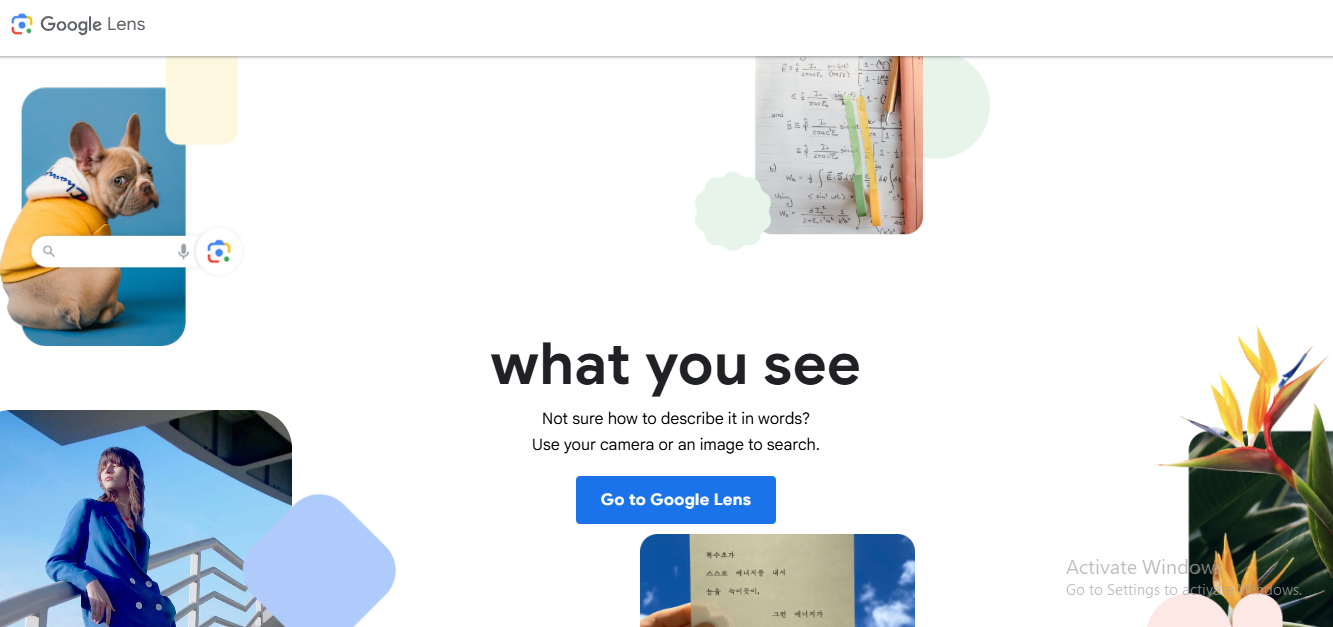
Google Lens is a cutting-edge image recognition tool developed by Google, designed to provide instant translations for text in over 100 languages. By simply pointing a device’s camera at signs, menus, or documents, users can see the translated text appear on their screen in real time.
This functionality is especially useful for travelers, enabling them to navigate foreign environments confidently and understand written content without relying on separate translation apps. The ability to translate on-the-go makes reading and comprehending foreign text simple and efficient.
Integrated with Google Photos and the Google app, Google Lens allows users to translate text from saved images or screenshots as well. Its intuitive interface and wide language support make it an essential tool for overcoming language barriers in daily life.
Key Features:
- Real-time translation of over 100 languages using the camera
- Translate text on signs, menus, and documents instantly
- Integrated with Google Photos and Google app for saved images
- Enhances travel by simplifying comprehension of foreign text
- User-friendly interface for seamless translation
2. Google Translate
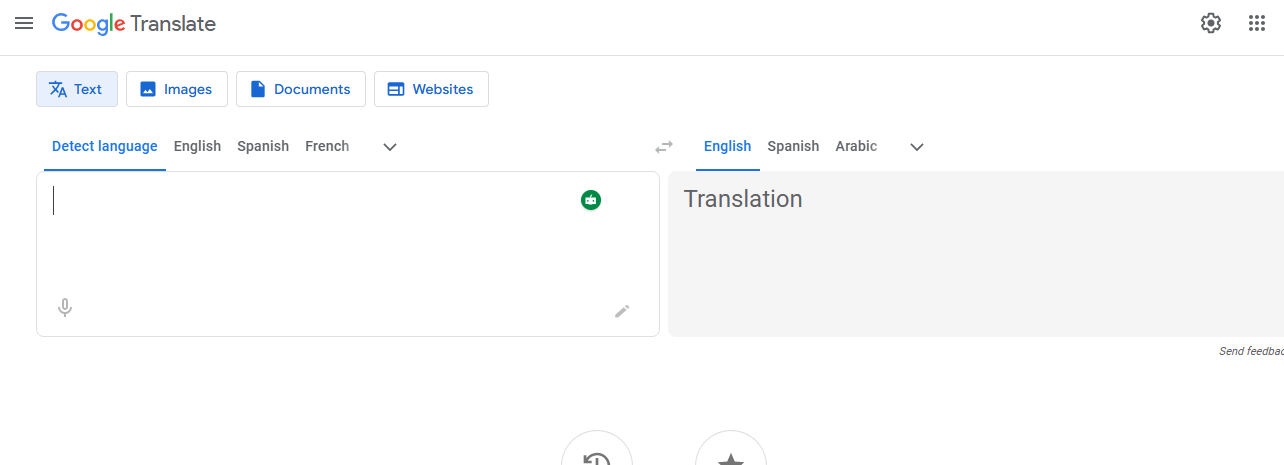
Google Translate is one of the most popular AI-powered translation tools globally, offering text, document, and website translations across more than 100 languages. Its straightforward interface allows users to select languages, input text, and receive immediate translations.
The tool’s accessibility makes it ideal for casual users, professionals, and travelers alike. Machine learning models trained with native speakers ensure that translations are accurate, natural, and contextually relevant.
Additional features like Conversation Mode for mobile devices enhance real-time communication, while verified translations and multi-language support make Google Translate a versatile tool for everyday and professional use.
Key Features:
- Supports over 100 languages worldwide
- Easy-to-use interface for quick translations
- Free online tool accessible on multiple devices
- Verified and reliable translations
- Conversation Mode for mobile speech translation
3. DeepL
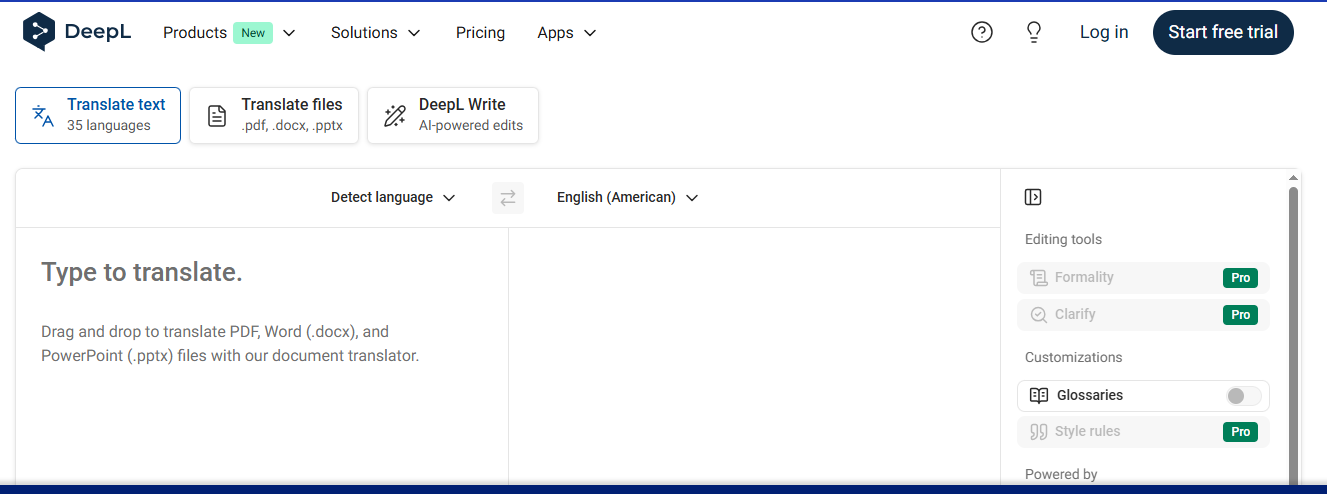
DeepL has rapidly gained popularity as an AI translation software known for its high accuracy and intuitive design. Compatible with Windows and iOS, it offers smooth integration into workflows for both individual users and businesses.
The tool allows users to customize translations, giving them more control over phrasing and context. It also ensures that translations maintain the original document’s formatting, which is especially important for professional and business documents.
With support for 25+ international languages, unlimited text input, and extensions for Windows, DeepL provides a reliable and user-friendly solution for accurate and professional translations.
Key Features:
- Translates 25+ international languages
- No text input limits
- Retains original document formatting
- Windows extension for easy access
- Suitable for both business and personal use
4. Machine Translation
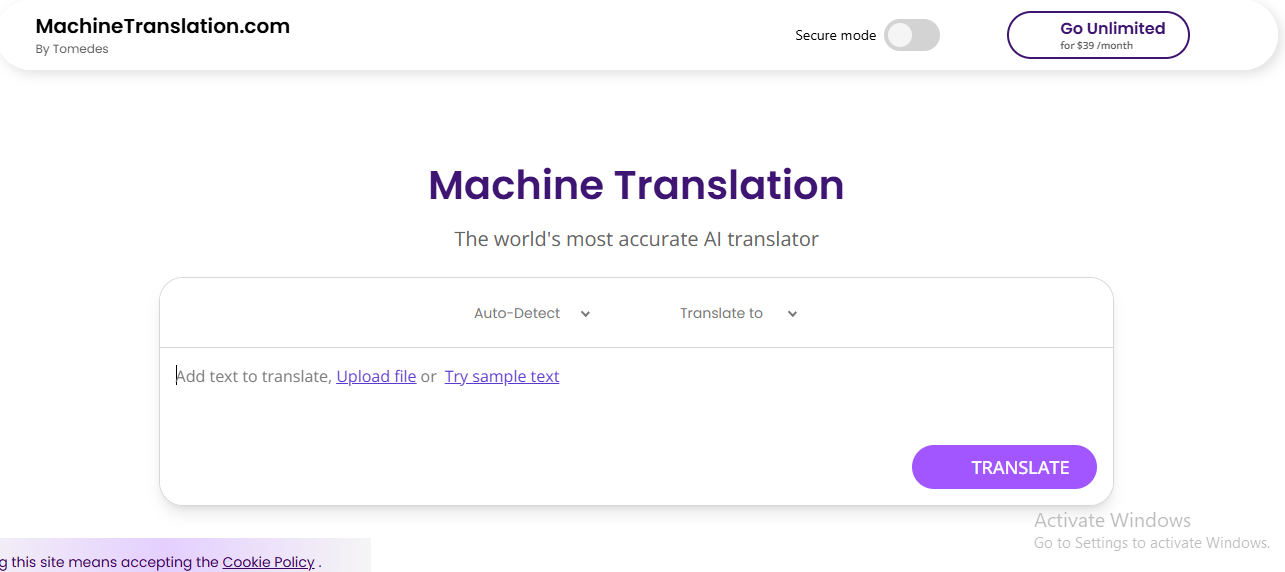
Machine Translation is a unique AI-powered tool designed to analyze, compare, and recommend the best translation engine for any given text and language pair. By leveraging GPT-4, it evaluates the strengths and weaknesses of multiple translation engines to provide a highly tailored translation experience.
This tool takes into account the context and nuances of the text, ensuring more accurate translations. It allows individuals and businesses to communicate confidently across languages, improving clarity and reducing the risk of misinterpretation.
Machine Translation also enables users to select the target audience for translations, such as the general public, technical professionals, or academic researchers. This level of customization ensures that every translation is appropriate for its intended readership.
Key Features
- Supports translations in 50+ international languages
- Compare outputs from Google, DeepL, Amazon, ModernMT, Microsoft, and ChatGPT
- Tailored translations for businesses and individuals
- Allows selection of target audience for precise results
5. Wordvice AI – Translator
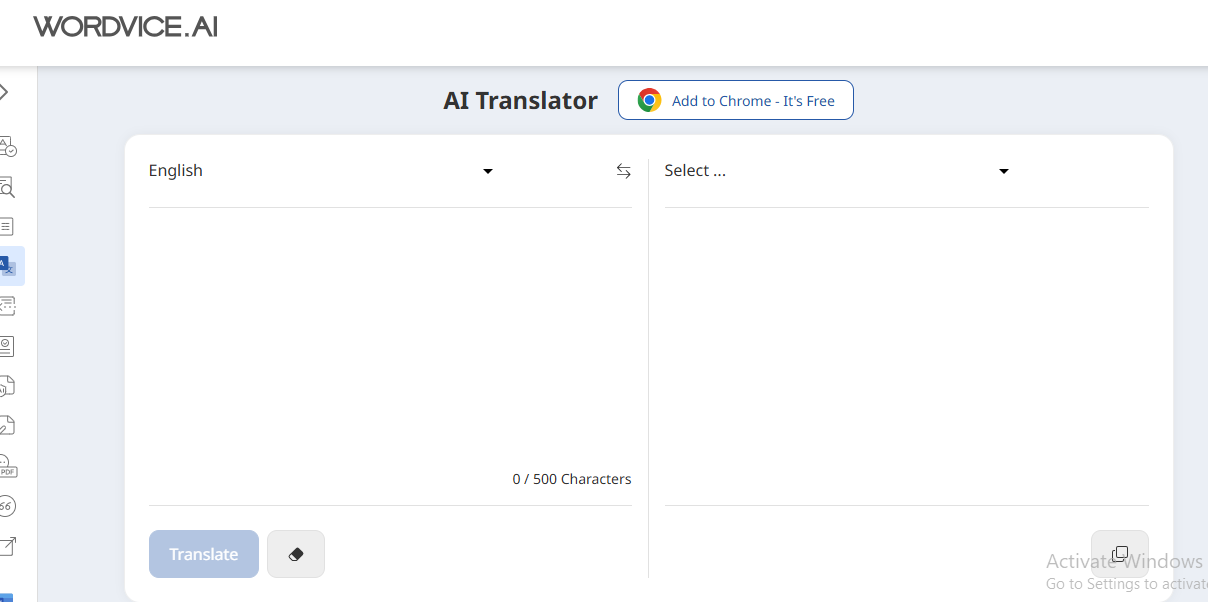
Wordvice AI is a powerful online translator that leverages neural machine translation to deliver instant, precise, and natural translations across multiple languages. It is designed for high-quality localization of academic papers, business documents, and personal statements.
The tool is accessible on both computers and mobile devices without requiring an app or extension, offering an ad-free experience. It stands out for its translation quality, speed, and convenience, making it ideal for students, researchers, and professionals who need reliable results.
With support for popular language pairs like English to Chinese and Spanish, Wordvice AI ensures effective cross-cultural communication. Additionally, it offers free AI-powered writing enhancement tools that improve content after translation, making it a comprehensive solution for accurate and polished translations.
Key Features
- AI-powered instant translations with neural machine translation
- Natural, precise, and high-quality results
- Ad-free and accessible on computers and mobile devices
- Ideal for academic, business, and personal document translation
- Includes free AI revision tools to enhance translated content
6. Alexa Translations

Alexa Translations has been a trusted language services provider since 2002, offering AI-powered translation tools for industries such as legal, financial, technical, marketing, and government sectors. It combines advanced machine learning with professional human oversight for highly accurate results.
The platform provides customized translation services, making it suitable for large-scale projects or industry-specific documents. Its AI translation engine is fast and efficient, often integrated into workflows alongside human translators to enhance quality and reliability.
Alexa Translations supports a wide range of content, including web content and documents, ensuring client-specific translation results. It is designed to help businesses and professionals meet strict deadlines while maintaining high translation standards.
Key Features
- Translates up to 100 documents in seconds
- Ideal for legal, financial, and technical industries
- Provides client-specific translation results
- Supports translation of web content
- Integrates AI with human translation services
7. Bing Microsoft Translator
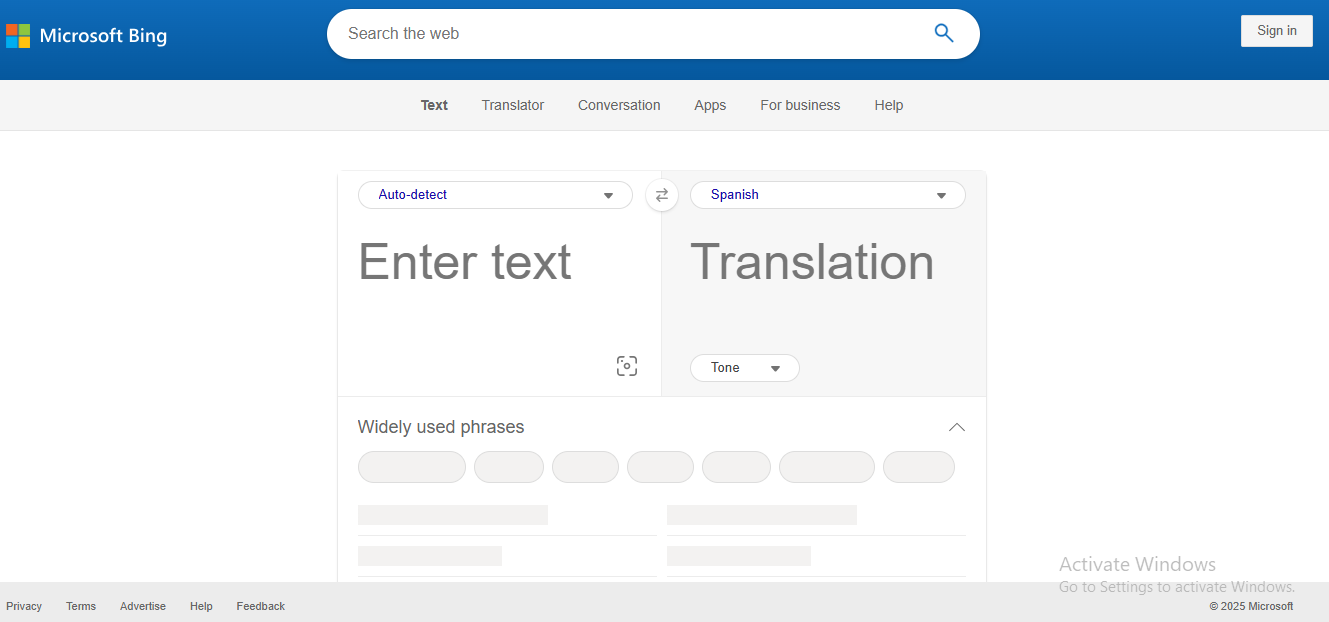
Bing Microsoft Translator is a cloud-based AI translation service developed by Microsoft and integrated with Microsoft Cognitive Services. It works across multiple platforms, including Bing, Microsoft Office, Microsoft Edge, Skype, and Visual Studio, providing seamless access to translation tools.
The service supports text, speech, and image translations, offering more than 100 languages and 12 speech translation systems for real-time conversations. This makes it an ideal tool for both personal and professional communication in multilingual environments.
Bing Microsoft Translator also enables in-context editing and website translation via widgets, giving users flexibility in how they apply translations. Its wide range of features ensures accurate, efficient, and versatile translation for users across different scenarios.
Key Features
- Translation memory for consistent results
- Text, speech, and image translations
- In-context editing capabilities
- Website translation widget
- Supports 100+ languages
8. Taia
Taia is an AI-powered translation platform that combines advanced machine learning with human expertise to deliver accurate translations for 97 languages. It is widely used for both individual and corporate translation projects.
The translation process combines automated machine translation with human review, ensuring high-quality results delivered quickly. Users do not need to install any programs, and instant rate estimates make project planning easy and transparent.
Taia guarantees reliable translations with a 99.4% client satisfaction rate and provides long-term project support for recurring translation needs. Its hybrid approach of AI and human oversight ensures precision, consistency, and timeliness.
Key Features
- Supports 97 languages
- Combines AI technology and human translators
- Provides instant rate estimates
- 99.4% client satisfaction rate
- Long-term project support for recurring translations
9. Mirai Translate
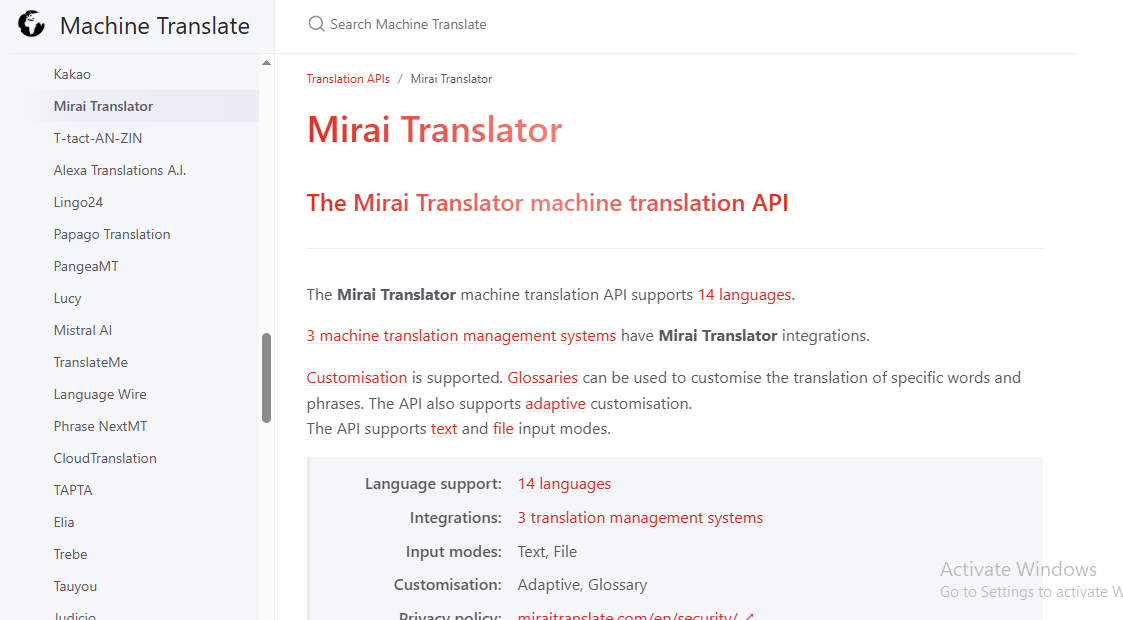
Mirai Translate is a neural machine translation tool designed for corporate use, offering multilingual support and compatibility with various file formats. It helps organizations improve productivity and translation speed for large-scale projects.
This cloud-based API service also supports speech translation, providing secure, reliable solutions for businesses managing multilingual communication. The tool delivers accuracy comparable to a highly proficient human translator.
Mirai Translate includes a user dictionary feature for group-specific translations, making it suitable for companies handling complex documents or collaborative projects. Its focus on security, versatility, and precision makes it a preferred choice for enterprise translation needs.
Key Features
- Sector-specific translations for corporate use
- Supports multiple file formats
- Multilingual capabilities
- Suitable for large corporations
- User dictionary for group-specific translations
10. Sonix
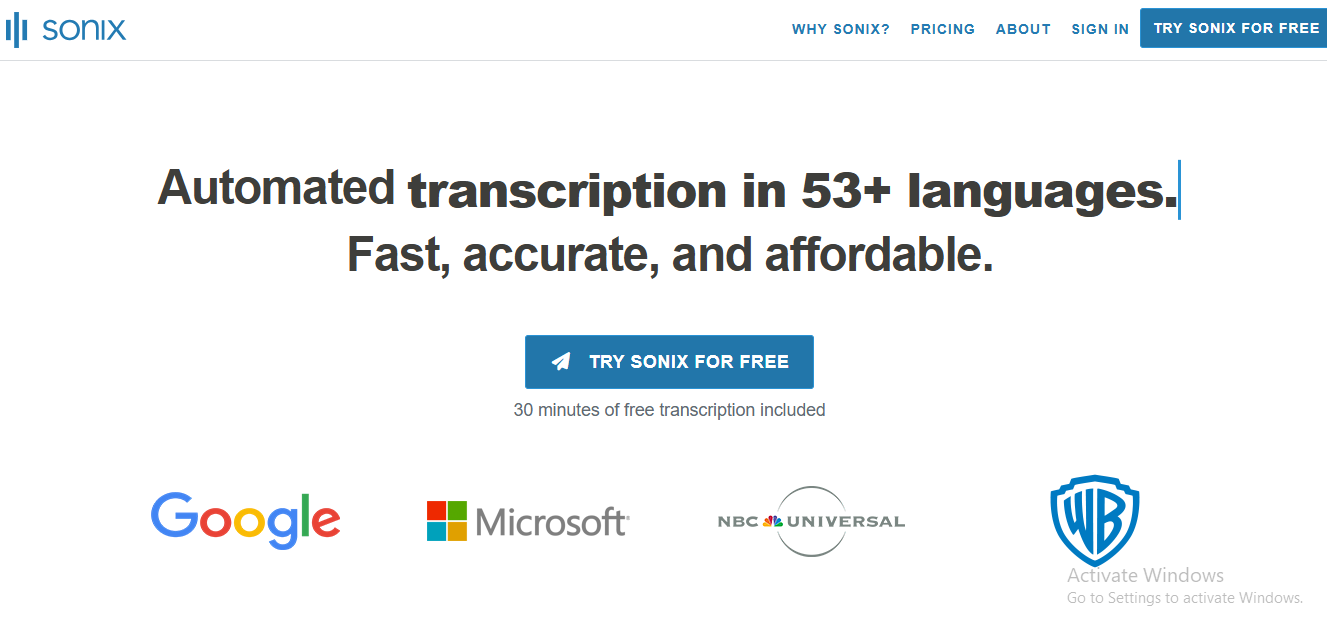
Sonix is an AI-powered translation tool designed specifically for video and audio content creators. It features an in-browser editor to search, edit, play, and organize audio and video files efficiently.
The platform converts audio to text quickly, allowing users to translate transcripts into multiple languages. Users can tweak the text before final translation to ensure accuracy and contextual correctness.
Sonix also offers audio-to-audio translation, enabling creators to convert videos, tutorials, or podcasts into different languages. This tool provides professional-quality translation results faster and more efficiently than traditional methods.
Key Features
- Ideal for video and audio content creators
- In-browser editor for managing files
- Audio-to-audio translation capability
- Converts audio to text before translating
- Allows transcript adjustments before translation
Final Verdict
AI translation tools have transformed the way we communicate across languages, making it faster, easier, and more accurate than ever before. From travelers using Google Lens to instantly translate signs and menus, to businesses relying on Mirai Translate and Taia for secure and professional document translations, there is a solution for every need.
Tools like DeepL and Wordvice AI offer high-quality, context-aware translations suitable for academic, business, and personal use, while platforms like Sonix cater specifically to content creators handling audio and video translations. Meanwhile, versatile options like Google Translate and Bing Microsoft Translator provide reliable multi-language support for everyday tasks and professional workflows.
Ultimately, the best AI translation tool depends on your specific requirements—whether you prioritize real-time convenience, professional document accuracy, multimedia translation, or enterprise-level capabilities. Leveraging these AI solutions ensures smoother communication, increased productivity, and a seamless cross-cultural experience in today’s globalized world.
Frequently Asked Questions (FAQs)
What is an AI translation tool?
AI translation tools are software platforms that use artificial intelligence and machine learning algorithms to convert text, audio, images, or videos from one language to another. These tools improve translation speed, accuracy, and contextual understanding compared to traditional methods.
Which AI translation tool is best for travelers?
For travelers, Google Lens is ideal because it translates text in real time using a camera, allowing users to instantly understand signs, menus, and documents. Google Translate with Conversation Mode is also effective for live speech translation.
Which tools are best for business or professional documents?
For professional use, DeepL, Wordvice AI, Mirai Translate, and Alexa Translations are recommended. They provide accurate, context-aware translations while maintaining document formatting, making them suitable for legal, financial, academic, and technical content.
Can AI translation tools handle audio or video content?
Yes, tools like Sonix and Bing Microsoft Translator support audio-to-text and audio-to-audio translations, which are ideal for podcasts, video tutorials, or any multimedia content requiring multilingual accessibility.
Are AI translation tools free to use?
Some tools, like Google Translate and Google Lens, are free with basic features. Others, including DeepL, Wordvice AI, Taia, and Mirai Translate, offer premium plans with advanced features and higher translation quality for professional needs.
