
Affiliate marketing continues to grow in sophistication and competition. But as the industry evolves, so do the risks. Have you ever worried about someone stealing your affiliate commissions? Or wondered whether shortening and masking your affiliate links is a smart protection strategy or a dangerous shortcut?
In today’s competitive landscape, affiliate marketers are constantly searching for ways to increase clicks, conversions, and revenue. However, with opportunity comes vulnerability. Some unethical actors use malware or tracking manipulation to replace affiliate IDs and redirect commissions to themselves. To combat these threats, many marketers rely on link cloaking.
At the same time, cloaking has developed a controversial reputation. While some use it for branding and link protection, others misuse it to bypass advertising platform restrictions.
So where does link cloaking stand? Let’s break it down clearly including how it works, its types, and its pros and cons.
What Is Affiliate Link Cloaking?
Link cloaking refers to the process of disguising or shortening an affiliate URL while redirecting users to the original destination. Instead of displaying a long, messy affiliate link filled with tracking parameters and IDs, marketers present a cleaner, branded version.
For example, affiliate links often look bulky and technical, containing long strings of numbers and symbols. Cloaking transforms these into short, readable URLs that appear more trustworthy and professional. Some marketers prefer calling this process “affiliate redirect” because the word “cloaking” sometimes sounds suspicious.
In most legitimate cases, cloaking serves practical purposes. It improves user experience, protects affiliate IDs from being copied or replaced, and allows marketers to manage links more efficiently. However, cloaking can also be used for URL masking where the displayed page differs from the final destination. This is where ethical concerns begin to arise.
How Does Link Cloaking Work?
At its core, link cloaking relies on URL redirection. A user clicks on a branded or shortened link, which first directs them to an intermediary URL. That URL then automatically redirects the visitor to the actual affiliate offer.
In its simplest form, this process is harmless and purely functional. The redirect happens almost instantly, and the user reaches the intended product or landing page without noticing the technical step in between.
More advanced cloaking setups involve conditional redirects. In these cases, the system analyzes incoming traffic based on factors such as IP address, device type, or location. Depending on the detected profile, users may be redirected to different versions of a page. While this can be used for personalization or geo-targeting, it can also be misused to bypass moderation systems which carries significant risk.
Types of Link Cloaking: White, Grey, and Black
Not all cloaking methods are equal. In 2027, affiliate marketers generally categorize cloaking into three types based on intent and implementation.
1. White Hat Cloaking
White hat cloaking focuses on transparency and compliance. This includes shortening links, branding URLs, hiding affiliate IDs to prevent theft, and filtering bot traffic. The key principle is that both users and platform moderators see the same content.
Examples include geo-based redirects for localization or filtering irrelevant traffic such as bots and VPN servers to preserve ad budgets. This form of cloaking is widely accepted and considered a standard marketing practice.
2. Grey Hat Cloaking
Grey hat cloaking operates in a moral gray area. It does not directly violate written rules, but it manipulates systems for advantage.
For instance, some marketers create slightly different page versions optimized for search engines while keeping user-facing content cleaner. While not always illegal, such tactics can trigger penalties if detected. Platforms may classify them as deceptive behavior even if no explicit policy was broken.
3. Black Hat Cloaking
Black hat cloaking intentionally hides prohibited content from moderators while showing it to regular users. This method is commonly used to promote restricted products such as gambling, crypto schemes, adult content, or questionable supplements.
Marketers using black hat cloaking attempt to bypass advertising restrictions on platforms like Facebook (now part of Meta). Moderators are shown compliant pages, while actual users see different content.
Although potentially profitable in the short term, this strategy carries a high risk of account bans, financial penalties, and permanent platform restrictions.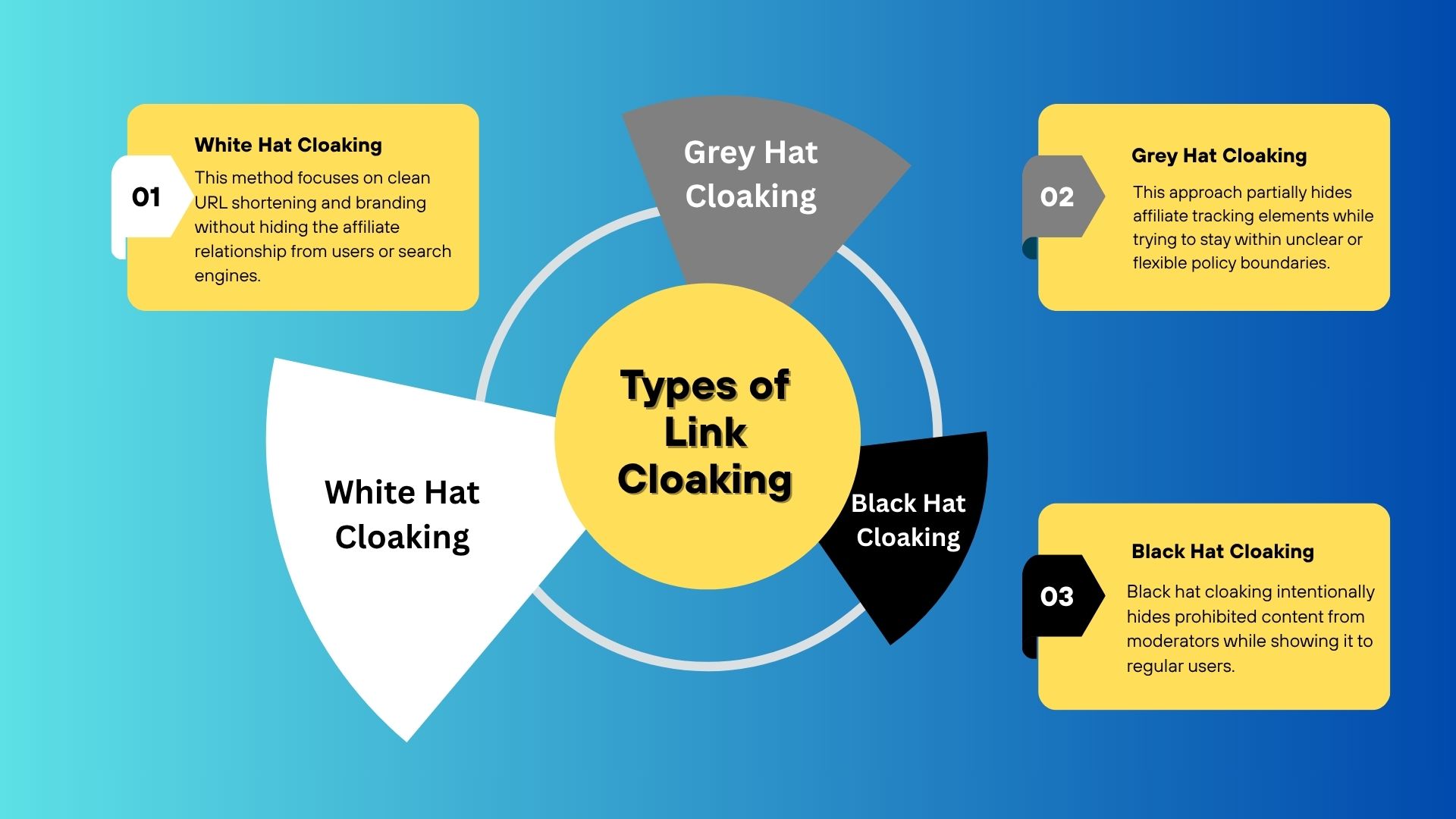
Pros of Affiliate Link Cloaking
1. Protects Affiliate Commissions
Cloaking helps reduce the risk of commission theft by masking visible affiliate IDs. In competitive niches, unethical actors may attempt to replace tracking parameters with their own identifiers.
By hiding these details behind a redirect, cloaking minimizes exposure and protects both affiliates and program managers from revenue leakage.
This protection builds confidence among partners. Affiliates are more likely to promote offers aggressively when they know their commissions are safeguarded. Over time, this increases affiliate satisfaction, retention, and long-term program stability.
2. Improves Link Appearance
Raw affiliate links often contain long strings of symbols, numbers, and tracking codes. These links can appear suspicious, especially to users trained to avoid phishing and malicious URLs.
A cloaked link looks clean, branded, and intentional. It feels like a natural extension of your website rather than an external redirect.
Improved visual appeal directly impacts click-through rates. Users are more comfortable clicking on a link that clearly belongs to a trusted domain. In B2B, SaaS, fintech, and other trust-sensitive sectors, presentation alone can significantly influence engagement.
3. Strengthens Branding
Each cloaked link reinforces your brand identity because it keeps users within your domain ecosystem. Instead of sending traffic through unfamiliar subdomains, you maintain brand continuity. Repeated exposure to your domain builds recognition over time. When audiences consistently see your brand associated with curated tools or recommendations, authority increases.
Search engines also recognize internal linking structures, which may support broader SEO strategies when implemented properly. For content-driven affiliate marketers, this consistency strengthens long-term positioning within a niche.
4. Enables Better Link Management
One of the most practical advantages of cloaking is centralized control. If an affiliate program changes its URL structure, you can update the destination without modifying every piece of published content. This is particularly valuable for large blogs or SaaS resource hubs with years of archived content. Manual link replacement can be time-consuming and error-prone.
Advanced cloaking tools also provide click tracking, performance monitoring, and redirect management in one dashboard. This flexibility allows marketers to scale campaigns efficiently without sacrificing accuracy or revenue continuity.
Cons of Affiliate Link Cloaking
1. Platform Policy Violations
Not all platforms allow cloaked affiliate links. Search engines, ad networks, and social platforms may penalize deceptive redirect practices if they violate their policies. Improper implementation, such as hiding the final destination from moderation systems, can lead to account suspension or reduced visibility.
Affiliate marketers must review the terms of service of advertising platforms and affiliate programs before applying cloaking. Ethical transparency combined with policy compliance is essential to avoid unnecessary risk.
2. Risk of Trust Issues
While clean links can increase trust, excessive or unclear cloaking may create suspicion. Users in privacy-sensitive industries often prefer full transparency about where a link leads. If visitors feel that the destination is being intentionally hidden, it may negatively impact credibility.
The solution is simple: combine cloaked links with clear disclosures and honest messaging. Transparency builds sustainable relationships, which are far more valuable than short-term click gains.
3. Technical Complexity
Although many tools simplify cloaking, proper implementation still requires attention to redirect logic, parameter handling, and analytics integration. Incorrect configuration can lead to broken links, lost tracking data, or misattributed commissions.
For businesses managing affiliate programs without dedicated technical resources, complexity may outweigh the benefits initially. Testing, documentation, and ongoing monitoring are necessary to ensure smooth performance.
4. Ethical Concerns
Cloaking becomes problematic when used to bypass moderation systems or conceal misleading promotions.Short-term tactics that obscure real destinations can damage long-term brand reputation. Ethical affiliate marketing focuses on clarity, disclosure, and delivering real value to users. Cloaking should enhance user experience and protect revenue not manipulate or deceive audiences.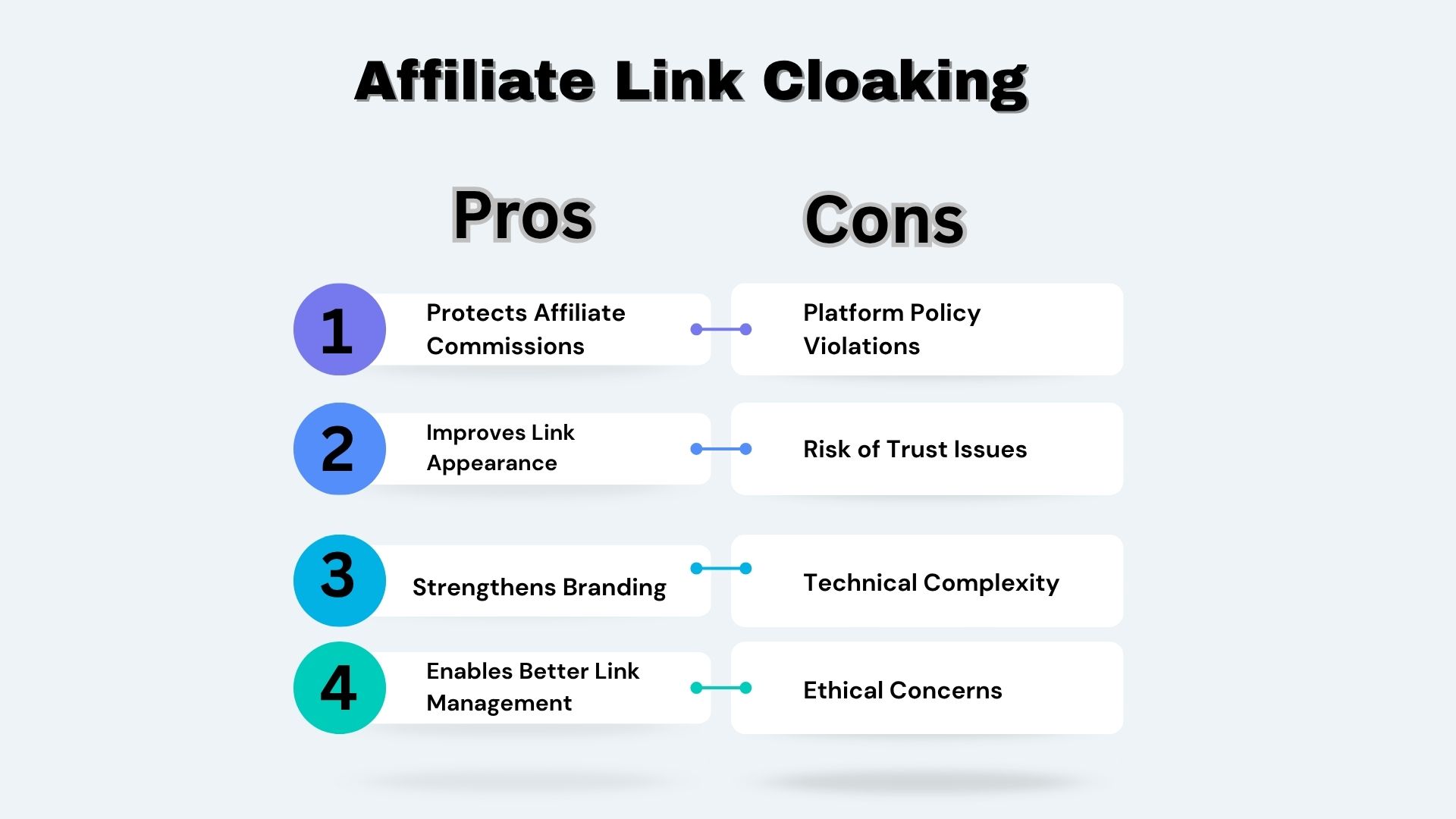
When You Should Consider Using Affiliate Link Cloaking
Affiliate link cloaking is most beneficial when your program is scaling and link management becomes operationally demanding. If you manage multiple affiliates, publish high volumes of content, or operate in competitive niches where commission theft is a concern, cloaking provides measurable advantages.
It is also useful when branding consistency matters particularly for SaaS companies, B2B service providers, and authority-driven niche sites. However, if your affiliate program is small, your partners are trusted, or your traffic volume is limited, you may prioritize simplicity before adding technical layers.
Ethical Best Practices for Affiliate Link Cloaking
To use cloaking responsibly, always combine it with clear affiliate disclosures. Transparency maintains compliance with advertising regulations and builds audience trust.
Choose a reliable cloaking method, whether through WordPress plugins, server-side redirects, or integrated affiliate management software. Avoid unstable methods that may break tracking.
Before launching cloaked links, test redirect paths on desktop and mobile, confirm tracking parameters pass correctly, and verify analytics reporting. Finally, schedule periodic link audits. Affiliate programs evolve, offers expire, and URLs change. Proactive maintenance prevents lost commissions and preserves credibility.
Technical Best Practices for Clean Redirection in 2027
Using cloaking software correctly is just as important as choosing the right tool. Following these technical best practices helps maintain accurate tracking, improve user experience, and reduce the risk of redirect errors or platform warnings.
Use HTTP 302 Redirects for Affiliate Links
Whenever possible, choose 302 (Temporary) redirects instead of 301 (Permanent) redirects for affiliate campaigns. Since affiliate URLs can change over time, a temporary redirect prevents browsers from caching outdated destinations and keeps your links easier to update.
Keep Redirect Chains Short
Your cloaked link should redirect users directly to the destination page whenever possible. Multiple redirect hops increase page loading time, reduce conversion rates, and may create unnecessary issues for both users and search engines.
Add Proper Link Attributes
When publishing cloaked affiliate links on your website, use attributes such as rel=”nofollow sponsored” where appropriate. These attributes help search engines understand that the links are promotional while supporting better SEO practices and compliance with search engine guidelines.
Test Your Redirects Regularly
Before launching a campaign, verify that every cloaked link redirects correctly across desktop and mobile devices. Regular testing helps identify broken links, tracking issues, or destination changes before they affect your campaign performance.
Affiliate Link Cloaking vs. Link Shortening
| Feature | Affiliate Link Cloaking | Link Shortening |
| Primary Purpose | Masks affiliate tracking URLs under your own branded domain | Reduces the length of a long URL |
| Branding | Uses your domain (e.g., yoursite.com/tool) | Uses third-party domain (e.g., bit.ly/xyz) |
| Control | Full control over redirects and destination URLs | Dependent on third-party service |
| Commission Protection | Helps hide affiliate IDs and reduce hijacking risk | Does not specifically protect affiliate IDs |
| Link Ownership | You own and manage the redirect system | Platform owns shortened link |
| Long-Term Stability | Stable if hosted on your own domain | Risk if shortening service shuts down |
| Tracking Flexibility | Can integrate with analytics and affiliate tracking systems | Limited tracking features |
| Strategic Value | Supports branding, optimization, and scalability | Mainly improves visual length |
Common Mistakes to Avoid When Cloaking Affiliate Links
Below are few Mistakes that need to avoid when cloaking Affiliate linked:
- Over-cloaking without clear affiliate disclosures
- Using cloaking to hide misleading or low-quality offers
- Choosing incorrect redirect types (e.g., improper 301/302 usage)
- Creating redirect chains that slow page speed
- Failing to pass affiliate tracking parameters correctly
- Not testing links on mobile devices
- Ignoring analytics conflicts between cloaking tools and affiliate dashboards
- Relying on unstable JavaScript-only redirects
- Not scheduling regular link audits
- Forgetting to check affiliate network or ad platform policies
How Affiliate Link Cloaking Impacts Conversion Rates
Affiliate link cloaking can influence conversion rates through psychological trust signals. Users are more likely to click links that appear branded, clean, and intentional. Long strings of random parameters often trigger caution, especially among security-conscious audiences.
Cloaked links also reduce visual friction. When links match your domain structure and content theme, they feel like a natural extension of your recommendation rather than an external advertisement. This subtle alignment improves user confidence and increases click-through rates.
Additionally, improved link management allows faster optimization. Because cloaked links can be edited centrally, marketers can swap underperforming offers quickly without rewriting content. Faster testing and adjustments lead to incremental conversion improvements over time, which compound into meaningful revenue growth.
Legal and Compliance Considerations for Affiliate Link Cloaking
Affiliate link cloaking must always be paired with clear and visible disclosures. Regulatory bodies in many regions require that affiliate relationships be disclosed transparently. Cloaking does not replace disclosure, it only changes how the URL appears.
You must also review the terms of your affiliate networks and advertising platforms. Some programs restrict certain types of redirects or require that final destination URLs be clearly identifiable. Non-compliance can result in link invalidation or account suspension.
Privacy regulations are another factor. With increasing focus on data protection and tracking transparency, affiliate marketers should ensure their redirect methods align with cookie policies and user consent frameworks. Ethical implementation protects not only revenue, but long-term brand reputation.
Final Thoughts
Affiliate link cloaking is neither a magic solution nor a risky shortcut—it is a strategic tool. When implemented ethically and transparently, it protects commissions, strengthens branding, and simplifies link management at scale. For growing affiliate programs, especially in SaaS and competitive niches, that operational control can make a measurable difference.
However, cloaking should never replace trust. Clear disclosures, compliance with platform policies, and accurate tracking must remain priorities. Used responsibly, cloaking enhances user experience and safeguards revenue. Used carelessly, it can damage credibility and create technical problems.
In 2027 and beyond, the most successful affiliate marketers will not rely on shortcuts. They will combine clean link structures, ethical transparency, and continuous optimization to build sustainable, scalable systems.
Frequently Asked Questions (FAQs)
Is affiliate link cloaking legal?
Yes, affiliate link cloaking is legal when used transparently and in compliance with advertising regulations and platform policies. You must clearly disclose affiliate relationships and avoid deceptive redirect practices.
Does link cloaking affect SEO?
When properly configured using 301 or 302 redirects, cloaking does not harm SEO. However, incorrect setups such as broken redirects or improper indexing can create issues.
Can cloaking increase click-through rates?
In many cases, yes. Clean, branded links appear more trustworthy than long tracking URLs filled with random characters.
Is cloaking necessary for beginners?
Not always. If you’re just starting with a small number of affiliates or limited traffic, cloaking may not be essential. Simplicity can be more important in the early stages. As your program grows and link management becomes more complex, cloaking can provide greater operational control.
What is the safest way to cloak affiliate links?
The safest methods include reputable WordPress plugins, trusted affiliate management platforms, or properly configured server-side redirects. Avoid unreliable JavaScript-only redirects, and always test tracking, mobile functionality, and analytics before publishing links.
