
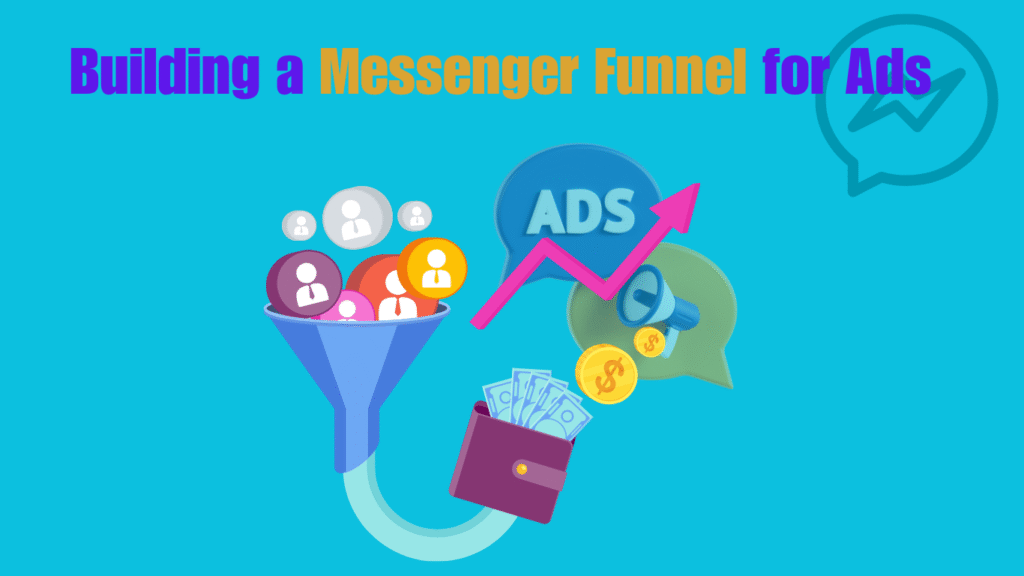
What is Messenger Funnel Architecture?
Conversational Marketing Standards define a Messenger funnel as a technical, automated communication sequence designed to transition prospects from initial awareness to final conversion within the Meta ecosystem. Messenger funnels function as virtual sales assistants by managing real-time interactions without manual intervention. Automated chat flows initiate immediately following a user’s interaction with a specific ad trigger.
The Structural Framework of Chat Flows
Structural frameworks allow creators to guide users through a logic-based journey using pre-set questions and calls-to-action (CTAs). Real-time segmentation ensures that every prospect receives content tailored to their specific behavioral inputs. Logic branching creates a personalized experience by directing users to different messages based on their unique responses.
Essential Components of an Automated Funnel
Digital Advertising Research confirms that high-converting funnels rely on a multi-stage technical infrastructure. Entry triggers usually consist of Click-to-Messenger ads or website interface buttons. Welcome sequences deliver immediate gratification by providing promised offers like discounts or lead magnets.
- Establish a clear entry trigger via Facebook or Instagram advertisements.
- Deliver an automated greeting that confirms the user’s intent.
- Ask diagnostic questions to qualify the lead’s potential value.
- Provide immediate value through high-quality digital assets or offers.
- Execute a primary call-to-action to secure a conversion event.
- Implement logical follow-up paths to reduce funnel abandonment.
Defining the Messenger Funnel for Ads
Facebook Ads Manager Protocols describe the Messenger ad funnel as a specialized campaign type utilizing the “Click-to-Messenger” destination. Direct redirection ensures that users remain within the Messenger application instead of being sent to an external landing page. Low-friction lead capture occurs because the platform pre-fills user data and provides an instant interface.
Contextual Relevance in Advertising
Ad-to-chat consistency requires that the chatbot’s first response perfectly mirrors the advertisement’s promise. Contextual relevance ensures that the conversation feels like a natural extension of the user’s social media browsing experience. Instant engagement capitalizes on the user’s current attention span to drive higher interaction rates.
Messenger Funnel for Ads vs. Messenger Funnel for Sales
Strategic Marketing Analysis identifies distinct functional differences between ad-driven funnels and sales-driven funnels. Ad funnels serve as the top-of-funnel (TOFU) entry point focused on volume and initial engagement. Sales funnels encompass the mid-funnel (MOFU) and bottom-of-funnel (BOFU) stages where nurturing and closing occur.
| Comparison Point | Messenger Ad Funnel | Messenger Sales Funnel |
| Primary Goal | Initiation and lead capture | Nurturing and revenue generation |
| Funnel Position | Top (Awareness) | Mid to Bottom (Conversion) |
| Key Metric | Cost per conversation | Return on Ad Spend (ROAS) |
| Content Type | Broad offers and hooks | Specific solutions and CTAs |
Technical Advantages of Messenger Advertising
Communication Science proves that conversational interfaces outperform traditional static web pages in engagement metrics. Instantaneous delivery satisfies the modern consumer’s demand for immediate information. Tailored experiences utilize logic branching to show users only the information relevant to their interests.
AI-Driven Adaptability and Mobile Design
AI-driven adaptability allows the funnel to respond to various user intents dynamically. Mobile-first design ensures that the interface remains perfectly functional on all smartphone devices. Interactive elements like quick replies and cards provide a superior user experience compared to traditional text forms.
- Achieve higher message open rates compared to traditional email marketing.
- Facilitate two-way communication to build immediate brand trust.
- Automate the lead qualification process to save human resources.
- Integrate data directly with CRM systems for long-term tracking.
- Decrease the cost-per-lead by removing external website friction.
Essential Tools for Funnel Construction
Automation Technology Frameworks require a specific stack of tools to manage traffic and dialogue. Business Pages serve as the official identity and hosting platform for the bot. Visual Bot Builders enable the creation of complex logic flows without requiring programming knowledge.
Management and Tracking Infrastructure
Ads Manager provides the interface for targeting and budgeting the ad campaign. Mapping tools assist in the visual planning of conversational branches. Analytics platforms track user progress and conversion efficiency. Integration layers connect the chatbot to email marketing or sales software.
| Tool Category | Recommended Software | Core Function |
| Bot Platform | ManyChat / Chatfuel | Build and automate message flows |
| Ad Management | Meta Ads Manager | Target audiences and deploy ads |
| Lead Management | HubSpot / Zapier | Synchronize user data and tags |
| Visual Mapping | Lucidchart / Whimsical | Plan the conversation logic |
| Tracking | Facebook Pixel | Measure conversion events from chat |
Step-by-Step Process: How to Build a Messenger Ad Funnel
1. Strategic Campaign Planning
Marketing Strategy Standards dictate that every funnel must begin with a clearly defined objective. Goal setting determines whether the campaign focuses on lead generation, sales, or appointment bookings. Audience profiling identifies the specific pain points that the ad copy must address.
2. Developing the Click-to-Messenger Creative
Visual Design Principles state that the advertisement must be optimized for high click-through rates (CTR). Headlines should clearly state the benefit of starting a message. Ad copy must include a specific call-to-action like “Send Message” or “Get Started.”
3. Engineering the Automated Conversation Flow
User Experience (UX) Design for chatbots focuses on making the interaction feel natural and helpful. Welcome messages must immediately fulfill the ad’s promise to maintain credibility. Menu options or buttons should be used to minimize the need for user typing.
- Start with a greeting that mentions the specific ad offer.
- Ask two or three questions to determine user intent.
- Provide multiple-choice buttons for faster interaction.
- Tag users based on their selected preferences for future retargeting.
4. Implementation of Follow-Up Sequences
Retention Analytics confirm that the majority of conversions occur during follow-up interactions. The 24-hour rule permits businesses to send free follow-up messages within one day of the user’s last interaction. Reminder flows prompt users who started the funnel but did not finish.
Advanced Optimization and Best Practices
Data-Driven Optimization requires constant testing of every funnel element. A/B Testing should be used to compare different ad creatives and initial bot greetings. Drop-off analysis identifies which questions cause users to stop interacting with the bot.
Bidding and Mobile Accessibility
Conversational brevity ensures that messages are easy to read on mobile screens. Personalization tokens allow the bot to address users by their first name to increase engagement. Accessibility standards ensure that the chatbot is usable for a diverse audience.
- Keep messages under three sentences to ensure mobile readability.
- Use emojis sparingly to maintain a professional yet friendly tone.
- Provide an easy “Unsubscribe” option to remain compliant with policies.
- Test different button labels to see which drives more clicks.
- Monitor the “Cost Per Goal Achievement” to ensure campaign ROI.
Innovative Messenger Funnel Strategies for 2027
Interactive Technology Trends indicate that incorporating advanced media types significantly boosts user engagement. Video messages within the chat flow provide a human touch that builds immediate rapport. Voice notes allow for a more personalized and authentic communication style. Dynamic carousels showcase multiple products or services in a visually appealing, scrollable format. Live location sharing facilitates easier logistics for service-based businesses or physical retail locations.
- Integrate short, high-quality video clips to introduce brand personality.
- Utilize audio messages to provide detailed explanations in a natural tone.
- Deploy image carousels to highlight diverse product features or options.
- Incorporate interactive polls to gather real-time audience insights.
- Offer direct booking links within the chat for immediate scheduling.
Leveraging AI for Enhanced Personalization
Machine Learning Developments enable Messenger funnels to adapt to complex user inputs and sentiment. Natural Language Processing (NLP) allows chatbots to understand and respond to free-form text queries. Sentiment analysis identifies user frustration or satisfaction to trigger human intervention when necessary. Predictive suggestions offer users the most likely next steps based on historical data. Automated translations ensure that the funnel remains accessible to a global, multilingual audience.
- Apply NLP keywords to trigger specific sub-flows based on user questions.
- Monitor user sentiment to maintain a positive brand interaction.
- Predict user needs by analyzing common pathing sequences.
- Translate content automatically to reach international markets.
- Adjust response timing to simulate a natural conversation flow.
Conclusion: The Future of Conversational Commerce
Strategic Evolution in 2026 has moved Messenger funnels from simple support tools to primary revenue drivers. Value-driven automation ensures that every interaction serves the user’s immediate needs while fulfilling the business’s sales objectives.
Success in this landscape requires a balance of advanced AI capabilities and authentic human connection. By implementing structured flows, leveraging precision retargeting, and maintaining strict policy compliance, brands can build high-converting funnels that scale with their growth.
Conversational marketing is no longer an optional tactic; it is the fundamental infrastructure for modern, mobile-first advertising.
Frequently Asked Questions (FAQs)
What is the difference between an ad funnel and a sales funnel?
Funnel Architecture defines the ad funnel as the entry mechanism and the sales funnel as the conversion mechanism. Ad funnels drive traffic and initiate contact. Sales funnels qualify that traffic and lead it toward a financial transaction.
Can I build these funnels without technical coding skills?
No-Code Platforms like ManyChat and Chatfuel allow for the creation of advanced funnels through visual interfaces. Drag-and-drop editors make it simple to connect message blocks and logic gates. Integrations with other tools are handled through simple API connections.
What are the typical costs associated with Messenger ads?
Market Benchmarks suggest that Messenger ads often have a lower cost-per-action than traditional traffic ads. Average CPC usually falls between $0.40 and $1.50 depending on the target niche. Lead quality is often higher because the conversational nature acts as a filter.
How do I ensure my funnel is compliant with Meta policies?
Policy Compliance requires strictly following the “24-hour messaging window” for standard messaging. Promotional content must not be sent outside this window unless using “Sponsored Messages.” Transparency involves clearly stating how user data will be used.
