
In the fast-paced world of digital advertising, ad fraud has become one of the biggest challenges for marketers, agencies, and businesses alike. Fraudulent activities, such as bot traffic, click farms, fake impressions, and fraudulent conversions, can severely impact your ad campaigns, draining budgets and skewing performance metrics. Without proper protection, businesses risk paying for invalid traffic while losing valuable insights into the effectiveness of their marketing efforts.
Ad fraud is a persistent issue in the advertising sector, affecting the quality of inventory for advertisers and marketers. It involves the manipulation of engagement metrics to create fake impressions, clicks, and traffic, which negatively impacts revenue generation and click-through rates. In the world of programmatic advertising, the chances of encountering ad fraud increase significantly. Thus, using ad fraud detection tools is essential to protect your ad budget and optimize ad spend.
To combat these issues, businesses increasingly rely on ad fraud detection and prevention tools. These platforms are designed to identify suspicious activity, block fraudulent sources, and provide detailed analytics that help marketers make informed decisions. From real-time monitoring to AI-powered detection, modern ad fraud tools equip brands with the necessary defenses to maintain campaign integrity and maximize return on investment (ROI).
Choosing the right tool is crucial, as different platforms offer varied features—including bot detection, geo-targeting analysis, invalid click prevention, and integration with advertising networks. Whether you manage programmatic ads, display campaigns, social media ads, or video advertising, a reliable ad fraud solution ensures your ad spend is safe, transparent, and effective. In this guide, we’ll explore the 15 best ad fraud tools in 2026, detailing their unique strengths, pricing models, and key features to help you protect your campaigns and achieve measurable results.
What Is an Ad Fraud Tool?
Ad fraud refers to the deliberate generation of fake clicks, impressions, and app installs to exploit advertising technologies and generate fraudulent revenue. This malicious activity can lead to significant losses in advertising budgets, inaccurate performance metrics, and a lowered return on investment (ROI). Without proper monitoring, advertisers may unknowingly pay for invalid traffic while their campaigns fail to reach genuine audiences.
The right ad fraud detection and prevention tools are essential for safeguarding marketing spend. These tools identify suspicious traffic, block illegitimate sources, and provide real-time insights to ensure campaign data is accurate and reliable. By using solutions such as TrafficGuard, AppsFlyer, and FraudScore, marketers can detect and combat ad fraud effectively, maintain transparency, and optimize their advertising strategies.
Modern ad fraud tools go beyond basic detection by offering AI-powered analytics, geo-targeting verification, device fingerprinting, and integration with ad networks, helping businesses stay one step ahead of fraudsters. With these tools in place, advertisers can maximize ROI, improve campaign performance, and protect brand reputation in an increasingly competitive digital advertising landscape.
How Do Ad Fraud Tools Work?
Ad fraud tools are designed to detect and prevent attempts to manipulate online advertising networks for financial gain. They use advanced technologies and algorithms to identify fraudulent activities, such as click bots that simulate human behavior to generate fake clicks, impressions, or conversions. While automated bots are the most common form of ad fraud, scammers may also exploit other tactics, including click farms, fake installs, and traffic injection, to defraud advertisers and networks.
Modern ad fraud prevention tools rely on sophisticated bot detection algorithms, analyzing traffic across networks of devices, IP addresses, and geolocations to flag suspicious activities in real-time. These systems can differentiate between genuine user interactions and fraudulent actions, allowing advertisers to protect their campaigns and budgets effectively.
By using these tools, marketers gain not only fraud detection but also actionable insights to improve campaign performance. They help businesses maximize return on investment (ROI), maintain accurate analytics, and safeguard brand reputation, ensuring that ad spend reaches real audiences rather than fraudulent traffic.
Benefits of Using Ad Fraud Tools
Ad fraud tools offer numerous advantages:
-
Improved Budget Efficiency: Filter out fake clicks, impressions, and installs to ensure your ad spend reaches genuine users, maximizing every marketing dollar.
-
Revenue Growth: By targeting real traffic, ad fraud tools help increase conversion rates, driving more sales and boosting overall revenue.
-
Enhanced ROI: Eliminating fraudulent traffic can increase ROI, with some tools reporting up to a 20% improvement for platforms like Google Ads.
-
Brand Safety: Protect your brand from being associated with fraudulent or harmful content, maintaining a trustworthy online presence.
-
Transparency: Gain clear insights into traffic sources, campaign performance, and user behavior, enabling informed decision-making.
-
Increased Ad Effectiveness: Accurate metrics and verified traffic allow marketers to run more effective campaigns, improving targeting and engagement.
-
Support Systems: Many ad fraud tools provide dedicated support teams to assist with setup, monitoring, and optimization for maximum results.
Best Ad Fraud Tools in 2025
Here’s a look at the top 15 best ad fraud detection tools that have been highly effective over the past two years:
- SEON
- Signifyd
- Sift
- Kount
- Emailage
- ArkOwl
- Ekata
- TruValidate
- ThreatMetrix
- Cybersource
- FraudHunt
- Accertify
- IAS (Integral Ad Science)
- White Ops
- Pixalate
1. SEON

When it comes to tools and technology for ad fraud prevention, SEON stands out with a robust suite of features designed to provide deep insights into user behavior and protect businesses from fraudulent activities. One of its key capabilities is comprehensive data enrichment, which allows you to gather detailed information about a user based on their email address, IP address, or phone number. This enrichment process helps identify unusual or suspicious patterns and provides a clearer picture of who is interacting with your digital assets.
SEON also offers in-depth device fingerprinting, enabling you to analyze how users connect to your website. By understanding device characteristics, browser settings, and connection patterns, this feature helps detect anomalies that might indicate bot traffic, click farms, or other fraudulent activities. Additionally, SEON can search over 50 social media and online networks to uncover relevant information about users, helping you reveal their true intentions and determine whether the traffic or activity is genuine.
Flexibility is another strong point of SEON. Its API calls allow seamless integration with your existing systems, making it adaptable to a variety of workflows. Many companies even use SEON purely for data enrichment, adding an extra layer of security and verification to their operations. The platform also provides full control over risk guidelines, allowing you to set custom rules for fraud detection. On top of that, SEON leverages a powerful machine learning engine to offer actionable recommendations, helping businesses proactively prevent fraud while maintaining accurate and trustworthy analytics.
Pros:
- Modular solution for various fraud risks.
- Machine learning suggestions for customizing fraud rules.
2. Signifyd
he team at Signifyd has built a strong reputation for helping e-commerce businesses combat fraud and protect revenue. Founded by two former PayPal engineers, the platform was developed with a clear focus on business clients managing online transactions, particularly those with high volumes. By leveraging their experience in payment systems and security, Signifyd has become a trusted solution for merchants worldwide.
Signifyd offers a suite of products designed to cover multiple aspects of fraud prevention and revenue protection. Its three main offerings—Revenue Protection, Abuse Protection, and Payments Optimization—work together to safeguard businesses from fraudulent orders, unauthorized account activity, and payment risks. The platform now serves over 10,000 online stores globally, providing peace of mind for merchants across industries.
One of Signifyd’s standout features is its chargeback guarantee, which automates protection against fraudulent chargebacks. In this model, Signifyd assumes the cost of chargeback administration, reducing financial risk for merchants and simplifying dispute management. The platform is built for large transaction volumes, making it ideal for enterprise-level e-commerce operations. Popular clients such as Samsung, eBay, Illy, and Birkenstock trust Signifyd to protect their revenue and ensure smooth, fraud-free transactions.
Pros:
- Automated chargeback protection.
- Includes tools for detecting friendly fraud and return abuse.
3. Sift

Sift is a leading fraud prevention platform founded in 2011 and valued at $1 billion, with early support from the startup accelerator Y Combinator. Since its inception, Sift has grown rapidly, providing protection to over 34,000 websites and applications, including major brands like Airbnb and McDonald’s. The platform is trusted globally for its ability to detect and prevent fraudulent activities while ensuring a seamless user experience.
One of Sift’s standout features is its Digital Trust and Safety Suite, which consolidates multiple API-based tools into a single, integrated solution. This suite allows businesses to manage fraud detection, payment protection, account security, and user verification all in one place, streamlining operations and reducing the complexity of managing multiple tools.
With Sift, companies can not only identify and block fraudulent transactions in real-time but also gain actionable insights into user behavior and risk patterns. Its advanced machine learning algorithms continuously adapt to emerging threats, ensuring that businesses stay ahead of fraudsters while maintaining customer trust and operational efficiency.
Pros:
- Enterprise-level solutions tailored for large businesses.
- Effective chargeback resolution features.
4. Kount
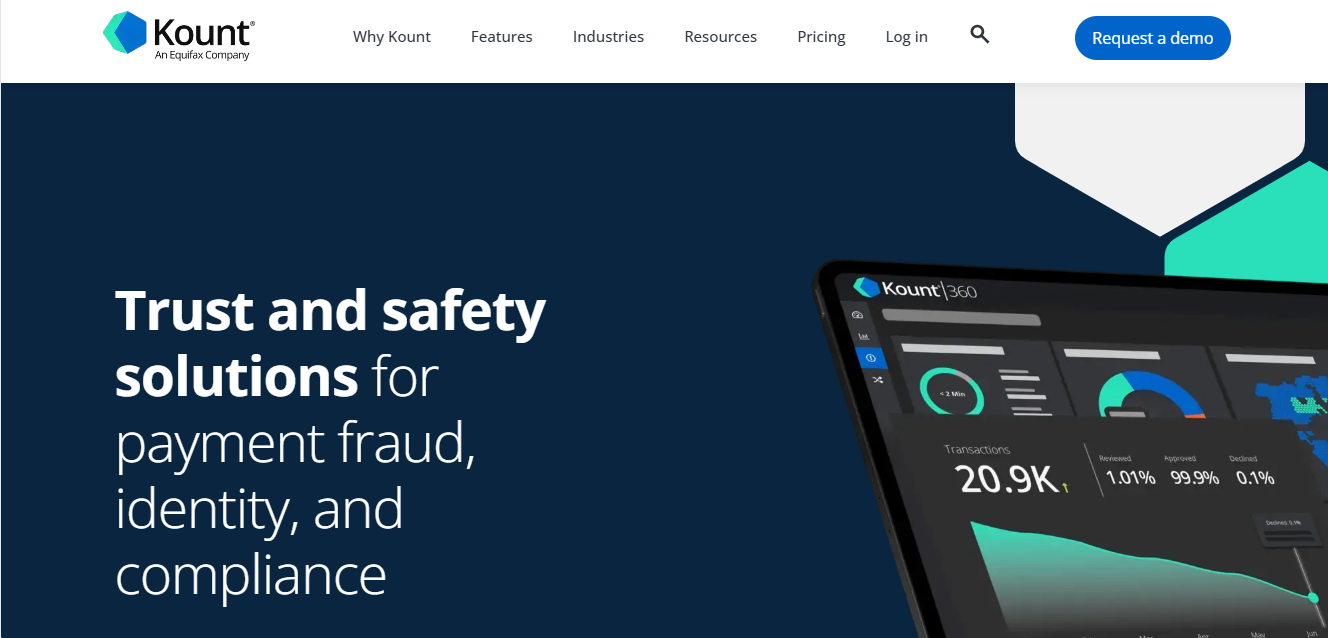
Kount was founded by Brad Wiskirchen, who famously sketched the initial concept for the platform “on the back of a napkin over a sushi lunch.” Since its humble beginnings, Kount has rapidly grown into a leading global fraud detection and prevention solution, serving over 9,000 clients worldwide. In early 2021, the company was acquired by Equifax, further strengthening its position in the enterprise fraud prevention market.
Kount stands out for its innovation and technical expertise, holding 30 patents in fraud detection technologies. The platform specializes in enterprise-level fraud management, providing advanced solutions for risk assessment, payment protection, and account security. Its clients include major brands such as Barclays, PetSmart, Staples, and Chase, demonstrating its capability to handle large-scale, complex transactions while mitigating fraud risk.
The platform uses AI-driven algorithms and machine learning models to analyze transactions, detect suspicious activity in real-time, and adapt to evolving fraud patterns. By leveraging Kount, businesses can protect revenue, reduce chargebacks, and maintain customer trust, making it an essential tool for organizations operating in high-volume, high-risk digital environments.
Pros:
- Supports multiple industries and high-volume transactions.
- Customizable rules for automated fraud prevention.
5. Emailage
Emailage, a specialized solution from LexisNexis, leverages the power of an email address as a critical source of information for fraud detection and risk assessment. By analyzing just a user’s email, Emailage can generate a detailed client profile and assign a risk score, helping businesses make informed decisions about the legitimacy of transactions and user activity.
Originally launched as a startup, Emailage has since been integrated with LexisNexis, a leading cybersecurity and risk management company. This integration allows Emailage to access data from over 30 million fraud occurrences and 5.9 billion digital identifiers annually, providing unmatched coverage and reliability in identifying potential fraud. The platform combines data analytics, machine learning, and risk intelligence to detect suspicious patterns and help businesses prevent losses before they occur.
Emailage serves a variety of industries, including banking, online gaming, travel agencies (OTA), and e-commerce, offering scalable solutions for companies of all sizes. While the company does not publicly list its clients, insiders recognize Emailage as a highly trusted provider in the fraud prevention space. By leveraging this tool, businesses can enhance their risk management strategies, safeguard revenue, and ensure secure customer interactions across digital channels.
Pros:
- Real-time alerts for email-related fraud.
- Part of the LexisNexis Risk Network for seamless integration.
6. ArkOwl
ArkOwl was founded in 2012 by Mike Greiling and Rob Daline, two engineers from GitLab, and became part of NICE Actimize’s platform-as-a-service in 2019. Since its inception, ArkOwl has gained recognition as a powerful fraud prevention and data enrichment tool that helps businesses validate user information and assess risk across digital transactions.
One of ArkOwl’s most appealing features is its ability to extract and verify information from a wide variety of databases, including social networking sites, WHOIS records, webmail providers, and other service platforms. This capability enables businesses to gain accurate insights into user activity, even from new or previously unverified sources.
For example, when examining domain or account information, ArkOwl can perform data enrichment based on email addresses, phone numbers, or IP addresses, helping companies detect suspicious activity before it leads to fraud. By providing real-time verification and actionable insights, ArkOwl enables organizations to reduce risk, improve trust, and streamline fraud detection workflows, making it a valuable tool for industries ranging from e-commerce to financial services.
Pros:
- Live social media data for real-time verification.
- Flexible payment options.
7. Ekata
Ekata is a well-established and trusted fraud detection and identity verification platform that has been helping businesses mitigate risk since its founding in 1997 (formerly known as Whitepages). With decades of experience in digital identity and fraud prevention, Ekata has become a go-to solution for companies seeking accurate, reliable, and scalable verification tools.
The platform provides a comprehensive suite of APIs designed to address different aspects of fraud and identity risk. Its Transaction Risk API evaluates the likelihood of fraudulent activity during online purchases, helping businesses prevent chargebacks and financial losses. The Address Risk API verifies mailing addresses to detect high-risk locations or invalid entries, while the Phone Intelligence API analyzes phone numbers to confirm legitimacy and identify suspicious patterns.
By leveraging these APIs, Ekata enables organizations to assess risk in real-time, prevent fraud before it occurs, and streamline the onboarding process for new customers. Its ability to provide actionable insights across multiple data points makes it a valuable tool for e-commerce, fintech, and other digital industries that rely on secure and trustworthy transactions.
Pros:
- Comprehensive machine learning solutions.
- Suitable for manual transaction analysis.
8. TruValidate
TruValidate is a veteran in iGaming fraud prevention, operating since 2004 and formerly known as TransUnion and Iovation. Despite its name changes over the years, TruValidate has consistently maintained a strong reputation for helping gaming operators detect and prevent fraudulent activities, ensuring safe and secure transactions for both players and businesses.
The platform’s core offering is its device recognition technology, which has become an industry standard for fraud detection in the iGaming sector. By analyzing device fingerprints, TruValidate can accurately identify suspicious activity, track user behavior across multiple accounts, and prevent unauthorized access. This technology helps operators reduce chargebacks, minimize account takeovers, and ensure compliance with regulatory requirements.
In addition to device recognition, TruValidate provides tools that monitor risk in real-time, offering actionable insights that allow gaming operators to make informed decisions and prevent fraud before it impacts their revenue. Its extensive experience, specialized focus on iGaming, and reliable technology make TruValidate a trusted solution for businesses looking to secure their platforms and protect players from fraud.
Pros:
- Native device fingerprinting for better fraud detection.
- Part of the TransUnion ecosystem for streamlined integration.
9. ThreatMetrix
ThreatMetrix is a leading fraud detection and digital identity platform that was founded in Australia in 2005 and later acquired by LexisNexis Risk Solutions, the same parent company that oversees Emailage. Since its acquisition, ThreatMetrix has leveraged LexisNexis’ extensive databases to enhance its fraud prevention capabilities, providing businesses with a robust, data-driven approach to online security.
The platform’s fraud detection and trust evaluation are powered by 78 billion records, allowing ThreatMetrix to analyze patterns and detect anomalies with unmatched precision. On a daily basis, it processes and evaluates over 270 million transactions, helping organizations quickly identify suspicious activity and mitigate risks before fraud can occur. This massive data coverage ensures that businesses can maintain secure transactions, protect revenue, and build trust with their customers.
ThreatMetrix combines advanced device fingerprinting, behavioral analytics, and global digital identity intelligence to deliver actionable insights in real time. By leveraging these features, companies can reduce fraudulent transactions, prevent account takeovers, and ensure compliance with industry regulations. Its highly scalable infrastructure and real-time capabilities make ThreatMetrix a preferred solution for enterprises seeking reliable fraud prevention across e-commerce, financial services, and other digital industries.
Pros:
- Access to the ThreatMetrix Consortium for industry-specific fraud insights.
- Mobile SDK for enhanced mobile channel security.
10. Cybersource

Cybersource is Visa’s in-house fraud prevention and payment security solution, trusted by businesses worldwide to safeguard online transactions. As one of the pioneers in the e-commerce era, Cybersource has long been a leader in online payment processing and fraud detection. Its acquisition of Authorize.net in 2007 further strengthened its capabilities, expanding its reach and enhancing its suite of payment and fraud prevention services.
The platform provides four primary modules designed to combat payment fraud, all powered by Visa’s Decision Manager software. This sophisticated system analyzes patterns, identifies potential risks, and makes real-time decisions to prevent fraudulent transactions. Last year alone, Decision Manager processed and analyzed nearly 2.2 billion transactions, highlighting the platform’s reliability, scalability, and advanced analytical power.
By combining real-time transaction monitoring, risk scoring, and predictive analytics, Cybersource enables businesses to detect suspicious activity before it impacts revenue. Its integration with Visa’s global payment network ensures seamless operations, reduces chargebacks, and protects both merchants and customers. Trusted by enterprises across industries, Cybersource remains a go-to solution for businesses seeking comprehensive payment fraud protection and online transaction security.
Pros:
- Modules for diverse payment methods and fraud prevention.
- Dynamic machine learning models for real-time analysis.
11. FraudHunt
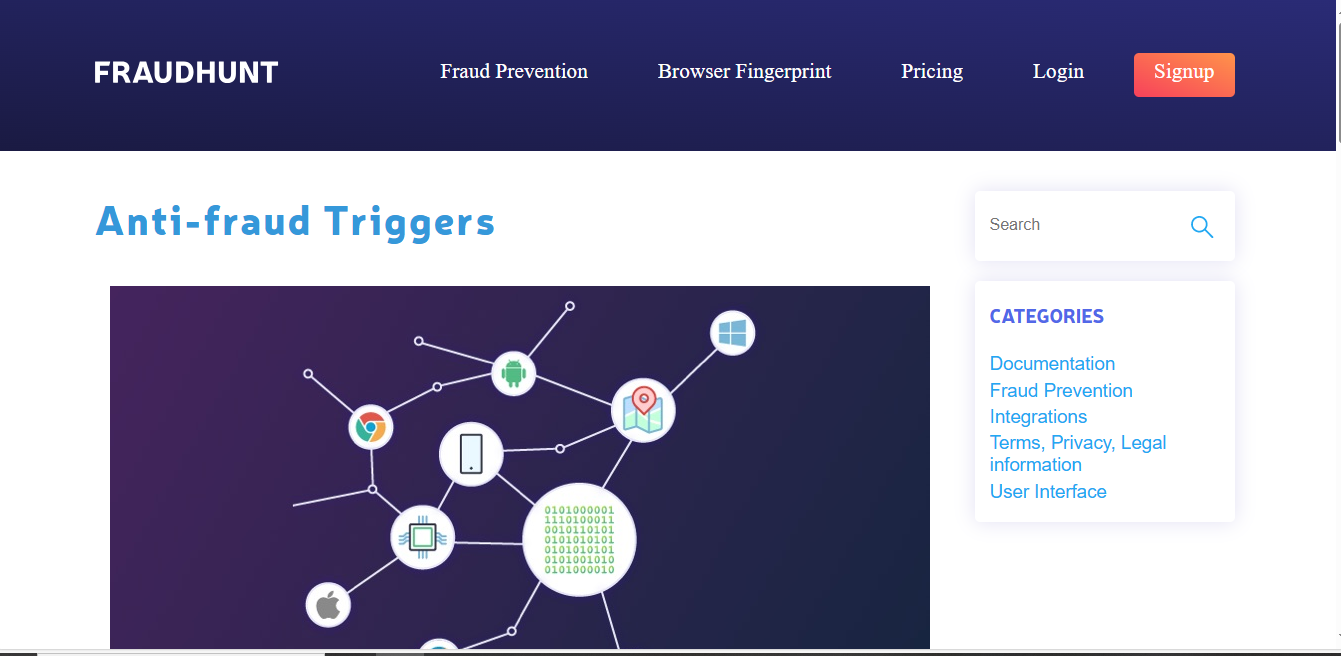
FraudHunt was founded with the goal of providing emerging markets a simple, affordable, and highly effective fraud prevention solution. The founding team, composed of experienced data analysts and developers, leveraged proven methodologies to design a platform that delivers dynamic security and risk management for online marketplaces of all sizes and industries. Its client base includes notable companies such as Crediexpress and DataBrain, highlighting its credibility and effectiveness in real-world applications.
At the heart of FraudHunt’s strategy is its ability to analyze incoming traffic based on risk indicators extracted from device and browser fingerprints. This approach enables the platform to detect suspicious activity, flag potential fraud attempts, and prevent unauthorized transactions in real-time. By focusing on behavioral and technical indicators, FraudHunt ensures that businesses can protect revenue, reduce chargebacks, and maintain customer trust.
In addition to its core fraud prevention capabilities, FraudHunt offers a scalable, adaptable solution suitable for marketplaces and e-commerce platforms of any size. Its combination of affordable pricing, advanced analytics, and robust risk detection mechanisms makes it an ideal choice for businesses looking to secure their online operations without the complexity or cost of enterprise-level solutions.
Pros:
- Competitive pricing and flexible integration.
- Effective bot detection for ATOs and credential stuffing prevention.
12. Accertify
Accertify is a comprehensive end-to-end fraud prevention solution trusted by major enterprises, including American Express, to protect online transactions and customer accounts. With a proven track record spanning over 15 years, Accertify has established itself as one of the longest-standing fraud prevention platforms available today.
In fact, many of its clients were once brick-and-mortar businesses that later expanded into e-commerce and decided to turn to a well-known credit provider for their stability.Accertify Digital Identity is the name of the company’s primary mobile fraud detection tool. The machine learning algorithms consult databases of user behavior statistics from the community and device intelligence to determine how to categorize each user. Along with chargebacks and reputational damage.
The platform offers a full suite of tools designed to mitigate fraud risk, including chargeback management, customer authentication, and Strong Customer Authentication (SCA) optimization. By addressing both preventive and reactive fraud measures, Accertify ensures businesses can minimize revenue loss, reduce operational overhead, and maintain customer trust even when fraudulent activity occurs.
Accertify’s robust infrastructure and advanced analytics allow organizations to analyze transactions in real-time, detect suspicious behavior, and implement adaptive risk strategies. Its integration with global payment networks, combined with dedicated support for complex enterprise requirements, makes it a reliable and scalable solution for businesses looking to secure their digital commerce operations and protect against evolving fraud threats.
Pros:
- Customizable scoring based on risk tolerance.
- Access to Amex’s network for extensive data points.
13. IAS (Integral Ad Science)

Integral Ad Science (IAS), founded in 2009, is a global leader in ad verification and digital advertising quality solutions. The company is renowned for addressing key challenges in the advertising ecosystem, including brand safety, ad fraud, and ad viewability. IAS provides tools and services designed to protect publishers, advertisers, and agencies, ensuring that ad campaigns deliver genuine value while minimizing the risk of fraudulent or non-viewable impressions. The company has collaborated with major industry players such as AOL, Adobe, and Google’s DoubleClick Ad Manager to combat ad fraud and maintain transparency across the digital advertising landscape.
One of IAS’s standout offerings is True Advertising Quality, a service that evaluates and scores both sellers and buyers based on criteria like brand safety, ad fraud, content quality, ad structure, and viewability. This scoring system allows advertisers and agencies to make informed decisions, ensuring their budgets are spent effectively on high-quality, verified inventory. Furthermore, IAS has received MRC accreditation for Sophisticated Invalid Traffic (SIVT) detection, covering both desktop and mobile online traffic, reinforcing its credibility as a trusted ad verification authority.
IAS also provides real-time solutions that deliver certified inventory to buyers, helping advertisers access high-quality, fraud-free ad placements instantly. By combining advanced analytics, machine learning, and industry-leading verification methodologies, IAS enables advertisers to maximize campaign ROI, protect brand reputation, and ensure complete transparency in digital advertising operations.
Pros:
- Industry-leading solutions for ad quality.
- Real-time certification for buyers.
14. White Ops
White Ops, founded in 2012, is a leading cybersecurity and ad fraud prevention company that provides robust protection for digital publishers and advertisers. The company specializes in defending against non-human traffic and sophisticated ad fraud threats, helping the advertising ecosystem maintain transparency and integrity. In 2016, White Ops earned MRC accreditation for Sophisticated Invalid Traffic (SIVT) detection, highlighting its credibility and effectiveness in identifying fraudulent activity.
White Ops’ core offerings include MediaGuard and FraudSensor, two powerful tools designed to detect and block fraudulent traffic while ensuring that publishers can safely monetize their inventory. These solutions have been adopted by major partners, including The TradeDesk, Videology, and TripleLift, demonstrating their industry-leading capabilities in safeguarding ad campaigns from invalid or malicious activity.
By filtering out non-human traffic and preventing targeted forms of ad fraud, White Ops enables publishers to sell inventory confidently without the risk of blocked ads or wasted impressions. Beyond ad tech, White Ops also serves industries such as travel, retail, financial services, and web security, providing comprehensive fraud prevention solutions across multiple sectors. Its combination of advanced analytics, real-time detection, and scalable technology makes White Ops a trusted choice for businesses aiming to protect revenue, improve ROI, and maintain a secure digital advertising environment.
Pros:
- Best-in-class bot detection technology.
- Comprehensive transparency in fraud detection.
15. Pixalate
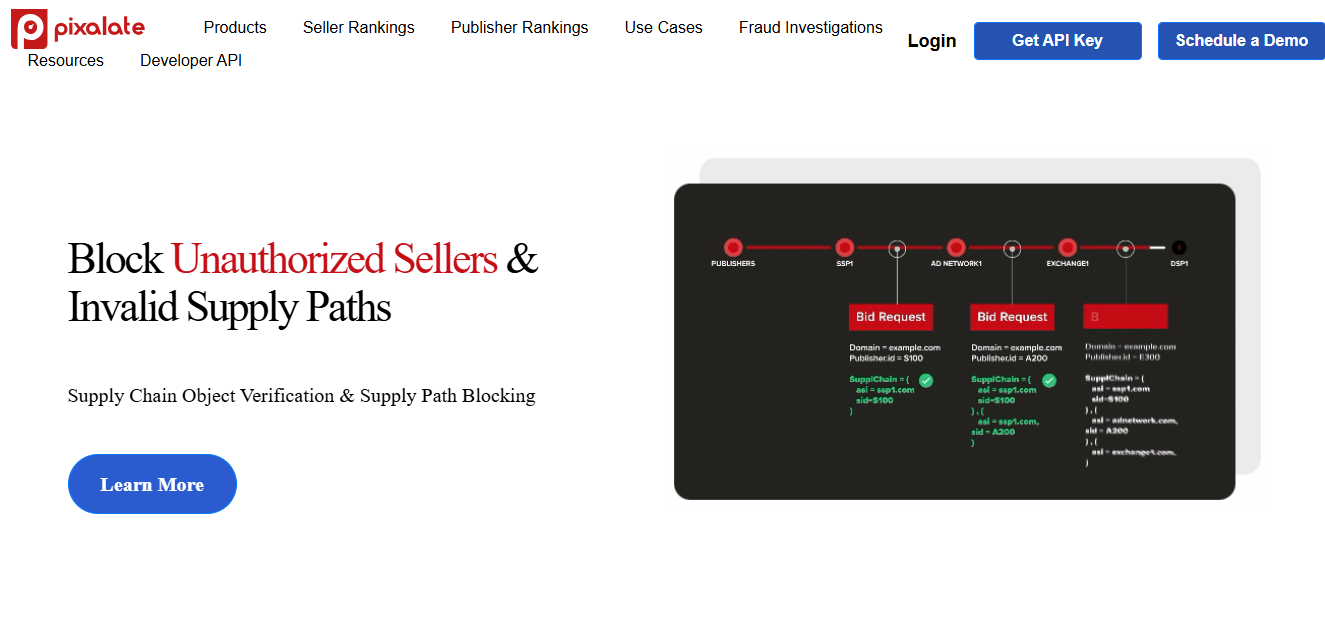
Pixalate is a comprehensive ad fraud detection and prevention company that claims to protect advertisers and publishers from over 15 different types of ad fraud. The platform has established partnerships with notable industry players such as OpenX, Oath, and Mobfox, demonstrating its credibility and widespread adoption across the digital advertising ecosystem.
Pixalate is particularly recognized for being the first company to earn MRC accreditation for detecting and filtering invalid traffic (IVT), setting a benchmark for transparency and reliability in the ad verification industry. As a cross-channel fraud intelligence provider, Pixalate delivers its services across display, app, and video platforms, helping businesses maintain clean, high-quality ad inventory.
By working closely with publishers, Pixalate ensures that non-human traffic is effectively blocked, improving the value of inventory and enhancing overall ad campaign performance. Its advanced analytics, real-time detection capabilities, and cross-platform coverage make it an essential tool for advertisers and publishers seeking to maximize ROI, maintain brand safety, and operate with confidence in the fight against ad fraud.
Pros:
- Feature-rich, cross-channel fraud protection.
- Pre-bid analysis for early fraud detection.
Conclusion
Ad fraud continues to be one of the most pressing challenges in digital advertising, leading to wasted budgets, reduced ROI, and skewed campaign metrics. Investing in ad fraud detection tools is no longer optional—it is essential for advertisers, publishers, and agencies that want to protect their campaigns from fraudulent activity and ensure genuine audience engagement.
Each of the tools highlighted above offers unique capabilities and specialized features to address various types of ad fraud, including click fraud, payment fraud, non-human traffic, and bot detection. From enterprise-grade solutions like Cybersource, Signifyd, and ThreatMetrix to versatile verification platforms such as IAS, Pixalate, and White Ops, these tools provide actionable insights, real-time monitoring, and robust fraud mitigation strategies tailored to different business needs.
Selecting the right ad fraud prevention solution depends on several factors, including industry type, campaign scale, budget, and specific fraud risks. By leveraging these tools effectively, businesses can maximize advertising ROI, safeguard their brand reputation, and ensure that marketing efforts reach real, engaged audiences. In 2026, adopting a comprehensive ad fraud detection strategy is key to staying competitive and maintaining trust in an increasingly complex digital advertising ecosystem.
Frequently Asked Questions (FAQs)
What is ad fraud?
Ad fraud refers to the manipulation of digital advertising metrics like clicks, impressions, and installs to generate fake engagement and revenue.
How do ad fraud tools work?
These tools detect patterns of fraudulent activity, such as bots generating fake clicks, and prevent such activities from impacting ad campaigns.
Why is it important to use ad fraud tools?
Ad fraud tools help protect your advertising budget, ensure genuine user engagement, and increase the ROI of digital ad campaigns.
Which ad fraud tool is the best?
The best tool depends on your specific needs, industry, and budget. Popular choices include SEON, Signifyd, and Kount.
Can ad fraud be completely eliminated?
While it’s challenging to eliminate ad fraud entirely, using the right tools can significantly reduce its impact and protect your ad spend.
