

ChatGPT Is Good. But Is It Good Enough for SEO?
The reality is that elite SEO teams stopped treating AI writers like novelty tools a long time ago. When you’re publishing at scale, competing against authoritative domains, and chasing high-intent keywords worth millions in revenue, “good enough” content is invisible content.
Modern SEO is no longer about generating readable paragraphs. It’s about topical authority, search intent mapping, SERP gap analysis, semantic coverage, entity optimization, internal linking logic, CTR engineering, and content that survives both algorithm updates and AI-content saturation.
That’s where most general AI tools fall apart.
They can write words. But they can’t reliably build ranking systems.
The best-performing brands in 2027 are using specialized AI platforms trained specifically for SEO workflows — tools designed to analyze competitors, identify content gaps, optimize structure for search engines, maintain brand voice consistency, reduce detectable AI patterns, and turn content into a traffic acquisition asset instead of a publishing liability.
We tested more than 30 AI writing platforms to identify the strongest performers for serious SEO operations. The 15 tools in this list were selected based on real-world ranking potential, content quality, semantic depth, optimization features, workflow scalability, AI detection resilience, ease of use, and overall ROI for publishers, agencies, and growth-focused content teams.
Why Is ChatGPT Not Enough for Professional SEO Content?
ChatGPT is excellent at generating fast drafts, brainstorming ideas, and simplifying research. But SEO content in 2027 demands far more than fluent writing. Ranking consistently requires live search intelligence, topical depth, competitive analysis, entity coverage, user-intent alignment, and content systems built around search performance — not just text generation.
This is where ChatGPT starts to break down for serious SEO workflows.
- No real-time keyword intelligence — ChatGPT doesn’t know what’s trending, what keywords are rising, or where search demand is shifting unless external data is manually provided.
- No SERP-level competitive analysis — It cannot analyze the current top-ranking pages, identify content gaps, measure search intent patterns, or reverse-engineer why competitors rank.
- Generic phrasing patterns — Many outputs still contain predictable AI structures, repetitive transitions, and low-originality wording that weakens differentiation and perceived expertise.
- No optimization scoring system — ChatGPT cannot reliably measure whether content is semantically complete, under-optimized, over-optimized, or competitive against existing SERP leaders.
- Limited long-form consistency — As article length increases, structural cohesion, topical memory, entity consistency, and narrative precision often begin to degrade.
- Weak brand voice retention — Maintaining a consistent editorial tone across hundreds of articles requires external systems because ChatGPT does not naturally preserve long-term brand context.
- Hallucinated facts and citations — The model can generate statistics, studies, quotes, or references that sound authoritative but do not actually exist, creating major accuracy risks for publishers.
- No workflow infrastructure for scaling SEO — Modern content operations require clustering, internal linking systems, content briefs, refresh cycles, performance tracking, and editorial collaboration — areas where standalone chat models remain limited.
The platforms below were built specifically to solve these weaknesses. Some focus on SERP intelligence. Others specialize in topical authority, optimization scoring, AI humanization, workflow scaling, or conversion-focused SEO writing. The best ones combine all of these into a single content system designed for ranking, not just writing.
How We Evaluated the Best ChatGPT Alternatives for SEO Content
Choosing the right AI SEO tool is not only about content generation speed. A useful SEO platform must support the complete content lifecycle—from research and planning to optimization, publishing, and performance improvement.
We evaluated these AI writing tools based on the factors that matter most for modern SEO workflows:
Content Quality and Natural Language Output
The tool should create readable, engaging, and expert-level content that requires minimal editing while maintaining a natural brand voice.
SEO Optimization Capabilities
We analyzed whether each platform provides features such as keyword analysis, SERP insights, semantic recommendations, content scoring, and competitor research.
Search Intent Understanding
The best AI SEO tools should help writers create content that matches what users actually want, rather than simply inserting keywords.
Topical Authority Support
Modern SEO requires complete topic coverage. Tools that support content clusters, entity optimization, and semantic depth received higher consideration.
Research Accuracy and Data Reliability
AI tools must reduce misinformation risks by providing accurate information, citations, or research assistance.
Workflow Scalability
We considered how well each platform supports freelancers, agencies, publishers, and enterprise content teams producing content at scale.
Pricing and Overall Value
The final rankings also consider whether the tool provides enough SEO value compared with its cost.
Quick Comparison: The Best ChatGPT Alternatives for SEO Content in 2027
Not every AI writer is built for the same type of SEO workflow. Some tools specialize in SERP optimization and topical authority, while others focus on long-form writing quality, research accuracy, workflow automation, or scalable content production.
The platforms below represent the strongest ChatGPT alternatives for modern SEO teams based on content quality, optimization capabilities, research depth, workflow efficiency, scalability, pricing, and overall ranking potential.
| Tool | Pricing | Best For | Key Strength | SEO Performance | Overall Rating |
|---|---|---|---|---|---|
| Claude | Free / $20/mo | Natural long-form writing | Human-like content quality | 9/10 | ★★★★★ |
| Surfer SEO | $99–$219/mo | SERP optimization | Real-time SEO scoring | 9.5/10 | ★★★★★ |
| Jasper AI | $39–$59/mo | Brand voice scaling | Team workflows + consistency | 8.5/10 | ★★★★★ |
| Writesonic | $16–$99/mo | Fast SEO blog generation | Speed + automation | 8/10 | ★★★★☆ |
| Copy.ai | Free / $49/mo | Marketing workflows | Automation systems | 8/10 | ★★★★☆ |
| Semrush ContentShake | $60/mo + Semrush plan | Existing Semrush users | Keyword ecosystem integration | 8.5/10 | ★★★★☆ |
| Perplexity AI | Free / $20/mo | Research and citations | Source-backed outputs | 8/10 | ★★★★☆ |
| Gemini Advanced | Free / $19.99/mo | Google ecosystem users | Workspace integration | 7.5/10 | ★★★★☆ |
| MarketMuse | $149–custom/mo | Topical authority | Deep content planning | 8.5/10 | ★★★★☆ |
| Rytr | Free / $9/mo | Budget-friendly writing | Low-cost content generation | 7/10 | ★★★☆☆ |
| Frase | $15–$115/mo | Content briefs | SERP-based optimization | 8/10 | ★★★★☆ |
| Copy.ai Workflows | From $49/mo | Multi-channel content teams | Workflow automation | 7.5/10 | ★★★★☆ |
| WriterZen | $23–$79/mo | Keyword clustering | Topic discovery | 7.5/10 | ★★★☆☆ |
| Koala Writer | $9–$350/mo | Bulk SEO publishing | Affordable scaled content | 7/10 | ★★★☆☆ |
| Microsoft Copilot | Free / Microsoft 365 | Office workflow users | Productivity integration | 7/10 | ★★★★☆ |
The right platform depends on your actual SEO workflow.
- Need stronger writing quality? Claude performs exceptionally well.
- Need live optimization scoring? Surfer SEO and Frase are stronger choices.
- Need scalable team workflows? Jasper AI and Copy.ai stand out.
- Need research-backed content with citations? Perplexity AI performs better than most chat-based tools.
- Need affordable bulk publishing? Koala Writer and Rytr provide lower-cost scaling options.
The deeper reviews below break down where each tool excels, where it struggles, and which type of SEO team benefits most from using it.
Which ChatGPT Alternative Is Best for SEO?
The best ChatGPT alternative depends on your SEO goal:
| SEO Goal | Best Tool |
|---|---|
| Best overall AI writing quality | Claude |
| Best SEO optimization | Surfer SEO |
| Best for enterprise content teams | Jasper AI |
| Best SEO research assistant | Perplexity AI |
| Best keyword and content planning | MarketMuse |
| Best affordable SEO writer | Rytr |
| Best for bulk affiliate content | Koala Writer |
| Best for Semrush users | Semrush ContentShake AI |
For most SEO professionals, the strongest workflow is not replacing ChatGPT with one tool. Instead, combine specialized platforms for research, writing, optimization, and content management.
The 15 Best ChatGPT Alternatives for SEO Content in 2027
#1 — Claude

The Best AI Writer for Human-Like SEO Content
Best For: Long-form SEO articles, thought leadership, editorial content, E-E-A-T-focused publishing
Pricing: Free plan available; Pro starts at $20/month
Overview
Claude has quietly become the preferred writing engine for many serious SEO teams. While most AI tools focus on speed and automation, Claude prioritizes writing quality, contextual understanding, and natural language flow. The result is content that sounds significantly less robotic than typical AI-generated copy.
For long-form SEO content, this matters enormously. Google’s ranking systems increasingly reward depth, expertise, clarity, and topical relevance. Claude performs exceptionally well in all four areas, especially when creating informational content, technical explainers, SaaS blog posts, and authority-building articles.
Its large context window also allows writers to work on extremely long documents without losing consistency — a major advantage over traditional chat-based AI systems.
Key Features
- Large context window for long-form article generation
- Strong natural-language quality with fewer repetitive AI patterns
- Excellent contextual memory across long articles
- Handles nuanced prompts and layered instructions effectively
- Strong for semantic SEO and entity-rich content
- Reliable tone consistency for brand publishing
- Effective for rewriting robotic AI drafts into more natural copy
- Performs well for technical and expert-level topics
Pros
- Produces some of the most human-sounding AI content available
- Exceptional readability and paragraph flow
- Handles complex SEO briefs with high accuracy
- Lower AI-detection footprint than many competing tools
- Strong for authority content and editorial-style writing
- Excellent for refreshing outdated content at scale
- Better contextual consistency than ChatGPT in long-form workflows
Cons
- No built-in SEO scoring or keyword optimization tools
- Lacks SERP analysis and competitor tracking
- Still capable of hallucinating statistics or citations
- Requires external SEO platforms for full optimization workflows
- Limited workflow automation compared to enterprise SEO suites
Final Verdict
Claude is currently the strongest pure writing model for SEO content quality. It does not replace dedicated SEO software, but when paired with tools like Surfer SEO or Semrush, it becomes one of the most powerful content production systems available in 2027.
For publishers focused on quality-first SEO, Claude is extremely difficult to beat.
#2 — Surfer SEO

The Best AI SEO Optimization Platform
Best For: SEO agencies, in-house content teams, publishers scaling organic traffic
Pricing: Starts at $99/month
Overview
Surfer SEO is not just an AI writer — it is a full SEO optimization engine built specifically for ranking content. Instead of guessing whether an article is optimized, Surfer analyzes top-performing SERP results and provides real-time recommendations while you write.
This makes it one of the most practical tools for modern SEO workflows. Rather than relying on intuition alone, content teams can use actual ranking data to structure articles, optimize topical coverage, and improve semantic relevance.
For websites publishing content at scale, Surfer dramatically reduces optimization guesswork.
Key Features
- Real-time SEO content scoring
- SERP-based keyword and NLP analysis
- Competitor content comparison
- Content Editor with optimization recommendations
- Topical Map feature for authority building
- AI-generated SEO article workflows
- Internal linking and structure guidance
- Multi-language support
Pros
- Excellent real-time optimization system
- Reduces under-optimized content risks
- Strong topical authority planning tools
- Integrates well with AI writers like Claude and Jasper
- Helpful for scaling SEO workflows efficiently
- Provides measurable optimization benchmarks
- Strong keyword and semantic analysis capabilities
Cons
- Higher pricing than most writing-only tools
- Recommendations can become formulaic if overused
- Content score alone does not guarantee rankings
- Requires human editorial oversight for quality control
- AI-generated articles may still need refinement
Final Verdict
Surfer SEO remains one of the most important tools in modern content optimization. It is especially valuable for SEO teams focused on measurable ranking improvements rather than simply generating content faster.
If Claude is the writing engine, Surfer is the optimization layer that helps transform strong writing into search-competitive content.
#3 — Jasper AI
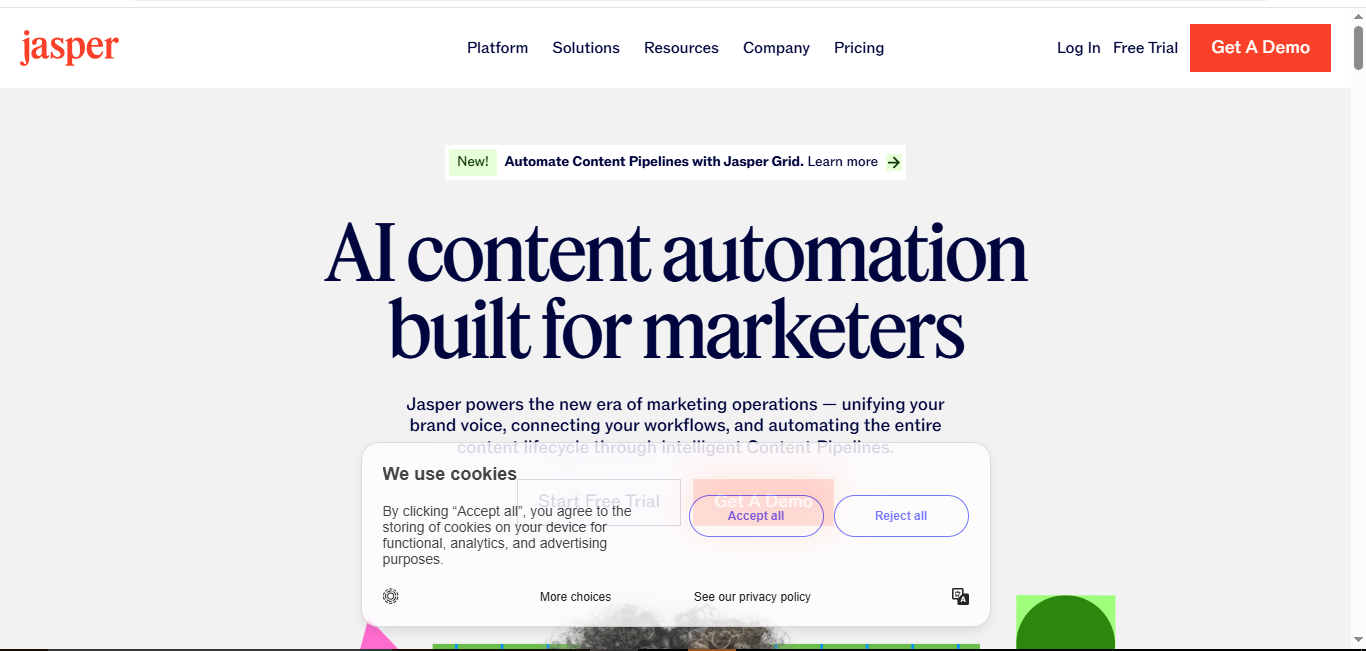
The Best AI Platform for Brand Voice and Content Scaling
Best For: Agencies, enterprise teams, multi-writer editorial operations
Pricing: Starts at $39/month
Overview
Jasper AI was one of the earliest AI writing platforms built specifically for marketing workflows, and it remains highly relevant because of its brand voice and collaboration capabilities.
Unlike lightweight AI chat tools, Jasper is designed for organizations managing large-scale content operations across blogs, ads, landing pages, email campaigns, and social channels. Its biggest strength is consistency. Teams can train Jasper to follow specific tone guidelines, messaging structures, and brand rules across thousands of content assets.
For companies scaling content production aggressively, this consistency becomes extremely valuable.
Key Features
- Brand Voice training system
- SEO-focused content templates
- Team collaboration workflows
- Multi-channel marketing content generation
- Integration with SEO platforms
- Long-form assistant mode
- Campaign-based content organization
- AI image generation support
Pros
- Excellent for maintaining consistent brand tone
- Strong workflow management for larger teams
- Useful template ecosystem for marketers
- Good scalability for agencies and enterprises
- Integrates smoothly with SEO optimization tools
- Faster campaign production workflows
Cons
- More expensive than many competitors
- Output quality depends heavily on prompt quality
- Can still produce formulaic content structures
- Requires onboarding time to maximize brand voice performance
- Less natural writing quality than Claude in many cases
Final Verdict
Jasper excels when content consistency matters more than raw writing creativity. It is particularly effective for agencies, SaaS companies, and marketing teams managing large editorial calendars across multiple channels.
For scaling branded SEO content, Jasper remains one of the strongest enterprise-focused AI platforms available.
#4 — Writesonic

The Fastest AI SEO Writer for Content Production
Best For: Bloggers, marketers, startups, small SEO teams
Pricing: Starts at $16/month
Overview
Writesonic focuses heavily on speed, accessibility, and real-time content generation. Its Chatsonic system integrates live web search capabilities, helping solve one of the biggest limitations of traditional AI models: outdated information.
This makes Writesonic particularly useful for trend-driven content, rapidly changing industries, and fast-moving marketing topics.
While it does not match Claude’s writing sophistication, it performs well for fast SEO drafting workflows where efficiency matters more than editorial polish.
Key Features
- Real-time web search integration
- AI article generation workflows
- SEO-focused templates
- Product description and ad copy generation
- Multi-language support
- AI chatbot functionality
- Landing page generation tools
- Workflow automation features
Pros
- Extremely fast content production
- Helpful for breaking writer’s block
- Real-time search improves information freshness
- Beginner-friendly interface
- Affordable entry-level pricing
- Good for short-to-medium SEO articles
Cons
- Output quality can vary significantly
- Long-form content often needs heavy editing
- Less nuanced than premium AI writers
- Optimization depth is weaker than Surfer or Frase
- Higher-tier pricing scales quickly
Final Verdict
Writesonic is one of the best speed-focused AI platforms for marketers who prioritize rapid publishing workflows. It may not produce elite editorial content out of the box, but it offers strong efficiency for smaller teams managing consistent publishing schedules.
#5 — Copy.ai

The Best AI Workflow Automation Tool for Marketing Teams
Best For: Agencies, multi-channel marketers, workflow automation
Pricing: Free plan available; paid plans start at $49/month
Overview
Copy.ai has evolved from a simple AI copywriting tool into a workflow-driven marketing automation platform. Instead of focusing only on article generation, it helps teams automate repetitive content tasks across blogs, emails, social media, sales funnels, and outbound campaigns.
Its biggest strength is operational efficiency. Marketing teams can build repeatable workflows that reduce manual content production time while maintaining consistency across channels.
For SEO-focused organizations managing high publishing volumes, Copy.ai works best as a content operations layer rather than a standalone writing engine.
Key Features
- Workflow automation builder
- Multi-step content generation systems
- Brand voice customization
- Blog, email, and ad templates
- Multi-language support
- Team collaboration features
- Automated campaign workflows
- AI-powered content ideation tools
Pros
- Excellent for automating repetitive marketing tasks
- Strong workflow scalability for agencies
- Helpful for multi-channel content distribution
- Reduces operational bottlenecks significantly
- User-friendly interface for non-technical teams
- Good template ecosystem for marketers
Cons
- Long-form SEO writing quality is inconsistent
- Requires significant prompt refinement for advanced content
- SEO optimization features are limited
- Less effective for technical authority content
- Workflow setup can take time initially
Final Verdict
Copy.ai is ideal for marketing teams that value automation and operational speed. While it is not the strongest pure SEO writer, it excels at streamlining content systems across multiple platforms and campaigns.
For agencies managing large-scale content operations, it can significantly improve workflow efficiency.
#6 — Semrush ContentShake AI

The Best SEO Writing Assistant for Semrush Users
Best For: SEO professionals, content strategists, Semrush subscribers
Pricing: Starts at $60/month plus Semrush subscription
Overview
ContentShake AI extends the Semrush ecosystem directly into content creation. Instead of separating keyword research, competitor analysis, and writing workflows, it combines them into a unified SEO publishing environment.
This integration is its biggest advantage. Teams already using Semrush can generate keyword-informed content briefs, analyze SERPs, and optimize articles without constantly switching tools.
For structured SEO workflows, this creates major efficiency gains.
Key Features
- Semrush keyword database integration
- AI-powered content brief generation
- SERP-driven optimization suggestions
- Topic and headline recommendations
- Competitor analysis support
- Workflow integration with Semrush tools
- SEO scoring assistance
- Content ideation system
Pros
- Excellent integration with existing SEO workflows
- Saves significant keyword research time
- Helpful optimization recommendations
- Strong for content planning and briefs
- Good balance between SEO and AI writing
- Useful for scaling editorial workflows
Cons
- Most valuable only for Semrush users
- Higher total cost when combined with Semrush plans
- Writing quality trails Claude for long-form content
- Limited creativity for thought leadership writing
- Some outputs still require strong editorial refinement
Final Verdict
ContentShake AI is one of the most practical AI additions for SEO teams already operating inside the Semrush ecosystem. It streamlines the transition from keyword research to publishing while keeping optimization data centralized.
For existing Semrush users, it is one of the easiest productivity upgrades available.
#7 — Perplexity AI
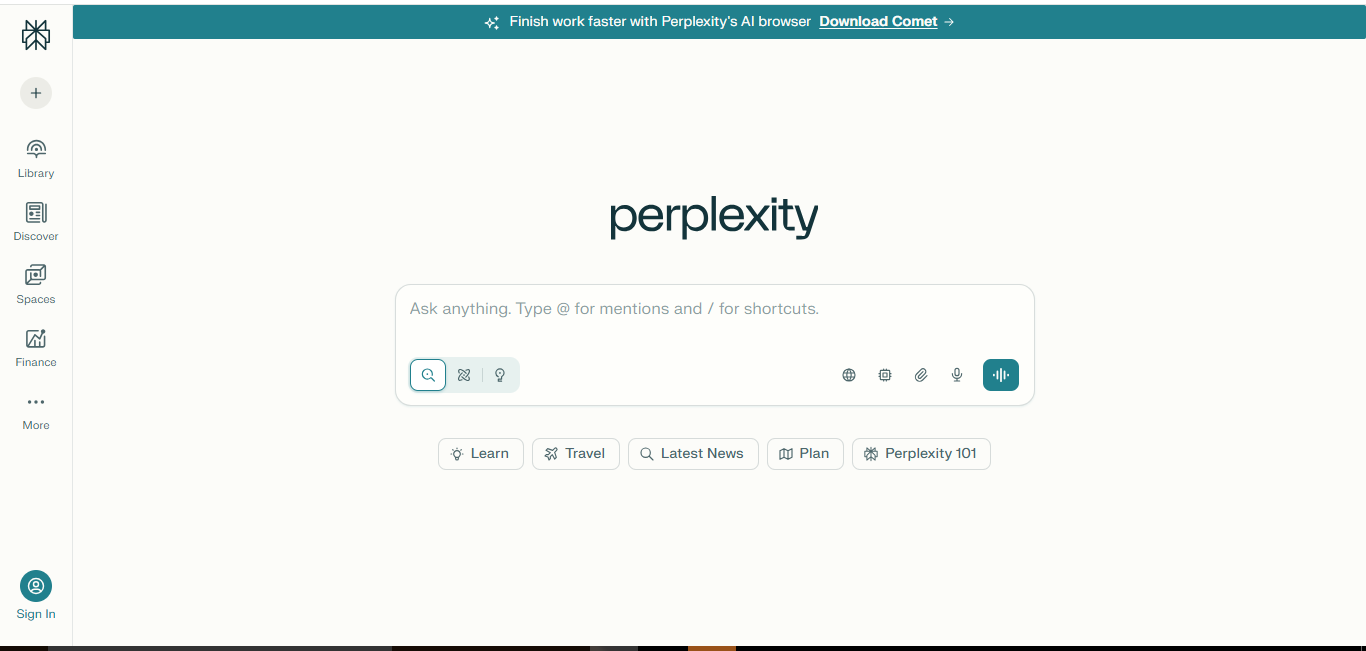
The Best AI Research Assistant for SEO Writers
Best For: Researchers, journalists, SEO writers needing source-backed information
Pricing: Free plan available; Pro starts at $20/month
Overview
Perplexity AI approaches AI differently than traditional writing assistants. Rather than acting primarily as a content generator, it functions as a research-focused answer engine with live web access and source citations.
This makes it incredibly valuable for SEO teams producing fact-heavy content, trend analysis, statistical research, and current-event coverage.
In modern SEO, content accuracy increasingly matters. Perplexity helps reduce hallucinations and improves trustworthiness by surfacing verifiable sources directly inside responses.
Key Features
- Real-time web research
- Source-backed citations
- Current-event discovery
- AI-powered research summaries
- Fast answer engine interface
- Follow-up conversational research
- Multi-source information synthesis
- Academic and web citation support
Pros
- Excellent research accuracy compared to standard AI tools
- Reduces hallucination risks significantly
- Ideal for collecting statistics and references
- Extremely fast research workflows
- Helpful for validating AI-generated claims
- Strong companion tool for Claude or Jasper
Cons
- Not a complete SEO writing platform
- Limited long-form content generation quality
- Minimal optimization features
- Workflow tools are relatively limited
- Requires another AI writer for polished content creation
Final Verdict
Perplexity AI is not designed to replace professional AI writers. Instead, it acts as a high-speed research layer that dramatically improves information accuracy and source verification.
For SEO teams prioritizing factual trustworthiness and research efficiency, it is one of the most valuable supporting tools available.
#8 — Gemini Advanced

The Best AI Assistant for Google Workspace Users
Best For: Google Workspace teams, productivity-focused businesses, collaborative environments
Pricing: Free version available; Advanced starts at $19.99/month
Overview
Gemini Advanced is deeply integrated into Google’s ecosystem, making it especially useful for businesses already operating heavily inside Gmail, Docs, Sheets, and Drive.
Its biggest advantage is convenience. Teams can draft, summarize, brainstorm, and organize content without constantly switching between external platforms.
While its SEO-specific capabilities remain limited compared to dedicated optimization tools, Gemini has improved significantly in writing quality and contextual understanding.
Key Features
- Native Google Workspace integration
- AI support inside Docs and Gmail
- Real-time search integration
- Multimodal AI capabilities
- Content summarization tools
- Spreadsheet and productivity assistance
- Collaborative workflow support
- Context-aware AI assistance
Pros
- Excellent productivity integration
- Convenient for collaborative teams
- Helpful for content drafting and organization
- Strong real-time information access
- Useful multimodal capabilities
- Works naturally within Google workflows
Cons
- SEO optimization features remain limited
- Writing quality still trails Claude in many areas
- Less effective for advanced editorial content
- SERP analysis tools are minimal
- Best value depends on existing Google ecosystem usage
Final Verdict
Gemini Advanced works best as a productivity-focused AI assistant rather than a specialized SEO platform. For teams deeply integrated into Google Workspace, it improves operational efficiency substantially.
However, serious SEO teams will still require dedicated optimization and strategy tools alongside it.
#9 — MarketMuse

The Best AI Platform for Topical Authority Strategy
Best For: Enterprise SEO teams, authority-site builders, content strategists
Pricing: Starts at $149/month
Overview
MarketMuse focuses less on writing speed and more on strategic content intelligence. Its core value lies in helping websites build topical authority by identifying coverage gaps, content opportunities, and competitive weaknesses.
Instead of optimizing isolated articles, MarketMuse encourages ecosystem-level content planning — a strategy increasingly important for modern SEO performance.
For publishers competing in difficult niches, this strategic depth can create significant ranking advantages over time.
Key Features
- Topic modeling and authority analysis
- Content gap identification
- Competitive authority benchmarking
- Detailed AI-generated content briefs
- SERP-based optimization insights
- Content inventory analysis
- ROI forecasting tools
- Strategic content planning support
Pros
- Exceptional for topical authority building
- Advanced strategic SEO insights
- Strong content gap analysis capabilities
- Excellent briefing system for writers
- Useful for long-term organic growth planning
- Valuable for enterprise-scale SEO operations
Cons
- Expensive for smaller creators
- Steeper learning curve than most AI tools
- More strategy-focused than writing-focused
- Requires complementary AI writing tools
- Overkill for small blogs or niche sites
Final Verdict
MarketMuse is one of the most sophisticated content intelligence platforms available today. It is designed for organizations focused on dominating competitive search verticals through strategic authority building.
For enterprise SEO operations, it can become a major competitive advantage.
#10 — Rytr

The Best Budget AI Writer for Beginners and Freelancers
Best For: Freelancers, beginners, students, solopreneurs on a tight budget
Pricing: Free plan available; paid plans start at $9/month
Overview
Rytr is designed for affordability and simplicity. Unlike premium AI writing platforms focused on enterprise workflows or advanced SEO systems, Rytr targets users who need fast content generation without a steep learning curve or expensive subscription.
Its interface is lightweight, beginner-friendly, and optimized for short-form content production. While it can generate blog drafts and marketing copy reasonably well, it lacks the depth, sophistication, and optimization capabilities required for highly competitive SEO environments.
For entry-level users, however, it remains one of the most accessible AI writing tools available.
Key Features
- Affordable entry-level pricing
- Multiple tone customization options
- Blog and marketing content templates
- Multi-language support
- AI paragraph and outline generation
- Built-in plagiarism checker
- Simple UI for beginners
- Fast short-form content generation
Pros
- Extremely budget-friendly
- Very easy to use for beginners
- Good for quick drafting tasks
- Helpful for social media and email copy
- Lightweight interface with minimal complexity
- Strong value for casual creators
Cons
- Long-form SEO quality is inconsistent
- Limited contextual depth compared to premium AI tools
- No built-in SEO optimization system
- Content often requires heavy editing
- Weak for authority or expert-level writing
- Not suitable for enterprise workflows
Final Verdict
Rytr is a solid entry-level AI writer for users prioritizing affordability over advanced SEO performance. It works best for lightweight marketing tasks, quick drafts, and beginner experimentation.
However, serious SEO publishers will likely outgrow it quickly as content quality and optimization demands increase.
#11 — Frase

The Best AI Tool for SEO Content Briefs and Research
Best For: SEO writers, bloggers, content managers, research-focused workflows
Pricing: Starts at $15/month
Overview
Frase has built a strong reputation as one of the most efficient SEO research and briefing tools available. Instead of focusing primarily on AI writing quality, Frase specializes in SERP analysis, question extraction, and optimization guidance.
Its biggest advantage is speed. Writers can quickly generate comprehensive content briefs by analyzing top-ranking pages, People Also Ask questions, competitor structures, and related search intent patterns.
This dramatically reduces research time and helps teams produce more search-aligned articles.
Key Features
- SERP-based content brief generation
- Competitor content analysis
- People Also Ask extraction
- SEO optimization scoring
- AI-assisted drafting workflows
- Question and topic clustering
- Research automation tools
- Outline generation system
Pros
- Excellent for reducing research time
- Strong content brief generation capabilities
- Helpful SERP-driven optimization guidance
- Affordable compared to many SEO suites
- Useful for structured SEO workflows
- Great companion tool for Claude or Jasper
Cons
- Writing quality is average compared to premium AI writers
- User interface feels dated in some areas
- Advanced AI features require higher-tier plans
- Optimization recommendations can become repetitive
- Less effective for highly creative content
Final Verdict
Frase is one of the best research-focused SEO tools for content writers who want faster workflows and stronger article structures. While it is not the strongest standalone writing platform, it excels as a strategic briefing and optimization layer.
Combined with a high-quality AI writer, Frase becomes extremely powerful for scalable SEO publishing.
#12 — Koala Writer

The Best AI Writer for Bulk Affiliate Content
Best For: Affiliate marketers, niche-site operators, bulk publishing workflows
Pricing: Starts at $9/month
Overview
Koala Writer is built for speed, scale, and affordability. It targets affiliate marketers and niche-site builders who need large volumes of SEO-focused content without enterprise-level pricing.
Unlike premium editorial AI systems, Koala prioritizes efficient content generation over refined prose. Its outputs are functional, reasonably optimized, and designed for high-volume publishing environments such as affiliate sites, product review hubs, and informational content networks.
For budget-conscious publishers, this balance between speed and affordability is highly attractive.
Key Features
- Bulk SEO article generation
- Real-time SERP-informed writing
- Affiliate review article workflows
- Keyword-focused content generation
- Amazon affiliate integration support
- Long-form blog generation tools
- Outline automation features
- WordPress publishing support
Pros
- Excellent value for high-volume publishing
- Fast article production workflows
- Useful for affiliate and comparison content
- Affordable scaling options
- Better SEO alignment than many cheap AI tools
- Moderate editing burden compared to budget competitors
Cons
- Writing style can feel formulaic
- Limited originality for thought leadership content
- Weak brand voice consistency
- Not ideal for premium editorial publishing
- Higher factual verification needs
- Less nuanced than Claude or Jasper
Final Verdict
Koala Writer is highly effective for the specific audience it targets: affiliate marketers and niche-site publishers focused on scalable content production.
It is not designed for sophisticated editorial publishing, but for budget-driven SEO operations, it offers one of the strongest price-to-output ratios available.
#13 — Microsoft Copilot

The Best AI Productivity Assistant for Microsoft 365 Users
Best For: Enterprise teams, business professionals, Microsoft ecosystem users
Pricing: Free version available; included with Microsoft 365 plans
Overview
Microsoft Copilot is less of a specialized SEO platform and more of a productivity-focused AI assistant deeply integrated into the Microsoft ecosystem.
Its biggest advantage is workflow convenience. Users can generate drafts, summarize meetings, create reports, organize spreadsheets, and manage communications directly inside Word, Excel, Outlook, Teams, and PowerPoint.
For businesses already operating heavily inside Microsoft 365, Copilot significantly reduces repetitive administrative work.
Key Features
- Native Microsoft 365 integration
- AI support inside Word and Outlook
- Meeting summarization tools
- Spreadsheet and data assistance
- Bing-powered web integration
- Enterprise security infrastructure
- Productivity workflow automation
- Document drafting support
Pros
- Excellent ecosystem integration
- Improves productivity across multiple workflows
- Helpful for document organization and communication
- Strong enterprise-grade security features
- Useful for collaborative business environments
- Convenient for Office-heavy teams
Cons
- Weak SEO-specific optimization features
- Writing quality trails premium AI writers
- Limited SERP and keyword intelligence
- Less effective for creative long-form publishing
- Best value depends on existing Microsoft subscriptions
Final Verdict
Microsoft Copilot is best viewed as a business productivity multiplier rather than a dedicated SEO content platform. It delivers the most value for organizations deeply integrated into Microsoft’s ecosystem.
For pure SEO publishing, however, it still requires specialized optimization and writing tools alongside it.
#14 — DeepSeek V3.2

The Best Low-Cost AI Model for Scalable Content Workflows
Best For: Developers, cost-conscious teams, API-driven publishing systems
Pricing: Free web access; API pricing significantly lower than premium competitors
Overview
DeepSeek has rapidly emerged as one of the most disruptive AI models in the market because of its unusually strong price-to-performance ratio. Its writing and reasoning capabilities often rival significantly more expensive models, making it attractive for high-volume content systems.
For developers and technically capable SEO teams, DeepSeek offers scalable AI infrastructure at dramatically lower operating costs.
Its open architecture also creates opportunities for custom workflows and fine-tuned implementations.
Key Features
- Low-cost API access
- Strong reasoning and instruction-following
- Multilingual content generation
- Open-source architecture support
- High-volume workflow scalability
- Long-form content generation
- Developer-friendly integration options
- Cost-efficient enterprise deployment potential
Pros
- Outstanding price-to-quality ratio
- Strong reasoning capabilities for structured content
- Excellent for high-volume API workflows
- Lower operational cost than many competitors
- Strong multilingual performance
- Flexible for custom integrations
Cons
- Limited native SEO functionality
- Requires technical expertise for advanced workflows
- Marketing-focused writing is less refined
- Enterprise privacy concerns for some organizations
- Smaller ecosystem compared to OpenAI or Anthropic
Final Verdict
DeepSeek is one of the most important emerging AI models for scalable publishing operations. Its affordability and performance make it especially attractive for technically advanced teams managing large content systems.
For API-focused SEO workflows, it offers exceptional economic efficiency compared to premium AI providers.
How SEO Professionals Use AI Tools in Their Content Workflow
Professional SEO teams rarely depend on one AI platform. Instead, they assign different tasks to specialized tools.
A typical AI-powered SEO workflow looks like this:
Step 1: Keyword Research and Topic Discovery
SEO teams use tools like Semrush, MarketMuse, or Surfer SEO to identify valuable topics, search intent, and content gaps.
Step 2: Research and Information Gathering
Research-focused AI assistants like Perplexity AI help collect statistics, references, and current information.
Step 3: Content Creation
AI writing models such as Claude help transform research into detailed, human-readable articles.
Step 4: SEO Optimization
Platforms like Surfer SEO and Frase analyze content structure, semantic coverage, headings, and keyword opportunities.
Step 5: Human Editing and Experience Enhancement
The final step requires human expertise—adding examples, personal insights, original data, and brand-specific knowledge.
AI improves the process, but strategic human input remains the key factor behind successful SEO content.
How to Choose the Right ChatGPT Alternative for SEO Content?
The best AI platform depends entirely on your SEO workflow, publishing goals, team size, and content strategy. Some tools specialize in writing quality, while others focus on optimization, automation, research, or topical authority.
Choosing the wrong platform usually leads to one of two problems: content that reads well but never ranks, or content that ranks temporarily but feels robotic and low quality.
The frameworks below make the decision process much clearer.
Choose Claude If…
- Writing quality is your highest priority
- You publish long-form authority content
- You care about E-E-A-T signals and editorial depth
- You create technical, medical, SaaS, legal, or thought leadership content
- You want AI content that sounds less robotic and more human
- You already use separate SEO tools for keyword research and optimization
Claude performs exceptionally well when content quality matters more than workflow automation. It is currently one of the strongest AI writing engines for producing nuanced, readable, expert-style articles.
Choose Surfer SEO If…
- Rankings and traffic growth are your main KPIs
- You want real-time SEO optimization guidance
- You publish content at scale every month
- You rely heavily on data-driven SEO workflows
- You want competitor-based content scoring
- You need topical authority mapping and semantic optimization
Surfer SEO is ideal for teams that prioritize measurable SEO performance. Instead of guessing whether content is optimized, writers receive live recommendations based on actual SERP analysis.
Choose Jasper AI If…
- You manage multiple writers or content teams
- Brand voice consistency is critical
- You produce content across blogs, ads, emails, and landing pages
- You need structured collaboration workflows
- Your organization publishes large volumes of marketing content
Jasper is less about pure writing quality and more about scalable content operations. It works especially well for agencies, SaaS companies, and enterprise marketing departments.
Choose Writesonic or Copy.ai If…
- Speed and affordability matter most
- You need fast first drafts
- Your team operates on a smaller budget
- You publish across multiple channels
- You want simple AI workflows without enterprise complexity
These tools are strong mid-tier options for marketers who need practical AI assistance without premium-level pricing.
Choose Frase + Claude If…
- You want one of the strongest quality-to-cost SEO workflows
- You begin every article with SERP research and structured briefs
- You are a freelancer, niche-site operator, or small SEO team
- You prioritize research depth before drafting content
This combination is extremely effective because Frase handles SERP analysis and optimization while Claude focuses on high-quality writing execution.
The Best SEO Teams Rarely Use One Tool
High-performing SEO teams in 2026 rarely depend on a single AI platform. Instead, they combine specialized tools for different stages of the workflow.
A common modern stack looks like this:
| Workflow Stage | Recommended Tool | Primary Purpose |
|---|---|---|
| Research | Perplexity AI | Statistics, citations, live web data |
| Writing | Claude | Long-form content generation |
| Optimization | Surfer SEO | SERP analysis and SEO scoring |
| Strategy | MarketMuse | Topical authority planning |
| Workflow Scaling | Jasper AI | Team collaboration and brand consistency |
The competitive advantage no longer comes from using AI alone. It comes from combining the right tools into a structured SEO publishing system.
Red Flags to Watch for in AI SEO Tools
Not every AI platform delivers meaningful SEO value. Many tools rely heavily on marketing hype while producing generic, low-performing content underneath.
Understanding these warning signs can prevent expensive mistakes.
AI Content Quality Red Flags
Low-quality AI tools often produce content with obvious structural patterns and weak informational depth.
Common indicators include:
- Repetitive sentence structures
- Excessive em dashes and filler transitions
- Generic introductions and conclusions
- Identical article structures across topics
- Thin topical coverage
- Overuse of rhetorical questions
- Fake statistics without citations
- Keyword stuffing disguised as optimization
If the content sounds predictable, generic, or obviously machine-written, rankings usually suffer over time.
SEO Optimization Red Flags
Some tools advertise “SEO optimization” while offering little more than outdated keyword density recommendations.
Major warning signs include:
- No live SERP analysis
- Outdated keyword volume data
- No search intent classification
- Weak semantic SEO capabilities
- No entity optimization support
- No topical clustering features
- No competitor content analysis
- Lack of CMS integrations
Modern SEO requires semantic relevance, topical authority, and search-intent alignment — not just keyword repetition.
Business and Pricing Red Flags
The tool itself is only part of the equation. Reliability, scalability, and support matter equally.
Watch for:
- No free trial or transparent demo
- Aggressive pricing increases at scale
- Weak customer support systems
- Unclear data privacy policies
- Limited export or workflow integrations
- Hidden API usage costs
- Poor onboarding documentation
For agencies and enterprise teams, these operational issues become serious scaling problems.
How Is AI SEO Content Changing in 2027?
The SEO landscape is evolving faster than most publishers realize. AI content generation is no longer the competitive advantage by itself. The real advantage now comes from quality, authority, research depth, and workflow sophistication.
Several major trends are reshaping how SEO content performs.
1. AI Visibility Is Becoming a New Traffic Layer
Search behavior is shifting beyond traditional Google rankings.
Users increasingly ask platforms like ChatGPT, Perplexity AI, and Google AI Overviews for recommendations instead of clicking standard search results.
This creates a new optimization layer where brands compete for AI-generated mentions, citations, and recommendations.
SEO is no longer only about blue links.
2. E-E-A-T Signals Matter More Than Ever
Google’s focus on expertise, trustworthiness, and content authenticity continues to intensify.
Thin AI-generated articles with generic phrasing are becoming easier to identify algorithmically. Meanwhile, content demonstrating genuine expertise, original insights, and factual depth performs significantly better.
This is why tools emphasizing high-quality writing and research workflows are gaining importance.
3. Topical Authority Is Replacing Isolated Content Strategies
Publishing isolated articles is no longer enough in competitive niches.
Modern SEO increasingly rewards complete topic ecosystems:
- Pillar pages
- Supporting clusters
- Entity coverage
- Internal linking systems
- Semantic depth
- Search intent segmentation
Platforms like MarketMuse and Surfer SEO are built specifically around this authority-driven approach.
4. Speed Alone Is No Longer a Competitive Advantage
In earlier AI cycles, publishing faster was enough to gain traffic.
That advantage is disappearing rapidly.
Today, high-performing content must combine:
- Speed
- Accuracy
- Optimization
- Topical depth
- Strong UX
- Original insights
- Expert-level readability
The bar for ranking has increased substantially.
5. AI Detection Systems Are Becoming Smarter
Google has repeatedly stated that low-quality content — not AI itself — is the real problem.
However, low-effort AI content often leaves predictable signals:
- Generic phrasing
- Weak topical depth
- Thin semantic coverage
- Repetitive structures
- Low originality
The safest long-term strategy is producing genuinely useful content enhanced by AI rather than mass-producing shallow articles.
Limitations of Using AI Tools for SEO Content
Although AI SEO tools have improved significantly, they should not replace human expertise completely.
Common limitations include:
Lack of Original Experience
AI can summarize information, but it cannot replace real customer experiences, case studies, expert opinions, or first-hand knowledge.
Accuracy Issues
AI-generated content still requires fact-checking because models may produce outdated or incorrect information.
Generic Content Risk
Without proper editing, AI content may sound similar to thousands of other articles competing in search results.
SEO Strategy Still Requires Humans
Choosing topics, understanding audiences, building authority, and creating unique perspectives remain human responsibilities.
The strongest SEO results come from combining AI efficiency with human strategy and expertise.
Frequently Asked Questions (FAQs)
Is there a free ChatGPT alternative for SEO writing?
Yes. Claude offers a strong free tier for writing quality, while Perplexity AI provides free research capabilities with citations. Budget-focused tools like Rytr also offer limited free plans.
Which AI tool writes the most human-like SEO content?
Claude consistently produces some of the most natural and human-sounding long-form SEO content currently available. Its sentence flow, contextual understanding, and nuanced writing style are stronger than many competing AI platforms.
Can AI-written content rank on Google?
Yes. Google evaluates content quality, usefulness, expertise, and relevance — not simply whether AI assisted in the writing process. High-quality AI-assisted content combined with research, editing, and optimization can rank extremely well.
What is the best AI stack for SEO content in 2027?
A highly effective workflow includes:
- Perplexity AI for research
- Claude for writing
- Surfer SEO for optimization
This combination covers research accuracy, writing quality, and SEO execution simultaneously.
Is Writesonic better than ChatGPT for SEO?
For SEO-specific workflows, Writesonic offers advantages because of its real-time web search integration and built-in SEO templates. ChatGPT remains strong for general AI conversations, but specialized SEO platforms typically provide better publishing workflows.
Conclusion
ChatGPT may still be the most recognizable AI tool, but SEO content in 2027 requires far more than basic text generation. Modern rankings depend on writing quality, topical authority, semantic optimization, factual accuracy, and strategic workflows.
That’s why specialized platforms like Claude, Surfer SEO, Perplexity AI, and Frase are becoming essential for serious SEO teams.
The most successful publishers are no longer relying on a single AI tool. They combine research, writing, optimization, and topical authority into one scalable content system.
In 2027, the advantage doesn’t come from using AI alone — it comes from using the right AI tools the right way.
