In 2026, managing and analyzing data efficiently is no longer just about storage — it’s about integration, transformation, real-time access, and automation. As organizations collect growing volumes of structured and unstructured data from multiple sources, manual data integration and siloed systems slow down analytics and increase operational risk.
Modern businesses require ETL (Extract, Transform, Load) tools that can automatically extract data from diverse sources, clean and transform it, and load it into analytics platforms, data warehouses, or cloud storage. With teams relying on multiple databases, cloud apps, and SaaS platforms, organizations that lack automated ETL solutions are falling behind.
ETL tools are no longer optional add-ons. They form the backbone of modern data management — helping businesses maintain accurate data, streamline workflows, enable real-time insights, and support decision-making at scale. From SMBs to large enterprises, ETL solutions transform how data is collected, processed, and analyzed for actionable intelligence.
This guide explores the 10 best ETL tools in 2026, carefully selected based on performance, ease of use, scalability, automation capabilities, and industry adoption.
How We Selected the Best ETL Tools
Not every ETL tool delivers real value. Many promise automation or data integration but fall short in performance, usability, or scalability. To ensure this list is practical and reliable, each solution was evaluated using a strict selection process.
Key evaluation criteria included:
- Data Extraction Capability – Connects to databases, APIs, cloud apps, and unstructured data sources
- Data Transformation Features – Cleans, enriches, and reshapes data for analytics or storage
- Load Performance & Scalability – Efficiently moves data into data warehouses, lakes, or cloud storage
- Automation & Scheduling – Supports automated ETL workflows and real-time updates
- Integration & Connectivity – Works with BI tools, cloud platforms, and enterprise applications
- Security & Compliance – Data encryption, access control, and regulatory compliance support
- Ease of Use & User Experience – Intuitive interfaces, minimal coding, and fast onboarding
- Monitoring & Analytics – Tracks ETL jobs, performance, and error logging
- Support & Community – Strong vendor support, documentation, and active user communities
By focusing on these factors, we ensured each ETL tool delivers measurable efficiency, reliability, and long-term business value.
Who Should Use ETL Tools?
ETL tools are essential for organizations that handle large volumes of data and need accurate, timely, and integrated insights. They are particularly valuable for:
- Enterprises & Corporations – Aggregate data across multiple departments and platforms
- Data Analysts & BI Teams – Ensure clean, structured data for reporting and dashboards
- Finance & Accounting Teams – Automate reconciliations, reporting, and analytics
- Healthcare Providers – Integrate patient data securely across systems
- Marketing & Sales Teams – Consolidate campaign, CRM, and customer data for insights
- Government & Public Sector – Maintain compliance while integrating public data
- SMBs & Startups – Build analytics capabilities without heavy engineering resources
In today’s data-driven environment, ETL tools allow teams to integrate, clean, and analyze data efficiently, enabling smarter decisions and faster operational insights.
Key Features to Look for in ETL Tools
When selecting an ETL platform, prioritize features that ensure reliable, fast, and scalable data workflows. The best solutions typically include:
- Data Extraction from Multiple Sources – Databases, APIs, files, cloud apps, and SaaS platforms
- Data Transformation & Cleansing – Standardization, enrichment, deduplication, and validation
- Automated Scheduling & Workflow Management – Enables repeatable, reliable ETL jobs
- Real-Time Data Integration – Supports streaming and near-real-time updates
- Scalability & Performance – Handles large datasets without delays or failures
- Integration with Analytics & BI Tools – Connects seamlessly with dashboards, reports, and AI tools
- Security & Compliance – Role-based access, encryption, and regulatory adherence
- Monitoring & Error Handling – Alerts, logging, and troubleshooting tools
- User-Friendly Interface – Drag-and-drop design, low-code/no-code options, and templates
These features ensure ETL tools can handle growing data complexity while remaining efficient, secure, and easy to use.
Top 10 Best ETL Tools in 2026
Here’s a curated list of the top ETL tools in 2026 for data integration, transformation, and analytics:
- Talend
- Informatica PowerCenter
- Apache Nifi
- Fivetran
- Microsoft Azure Data Factory
- Stitch
- Hevo Data
- SnapLogic
- Matillion
- Alooma
1. Talend
Overview
Talend is a leading AI‑enhanced ETL (Extract, Transform, Load) tool widely used in 2026 for data integration, transformation, and analytics across cloud and on‑premise environments. It enables organizations to connect to diverse data sources, automate data workflows, and ensure consistent, reliable data for reporting, BI, and downstream applications.
What sets Talend apart is its comprehensive connectivity and strong emphasis on data governance. With built‑in support for hundreds of databases, APIs, and cloud platforms, Talend helps businesses unify data from disparate systems while ensuring quality, compliance, and security across the data lifecycle. It is particularly valuable for data engineers, analytics teams, and enterprises that require scalable and governed ETL processes.
Key Features
- Broad Data Connectivity – Connects to databases, cloud platforms, APIs, and file systems
- Advanced Data Transformation – Cleanses, enriches, and reshapes data using visual tools
- Automated Workflows – Supports scheduled and event‑triggered ETL jobs
- Real‑Time and Batch Processing – Handles both streaming and batch data pipelines
- Data Quality & Profiling – Detects anomalies, duplicates, and inconsistencies
- Security & Compliance – Role‑based access, encryption, and policy enforcement
- Integration with BI & Analytics – Connects with major dashboards and reporting tools
- Cloud & Hybrid Support – Works across cloud and data center environments
- Monitoring & Alerts – Tracks pipeline health, logs, and performance metrics
Review
Talend stands out as a versatile and enterprise‑ready ETL solution in 2026. Its strong support for data governance, broad connectivity, and flexible workflow automation make it a top choice for organizations of all sizes. While advanced features can require a learning curve, Talend’s visual tools, community support, and scalable architecture deliver reliable performance for complex data environments and analytics initiatives.
Pros
- Broad connectivity across databases, cloud services, and applications
- Strong data governance, profiling, and quality tools
- Supports both real‑time and batch data processing
- Automated workflow scheduling and monitoring
- Scalable for enterprise and large‑volume use cases
Cons
- Initial learning curve for non‑technical users
- Enterprise features may require higher‑tier plans
Pricing
Free trial available; Subscription‑based pricing with Professional and Enterprise plans (custom pricing based on data volume, users, and support levels)
2. Informatica PowerCenter
Overview
Informatica PowerCenter is a highly trusted and widely adopted ETL platform in 2026, known for its enterprise‑grade data integration, transformation, and governance capabilities. It enables organizations to extract data from diverse sources, convert it into usable formats, and load it into centralized repositories such as data warehouses and data lakes. PowerCenter is designed for large enterprises that require robust performance, reliability, and scalability for mission‑critical data workflows.
What sets Informatica PowerCenter apart is its comprehensive metadata management and enterprise‑level data governance. With powerful automation, advanced transformation functions, and strong support for hybrid environments, PowerCenter helps businesses achieve consistent, high‑quality data across complex ecosystems. It is particularly valuable for IT teams, data architects, and analytics leaders responsible for enterprise data strategy.
Key Features
- Enterprise‑Grade Data Integration – Extracts, transforms, and loads data from a wide range of sources
- Advanced Transformation Capabilities – Performs complex joins, aggregations, and data restructuring
- Metadata Management – Tracks data lineage and metadata for governance and impact analysis
- Automated Workflows – Supports scheduling, monitoring, and automated error handling
- Real‑Time & Batch Processing – Handles both real‑time and batch data integration
- Security & Compliance – Data encryption, access control, and regulatory compliance support
- Integration with BI & Analytics – Connects with major business intelligence and reporting tools
- Scalability & Performance Optimization – Efficient processing for large data volumes
- Monitoring & Alerts – Real‑time dashboards, logs, and notifications for ETL jobs
Review
Informatica PowerCenter continues to be a market leader in enterprise ETL tools in 2026. Its robust architecture, strong metadata governance, and scalable performance make it ideal for large, complex data environments. While the platform can be resource‑intensive and require specialized training, its comprehensive feature set delivers high reliability and control for enterprise data integration and transformation workflows.
Pros
- Enterprise‑grade data integration and transformation
- Excellent metadata management and governance features
- Supports both real‑time and batch workflows
- Scalable for large enterprise workloads
- Deep integration with analytics and BI ecosystems
Cons
- Requires specialized training or technical expertise
- Higher cost compared to lightweight ETL tools
Pricing
Free trial available; Subscription‑based pricing with Professional and Enterprise tiers (custom pricing based on usage, users, and support options)
3. Apache NiFi
Overview
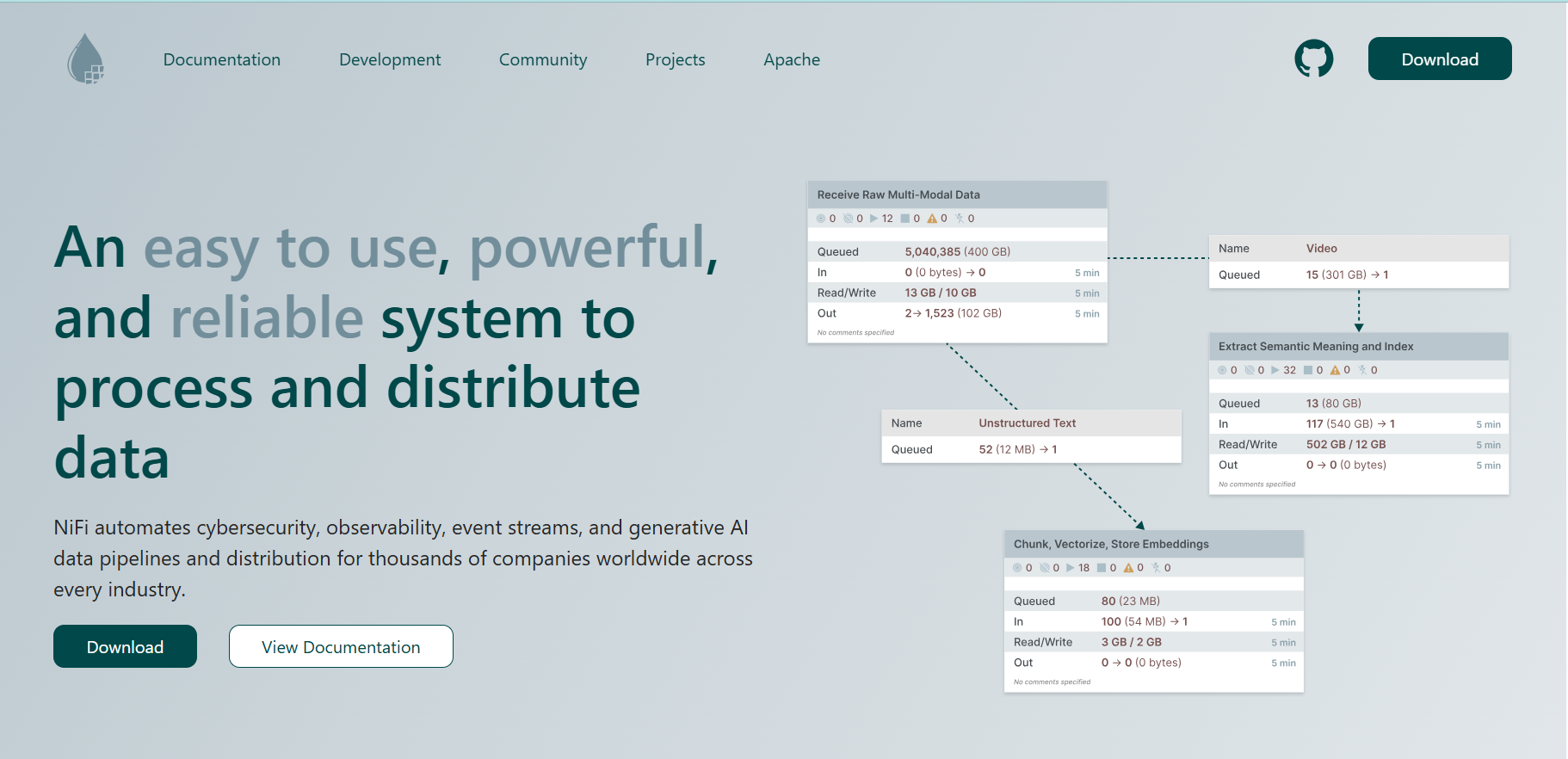
Apache NiFi is a powerful open-source ETL and data automation tool widely used in 2026 for real-time and batch data integration. Designed for organizations handling complex and high-volume data flows, NiFi enables seamless extraction, transformation, and routing of data across systems. Its visual interface and flow-based programming make it intuitive for both technical and semi-technical users to design, manage, and monitor data pipelines.
What sets Apache NiFi apart is its flexible, scalable architecture and strong real-time streaming capabilities. It supports event-driven data flows, allows granular data provenance tracking, and provides robust security and governance controls. NiFi is particularly suitable for enterprises needing dynamic, high-throughput data integration across heterogeneous environments.
Key Features
- Flow-Based Data Integration – Drag-and-drop interface for building complex data pipelines
- Real-Time & Batch Processing – Supports event-driven streaming and scheduled batch workflows
- Data Provenance Tracking – Tracks every step of data movement for transparency and auditing
- Extensive Connectivity – Connects to databases, APIs, cloud services, and file systems
- Security & Compliance – Role-based access, encryption, and audit logs
- Automated Workflow Management – Supports scheduling, monitoring, and automated error handling
- Scalability & High Availability – Handles large datasets with cluster support
- Integration with BI & Analytics – Works with data warehouses, lakes, and reporting platforms
- Open-Source Flexibility – Fully customizable with community-driven enhancements
Review
Apache NiFi stands out as a versatile ETL solution for organizations needing real-time, high-throughput data integration. Its flow-based design, real-time capabilities, and open-source flexibility make it ideal for complex and distributed environments. While some advanced features require technical expertise, NiFi’s scalability, provenance tracking, and extensibility make it a top choice for modern data operations.
Pros
- Intuitive flow-based interface for building pipelines
- Strong real-time and batch processing capabilities
- Detailed data provenance tracking for auditing and compliance
- Highly scalable with clustering support
- Open-source flexibility and community-driven enhancements
Cons
- Advanced configurations may require technical expertise
- Limited pre-built connectors compared to commercial ETL platforms
Pricing
Free and open-source; enterprise support and subscription options available through vendors like Cloudera or Hortonworks
4. Fivetran
Overview
Fivetran is a cloud-based ETL platform widely recognized in 2026 for its automated data integration and zero-maintenance pipelines. Designed to help businesses move data quickly from various sources into data warehouses or analytics platforms, Fivetran minimizes the need for manual coding and ongoing maintenance, making it ideal for data teams focused on insights rather than infrastructure.
What sets Fivetran apart is its fully managed, plug-and-play approach. It automatically adjusts to schema changes, ensures data consistency, and provides robust monitoring. Fivetran is particularly valuable for organizations adopting modern cloud-based analytics stacks and aiming for scalable, hands-off ETL solutions.
Key Features
- Automated Data Pipelines – Extracts, transforms, and loads data without manual intervention
- Zero-Maintenance ETL – Adapts automatically to schema changes and updates
- Real-Time & Incremental Updates – Ensures up-to-date data in warehouses
- Pre-Built Connectors – Supports numerous databases, SaaS platforms, and APIs
- Data Transformation Capabilities – Handles basic transformations and normalization
- Monitoring & Alerts – Tracks pipeline health and data sync status
- Scalability – Supports growing data volumes and cloud environments
- Security & Compliance – End-to-end encryption and role-based access control
- Integration with BI Tools – Seamlessly connects to analytics platforms and dashboards
Review
Fivetran stands out as a simple yet powerful ETL solution for cloud-centric organizations in 2026. Its managed pipelines, real-time updates, and pre-built connectors reduce operational overhead and accelerate analytics initiatives. While advanced transformations may require additional tools, Fivetran’s reliability, automation, and scalability make it ideal for businesses seeking low-maintenance ETL solutions.
Pros
- Fully automated, low-maintenance pipelines
- Pre-built connectors for numerous data sources
- Real-time and incremental updates
- Scalable for growing cloud-based analytics
- Easy integration with BI and reporting tools
Cons
- Advanced transformation functionality is limited
- Pricing can increase with higher data volumes
Pricing
Free trial available; Subscription-based pricing with Standard and Enterprise plans (custom pricing based on connectors, data volume, and support)
5. Microsoft Azure Data Factory
Overview
Microsoft Azure Data Factory (ADF) is a cloud-based ETL and data integration service widely used in 2026 for building, orchestrating, and automating data workflows. It allows organizations to connect to a wide range of on-premise and cloud data sources, transform data at scale, and load it into data warehouses, lakes, or analytics platforms. Azure Data Factory is ideal for enterprises seeking a fully managed, scalable, and secure ETL solution within the Microsoft ecosystem.
What sets Azure Data Factory apart is its tight integration with Azure services and enterprise-grade scalability. With ADF, organizations can leverage built-in connectors, visual data pipelines, and advanced scheduling to efficiently manage complex data workflows, making it particularly valuable for large-scale cloud deployments.
Key Features
- Wide Data Connectivity – Connects to on-premise, cloud databases, SaaS apps, and APIs
- Visual Workflow Orchestration – Drag-and-drop pipeline design for ETL processes
- Real-Time & Batch Processing – Supports both streaming and scheduled batch jobs
- Data Transformation & Mapping – Cleans, normalizes, and structures data for analytics
- Monitoring & Alerts – Tracks pipeline execution, errors, and performance metrics
- Integration with Azure Ecosystem – Works seamlessly with Azure Synapse, Power BI, and storage services
- Scalability & High Availability – Handles large datasets and high-volume pipelines
- Security & Compliance – Role-based access, encryption, and regulatory compliance
- Automation & Scheduling – Enables automated ETL workflows and event-based triggers
Review
Azure Data Factory stands out as a powerful ETL solution for organizations leveraging Microsoft cloud services. Its visual workflow design, broad connectivity, and enterprise scalability make it ideal for managing complex data pipelines. While its advanced features may require familiarity with the Azure ecosystem, ADF’s flexibility, integration, and performance make it a top choice for modern cloud-based ETL initiatives.
Pros
- Wide connectivity with cloud and on-premise sources
- Visual drag-and-drop ETL workflow design
- Supports real-time and batch processing
- Seamless integration with Azure services and analytics tools
- Scalable and secure for enterprise workloads
Cons
- Advanced features require familiarity with Azure platform
- Some complex transformations may need additional coding
Pricing
Free trial available; Pay-as-you-go pricing based on pipeline activity, data volume, and integration runtime usage
6. Stitch
Overview
Stitch is a cloud-based ETL platform widely used in 2026 for automated data extraction, transformation, and loading. It allows businesses to consolidate data from multiple sources into data warehouses or analytics platforms quickly and efficiently. Stitch is designed for organizations seeking a lightweight, scalable ETL solution with minimal setup and maintenance.
What sets Stitch apart is its ease of use and fast deployment. With pre-built connectors and automated workflows, Stitch enables teams to move data without heavy technical overhead. It is particularly valuable for small to medium-sized businesses, analytics teams, and startups that require reliable ETL pipelines with minimal configuration.
Key Features
- Automated Data Pipelines – Extracts, transforms, and loads data with minimal setup
- Pre-Built Connectors – Supports numerous databases, SaaS platforms, and APIs
- Real-Time & Incremental Updates – Ensures up-to-date data in warehouses
- Transformation Capabilities – Handles basic data cleaning and normalization
- Monitoring & Alerts – Tracks data sync status and pipeline health
- Scalability – Supports growing data volumes and cloud environments
- Integration with Analytics Tools – Connects seamlessly with BI platforms
- Security & Compliance – Provides encryption and role-based access control
- Ease of Use – User-friendly interface with low-code/no-code configuration
Review
Stitch stands out as a simple, reliable ETL tool for cloud-based analytics in 2026. Its pre-built connectors, automated pipelines, and minimal maintenance requirements make it ideal for organizations that need fast, scalable ETL without heavy engineering. While advanced transformations are limited, Stitch’s speed, simplicity, and scalability make it a popular choice for small to medium-sized businesses.
Pros
- Automated and easy-to-deploy ETL pipelines
- Extensive pre-built connectors for various data sources
- Real-time and incremental data updates
- Scalable for growing cloud-based analytics needs
- User-friendly interface with low technical requirements
Cons
- Limited advanced transformation capabilities
- Some connectors may require premium plans
Pricing
Free trial available; Subscription-based pricing with Standard and Enterprise plans (custom pricing based on data volume, connectors, and support)
7. Hevo Data
Overview
Hevo Data is a fully managed cloud-based ETL platform widely used in 2026 for real-time data integration and automation. It allows organizations to extract data from multiple sources, transform it using pre-built or custom transformations, and load it into data warehouses, lakes, or analytics tools efficiently. Hevo is ideal for teams seeking reliable, real-time ETL pipelines with minimal manual intervention.
What sets Hevo Data apart is its focus on no-code, automated data pipelines and real-time streaming capabilities. With Hevo, businesses can maintain up-to-date analytics, monitor data quality, and scale operations effortlessly. It is particularly valuable for analytics teams, startups, and enterprises that require fast deployment and consistent data reliability.
Key Features
- Automated Data Pipelines – Extracts, transforms, and loads data with minimal setup
- Real-Time Data Streaming – Ensures continuous, up-to-date analytics
- Pre-Built Connectors – Supports databases, SaaS applications, and cloud platforms
- No-Code Transformations – Enables basic and advanced data transformations without coding
- Monitoring & Alerts – Tracks pipeline health, errors, and data quality
- Scalability – Handles increasing data volumes efficiently
- Integration with BI & Analytics Tools – Works seamlessly with dashboards and reporting platforms
- Security & Compliance – End-to-end encryption and role-based access
- Ease of Use – Intuitive interface with minimal technical knowledge required
Review
Hevo Data stands out as a fast, scalable ETL tool for organizations prioritizing real-time analytics and minimal engineering effort. Its no-code interface, automated pipelines, and wide connectivity make it ideal for teams needing reliable and continuous data integration. While some advanced transformations may require technical configuration, Hevo’s automation, scalability, and monitoring features make it a top choice in 2026.
Pros
- Fully automated, no-code ETL pipelines
- Real-time data streaming and updates
- Extensive pre-built connectors for multiple data sources
- Scalable and reliable for growing datasets
- Easy integration with BI and analytics tools
Cons
- Advanced transformations may require additional configuration
- Premium plans needed for high-volume or enterprise deployments
Pricing
Free trial available; Subscription-based pricing with Starter, Professional, and Enterprise plans (custom pricing based on data volume, connectors, and support)
8. SnapLogic
Overview
SnapLogic is a cloud-based ETL and data integration platform widely used in 2026 for automating complex data workflows and connecting multiple systems. It enables organizations to extract, transform, and load data from diverse sources into data warehouses, lakes, or analytics platforms efficiently. SnapLogic is ideal for enterprises that need scalable, enterprise-grade ETL with low-code automation capabilities.
What sets SnapLogic apart is its AI-powered integration and visual workflow design. Its intelligent assistant, SnapLogic AI, helps optimize pipelines, suggest transformations, and monitor data flow for errors. SnapLogic is particularly valuable for IT teams, data engineers, and analytics departments that require high-volume, end-to-end data integration.
Key Features
- AI-Powered ETL Automation – Uses AI to optimize and automate data pipelines
- Visual Workflow Designer – Drag-and-drop interface for building and managing pipelines
- Pre-Built Connectors – Supports databases, SaaS applications, APIs, and cloud platforms
- Real-Time & Batch Processing – Handles both streaming and scheduled batch jobs
- Data Transformation & Mapping – Cleanses, enriches, and reshapes data
- Monitoring & Alerts – Tracks pipeline health, performance, and errors
- Scalability & High Availability – Designed for large-scale enterprise data
- Security & Compliance – End-to-end encryption, role-based access, and regulatory compliance
- Integration with BI & Analytics – Connects seamlessly to dashboards and analytics tools
Review
SnapLogic stands out as a powerful ETL platform for enterprises seeking AI-driven automation and low-code workflows. Its visual pipeline design, broad connectivity, and real-time processing capabilities make it suitable for high-volume, complex data environments. While advanced AI features may require familiarity, SnapLogic’s scalability, automation, and monitoring make it a preferred choice for modern data integration initiatives.
Pros
- AI-powered ETL pipeline optimization and automation
- Intuitive visual workflow designer
- Supports real-time and batch data processing
- Extensive connectors for multiple data sources
- Scalable and enterprise-ready architecture
Cons
- Advanced AI features may require technical expertise
- Pricing can be higher for large-scale deployments
Pricing
Free trial available; Subscription-based pricing with Standard, Professional, and Enterprise plans (custom pricing based on connectors, data volume, and support)
9. Matillion
Overview
Matillion is a cloud-native ETL and data integration platform widely used in 2026 for transforming and loading data into cloud data warehouses. It enables organizations to extract data from multiple sources, apply complex transformations, and load it efficiently into platforms such as Snowflake, Redshift, and BigQuery. Matillion is ideal for enterprises seeking a scalable, cloud-first ETL solution with strong integration and analytics capabilities.
What sets Matillion apart is its cloud-native architecture and visual ETL design, which allow for rapid deployment, easy management, and real-time monitoring of data workflows. It is particularly valuable for analytics teams and enterprises aiming to accelerate data operations in cloud environments.
Key Features
- Cloud-Native ETL – Fully optimized for cloud data warehouses
- Visual Workflow Designer – Drag-and-drop interface for building ETL pipelines
- Extensive Connectivity – Supports databases, APIs, SaaS platforms, and cloud storage
- Advanced Transformations – Enables complex joins, aggregations, and data cleansing
- Real-Time & Batch Processing – Handles both scheduled and streaming data
- Monitoring & Alerts – Provides real-time tracking and notifications for ETL jobs
- Scalability & Performance – Efficiently processes large volumes of data
- Security & Compliance – End-to-end encryption, access control, and audit trails
- Integration with BI & Analytics – Works seamlessly with dashboards and reporting tools
Review
Matillion stands out as a reliable, cloud-native ETL solution for modern data warehouses. Its visual pipeline design, cloud optimization, and advanced transformation capabilities make it ideal for enterprises needing scalable, efficient, and high-performing ETL workflows. While some advanced features may require technical expertise, Matillion’s cloud-first approach and analytics integration make it a top choice in 2026.
Pros
- Cloud-native and optimized for major data warehouses
- Visual, intuitive ETL workflow designer
- Supports both real-time and batch processing
- Extensive connectivity to multiple data sources
- Scalable for large enterprise data operations
Cons
- Advanced transformations require technical knowledge
- Higher cost for enterprise-scale deployments
Pricing
Free trial available; Subscription-based pricing with Standard, Professional, and Enterprise plans (custom pricing based on data volume, connectors, and support)
10. Alooma

Overview
Alooma is a cloud-based ETL and data integration platform widely used in 2026 for building, managing, and monitoring real-time data pipelines. It enables organizations to extract data from multiple sources, transform it, and load it into cloud data warehouses or analytics platforms seamlessly. Alooma is ideal for enterprises that require high-throughput, real-time data processing with minimal operational overhead.
What sets Alooma apart is its focus on real-time streaming, robust error handling, and flexible pipeline management. With automated schema mapping, monitoring dashboards, and scalable architecture, Alooma helps businesses maintain accurate, up-to-date data for analytics and business intelligence purposes. It is particularly valuable for data engineers and analytics teams managing complex, dynamic data environments.
Key Features
- Real-Time Data Pipelines – Supports continuous streaming and near real-time ETL
- Automated Schema Management – Automatically maps and adjusts schemas for incoming data
- Pre-Built Connectors – Connects to databases, APIs, SaaS applications, and cloud platforms
- Error Handling & Monitoring – Tracks errors, alerts, and data quality issues
- Data Transformation & Cleansing – Cleanses, enriches, and reshapes data for analytics
- Scalability & Performance – Handles high-volume and complex data flows
- Integration with BI & Analytics – Works seamlessly with data warehouses and reporting tools
- Security & Compliance – End-to-end encryption and role-based access control
- Ease of Use – Visual interface and minimal coding required for pipeline management
Review
Alooma stands out as a real-time ETL solution for organizations that prioritize fast, reliable, and scalable data integration. Its focus on streaming data, automated schema management, and comprehensive monitoring makes it ideal for complex and high-throughput environments. While advanced configurations may require technical expertise, Alooma’s flexibility, reliability, and real-time capabilities make it a preferred choice in 2026.
Pros
- Supports real-time and continuous ETL pipelines
- Automated schema management for dynamic data sources
- Extensive pre-built connectors for multiple systems
- Scalable and high-performance for large datasets
- Comprehensive error handling and monitoring
Cons
- Advanced configurations require technical knowledge
- Higher cost for enterprise-scale deployments
Pricing
Free trial available; Subscription-based pricing with Standard, Professional, and Enterprise plans (custom pricing based on connectors, data volume, and support)
Conclusion
ETL tools have become essential for modern business data operations in 2026. From automating data extraction and transformation to enabling seamless loading into analytics platforms, these tools save time, reduce errors, and ensure reliable, real-time access to actionable insights. Beyond operational efficiency, ETL platforms provide businesses with a single source of truth by consolidating data from multiple sources, maintaining data quality, and supporting informed decision-making across teams.
Choosing the right ETL tool depends on your organization’s data needs and use cases:
- Fivetran and Stitch excel at automated, low-maintenance data pipelines with pre-built connectors.
- Microsoft Azure Data Factory and Matillion shine in cloud-scale data integration, orchestration, and transformation.
- Hevo Data and Alooma are ideal for real-time streaming and no-code pipeline management.
- SnapLogic and Talend provide enterprise-grade workflow automation, AI-driven optimization, and broad connectivity.
By integrating ETL tools into business operations, companies can consolidate data efficiently, improve accuracy, enable analytics at scale, and make data-driven decisions faster. In today’s competitive market, leveraging ETL platforms is no longer optional — it’s a strategic necessity for organizations aiming to scale analytics, maintain data reliability, and enhance overall operational intelligence.
Frequently Asked Questions (FAQs)
What is an ETL tool?
An ETL tool is a software platform that extracts data from multiple sources, transforms it for accuracy and usability, and loads it into a target system, such as a data warehouse or analytics platform. It automates data workflows and reduces manual intervention.
How do ETL tools improve business efficiency?
ETL tools automate repetitive data handling tasks, consolidate data from multiple sources, and ensure clean, structured, and up-to-date information. This reduces errors, saves time, and allows teams to focus on analytics and strategic decision-making.
Are ETL platforms secure and compliant?
Yes. Modern ETL tools provide encryption, role-based access, monitoring, and compliance with regulatory standards to protect sensitive business data.
Can ETL tools integrate with other business applications?
Absolutely. Tools like Fivetran, Azure Data Factory, and Matillion offer seamless integrations with BI platforms, cloud storage, ERP systems, and analytics dashboards for unified data management.
Do I need technical expertise to use ETL platforms?
Basic usage is often user-friendly, especially with no-code or low-code platforms. However, advanced transformations, real-time streaming, and complex workflows may require technical knowledge or IT support.


