

The best podcast ad network depends on your audience size, podcast niche, geographic reach, preferred ad format, and how much control you want over monetization.
For most publishers, the strongest options to investigate in 2027 are Acast, Spotify Audience Network, AdsWizz, Libsyn Ads, RedCircle Ad Platform, Spreaker Ad Exchange, Podbean Ads Marketplace, Megaphone, AdvertiseCast, Podcorn, Audioboom, and other established audio advertising marketplaces and sales platforms.
For smaller and independent podcasts, automated marketplaces such as RedCircle, Spreaker, and Podbean can make monetization easier because they can dynamically insert advertising without requiring the creator to negotiate every sponsorship manually. RedCircle, for example, currently offers both host-read and programmatic advertising through its RedCircle Ad Platform and requires shows to reach 500 weekly downloads before applying.
For larger publishers and podcast networks, AdsWizz, Spotify/Megaphone, Acast, and enterprise-oriented audio platforms can provide more sophisticated targeting, dynamic ad insertion, campaign management, measurement, and demand access.
The most important point is that podcast monetization is not simply about finding the network with the highest advertised CPM. Fill rate, audience geography, ad position, listener demographics, show category, attribution, demand quality, revenue share, and the proportion of inventory sold directly can have a much larger impact on your final earnings.
Introduction
Podcasting has developed from a niche form of digital media into a serious advertising channel for brands, publishers, creators, and media companies.
But podcast monetization works differently from website advertising.
A website can display dozens of ad impressions on a single page. A podcast has a limited number of natural advertising opportunities inside an episode.
Those opportunities usually include:
- pre-roll,
- mid-roll,
- post-roll,
- host-read sponsorships,
- dynamically inserted ads,
- programmatic audio,
- branded content,
- feed drops,
- and direct sponsorships.
This makes inventory management extremely important.
A podcast with 20,000 downloads is not automatically worth more than a podcast with 10,000 downloads.
The smaller show could have:
- a more valuable audience,
- better listener retention,
- stronger geographic concentration,
- a higher-income audience,
- better host trust,
- stronger conversion rates,
- or a more commercially attractive niche.
That is why advertisers and podcast publishers increasingly use targeting and measurement rather than simply buying downloads.
Modern platforms can also dynamically insert different advertisements into the same episode depending on the listener.
For example:
Listener A in New York might hear a financial-services advertisement.
Listener B in London might hear a travel advertisement.
Listener C in Toronto might hear a software advertisement.
Spreaker describes this type of dynamic ad insertion as serving different ads based partly on the listener’s location and available advertising inventory.
The result is a podcast monetization ecosystem that is considerably more sophisticated than simply recording a sponsor message and placing it permanently inside every episode.
This guide compares 15 major podcast advertising and monetization platforms that publishers should consider in 2027.
What Is a Podcast Ad Network?
A podcast ad network connects advertisers with podcast inventory and helps publishers monetize their audio audiences through sponsorships, host-read ads, programmatic advertising, or dynamically inserted advertisements.
The network can provide:
- advertiser demand,
- campaign management,
- ad serving,
- dynamic ad insertion,
- audience targeting,
- reporting,
- payment processing,
- attribution,
- and revenue optimization.
The exact combination varies significantly from platform to platform.
How Podcast Advertising Works
A simplified podcast advertising ecosystem looks like this:
Advertiser → Podcast Ad Platform/Network → Podcast Publisher → Listener
The advertiser provides:
- campaign budget,
- creative,
- targeting requirements,
- campaign dates,
- desired audience,
- and performance goals.
The podcast publisher provides:
- audience,
- available ad inventory,
- show content,
- ad placements,
- and listener data.
The platform connects the two.
The Podcast Ad Inventory Pyramid
Podcast advertising can generally be thought of as a hierarchy.
1. Direct Sponsorships
The advertiser pays the publisher directly for a sponsorship.
These can include:
- episode sponsorship,
- seasonal sponsorship,
- category exclusivity,
- branded segments,
- or long-term partnerships.
2. Host-Read Ads
The host personally reads or records the advertising message.
This format is valuable because the host’s relationship with the audience can transfer credibility to the sponsor.
3. Programmatic Advertising
The advertisement is dynamically selected and inserted based on available inventory and targeting.
4. Remnant Inventory
Unsold advertising inventory can be monetized through automated demand.
This is often better than leaving the advertising slot empty.
Podcast Ad Network vs Podcast Hosting Platform
These are not always the same thing.
A podcast hosting platform primarily stores, distributes, and manages podcast content.
A podcast advertising platform primarily connects the show’s inventory with advertising demand.
However, modern companies increasingly combine both functions.
For example, Libsyn offers hosting and podcast monetization, while Spreaker provides podcast creation, distribution, analytics, and advertising tools.
This integrated model can be attractive because creators do not have to connect multiple systems.
Host-Read vs Programmatic Podcast Ads
| Feature | Host-Read | Programmatic |
|---|---|---|
| Host involvement | High | Low/none |
| Personalization | Excellent | Moderate |
| Scalability | Lower | High |
| Automation | Low | High |
| Typical control | High | Moderate |
| Advertiser matching | Manual/curated | Automated |
| Best for | Sponsorships | Scalable fill |
| Potential CPM | Often higher | Often lower |
| Operational effort | Higher | Lower |
The important lesson is:
Do not assume programmatic advertising should replace direct sponsorships.
The strongest monetization strategy often combines them.
Direct sponsorships can provide premium revenue.
Programmatic advertising can monetize inventory that would otherwise remain unsold.
Spreaker explicitly describes sponsorships and host reads as the higher-value portion of the podcast advertising pyramid, while ad exchanges and networks can fill remaining inventory.
How We Ranked These Podcast Ad Networks
We evaluated each platform using the following criteria:
Monetization Potential
How effectively the platform can turn podcast inventory into revenue.
Advertiser Demand
How much access publishers have to brands and advertising buyers.
Ad Formats
Whether the platform supports:
- pre-roll,
- mid-roll,
- post-roll,
- host-read,
- programmatic,
- dynamic insertion,
- video,
- branded content.
Audience Targeting
Whether campaigns can be targeted by:
- geography,
- demographics,
- behavior,
- category,
- content,
- audience,
- or other signals.
Fill Rate Potential
How much of the available inventory can realistically be sold.
Reporting
The quality of:
- impressions,
- revenue,
- CPM,
- campaign performance,
- audience data,
- and attribution.
Ease of Use
How easy it is for independent creators to start monetizing.
Scalability
Whether the platform remains useful when a creator grows from one podcast to a larger network.
15 Best Podcast Ad Networks for Audio Monetization
Quick Comparison
| Rank | Platform | Best For | Main Model | Editorial Rating |
| 1 | Acast | Global podcast monetization | Programmatic + sponsorships | 9.5/10 |
| 2 | Spotify Audience Network | Audience-based podcast advertising | Programmatic/audio marketplace | 9.4/10 |
| 3 | AdsWizz | Enterprise audio monetization | Programmatic + marketplace | 9.3/10 |
| 4 | Libsyn Ads | Independent podcasters | Automatic/programmatic ads | 9.1/10 |
| 5 | RedCircle Ad Platform | Independent podcasts | Host-read + programmatic | 9.0/10 |
| 6 | Spreaker Ad Exchange | Automated podcast monetization | Dynamic/programmatic | 8.9/10 |
| 7 | Podbean Ads Marketplace | Small-to-mid podcasts | Programmatic | 8.8/10 |
| 8 | Megaphone | Professional podcast publishers | Programmatic + direct sales | 8.8/10 |
| 9 | AdvertiseCast | Sponsorship sales | Direct + host-read | 8.7/10 |
| 10 | Audioboom | Podcast networks and publishers | Advertising + sponsorships | 8.5/10 |
| 11 | Podcorn | Creator sponsorship marketplace | Host-read/sponsorships | 8.4/10 |
| 12 | iHeartMedia Podcast Network | Large-scale podcast advertising | Direct + network sales | 8.4/10 |
| 13 | SiriusXM Media | Enterprise audio/podcast advertising | Direct + programmatic | 8.3/10 |
| 14 | Triton Digital | Enterprise digital audio | Programmatic/audio technology | 8.2/10 |
| 15 | Audacy | Podcast + audio advertising | Direct + digital audio | 8.1/10 |
1. Acast
Best overall podcast advertising and monetization platform for publishers seeking global scale, audience targeting, and multiple advertising formats.

Overall Rating: 9.5/10
Acast is one of the most established companies in podcast monetization and combines podcast hosting, distribution, advertising, analytics, and monetization.
Acast currently says its advertising platform provides access to more than 140,000 shows and more than 1 billion listens per quarter, with formats including host-read sponsorships, dynamic ads, and branded content.
Company Overview
- Founded: 2014
- Headquarters: Stockholm, Sweden
- Best For: Global podcasts, professional creators, publishers, podcast networks
- Commission Types: Advertising revenue share / negotiated sponsorship economics
- Cookie Duration: Not applicable to standard publisher monetization
- Minimum Payout: Program/account dependent
- Payment Methods: Account and market dependent
- Payment Frequency: Program/account dependent
- Approval Process: Show/platform eligibility and account review
- Supported Countries: Global
Key Features
- Dynamic ad insertion
- Host-read advertising
- Programmatic advertising
- Sponsorships
- Branded content
- Audience targeting
- Podcast analytics
- Podcast hosting
- Global advertising marketplace
- Cross-platform distribution
Pros
- Large global footprint
- Multiple monetization formats
- Strong advertiser access
- Professional analytics
- Global audience targeting
- Suitable for individual creators and publishers
Cons
- Some advanced features are more useful to established publishers
- Revenue can vary by geography and demand
- Marketplace performance depends on audience quality and inventory
Why Choose Acast?
Choose Acast if you want more than basic automated ad insertion.
It is particularly attractive for publishers who want to combine:
hosting + analytics + programmatic advertising + sponsorships.
Who Should Avoid It?
Very small podcasts with minimal audience demand may not see immediate premium sponsorship opportunities.
Expert Review
Acast’s biggest advantage is its combination of scale and monetization variety.
The platform is not dependent on one advertising model.
A creator can potentially use:
- dynamic ads,
- host-read sponsorships,
- branded content,
- and other monetization options.
That makes it one of the strongest all-around choices.
Final Rating: 9.5/10
2. Spotify Audience Network
Best for publishers and advertisers that want audience-based podcast advertising at large scale.

Overall Rating: 9.4/10
Spotify Audience Network is Spotify’s audio-first advertising marketplace.
Spotify says advertisers can reach audiences across podcasts both on and off Spotify, using demographic, geographic, behavioral, and contextual targeting.
Company Overview
- Company: Spotify
- Founded: 2006
- Headquarters: Stockholm, Sweden
- Best For: Large-scale podcast advertising, audience targeting, global campaigns
- Commission Types: Advertising revenue share for eligible creators
- Cookie Duration: Not applicable
- Minimum Payout: Program-specific
- Payment Methods: Spotify Payouts
- Payment Frequency: Program-specific
- Approval Process: Eligibility and monetization-policy review
- Supported Countries: Market-dependent
Key Features
- Audience-based buying
- Demographic targeting
- Geographic targeting
- Behavioral targeting
- Contextual targeting
- Podcast advertising
- Full-funnel measurement
- Spotify Ad Analytics
- Dynamic ad insertion
Spotify’s current Partner Program provides eligible creators with a 50% share of recognized revenue from Spotify-monetized ads that play in eligible episodes.
Pros
- Massive ecosystem
- Strong audience data
- Excellent targeting
- Global advertiser demand
- Strong measurement
- Ads can reach listeners beyond Spotify in eligible circumstances
Cons
- Eligibility varies by program and market
- Not every creator has access to every monetization feature
- Some Spotify monetization programs are restricted by location or invitation
Why Choose It?
Choose Spotify when you want access to a major global audio advertising ecosystem rather than relying exclusively on direct sponsorship sales.
Who Should Avoid It?
Creators who require complete control over every advertiser may prefer direct sponsorships or a more open marketplace.
Expert Review
Spotify’s biggest strategic advantage is scale combined with audience-based buying.
Traditional podcast advertising often revolves around buying individual shows.
Audience-based buying allows advertisers to think more broadly:
“Find listeners interested in technology.”
rather than:
“Buy this specific podcast.”
That shift is one of the biggest developments in podcast advertising.
Final Rating: 9.4/10
3. AdsWizz
Best enterprise podcast and digital-audio monetization technology for publishers and networks.

Overall Rating: 9.3/10
AdsWizz provides technology for publishers, advertisers, marketplaces, ad insertion, campaign management, yield optimization, and measurement.
Its Audio Marketplace connects advertisers with podcast and audio inventory from multiple publishers. AdsWizz says the marketplace currently reaches more than 255 million monthly global unique listeners.
Company Overview
- Founded: 2013
- Headquarters: New York, United States
- Best For: Enterprise publishers, podcast networks, audio companies
- Commission Types: Platform/advertising economics rather than traditional affiliate commissions
- Cookie Duration: Not applicable
- Minimum Payout: Contract dependent
- Payment Methods: Contract dependent
- Payment Frequency: Contract dependent
- Approval Process: Publisher/advertiser onboarding
- Supported Countries: Global
Key Features
- Dynamic ad insertion
- AudioMax SSP
- AudioServe
- Campaign management
- Yield optimization
- Marketplace
- Attribution
- Audience targeting
- Programmatic audio
- Direct sales management
AdsWizz describes its publisher technology as supporting dynamic ad insertion, campaign management, yield optimization, and programmatic selling.
Pros
- Enterprise-grade infrastructure
- Excellent monetization controls
- Programmatic demand
- Advanced measurement
- Large marketplace
- Strong publisher tools
Cons
- Overkill for small independent podcasts
- More technical
- Enterprise onboarding may require more resources
Why Choose It?
Choose AdsWizz if you manage:
- multiple podcasts,
- a publisher network,
- digital radio,
- large audio inventory,
- or enterprise-scale advertising operations.
Expert Review
AdsWizz is less about “joining a podcast ad network” and more about building a serious audio monetization infrastructure.
For a major publisher, that distinction matters.
Final Rating: 9.3/10
4. Libsyn Ads
Best straightforward advertising solution for independent podcasters already using or considering Libsyn.

Overall Rating: 9.1/10
Libsyn provides automatic podcast advertising designed to let creators monetize without individually finding sponsors.
Libsyn says its Automatic Podcast Ads program automatically inserts relevant advertisements into new and old episodes and allows creators to select advertising categories.
Company Overview
- Founded: 2004
- Headquarters: Pittsburgh, Pennsylvania, United States
- Best For: Independent podcasters and podcast publishers
- Commission Types: Advertising revenue share
- Cookie Duration: Not applicable
- Minimum Payout: Program-specific
- Payment Methods: Account-dependent
- Payment Frequency: Account/program dependent
- Approval Process: Program eligibility
- Supported Countries: Market dependent
Key Features
- Automatic advertising
- Dynamic insertion
- Old-episode monetization
- New-episode monetization
- Ad-category controls
- Podcast hosting
- Analytics
- Advertiser marketplace
Libsyn also operates advertising solutions for podcast networks and allows podcasts to create listings that can be considered for advertiser campaigns.
Pros
- Easy setup
- Strong hosting integration
- Automatic monetization
- Monetizes back catalog
- Established podcast infrastructure
Cons
- Less control than direct sponsorship
- Earnings depend on ad demand
- Premium sponsorship opportunities may require larger audiences
Why Choose It?
If you want:
publish → enable monetization → let the platform handle advertising
Libsyn is one of the most convenient options.
Expert Review
Libsyn’s strength is simplicity.
It removes much of the manual work associated with selling podcast advertising.
Final Rating: 9.1/10
5. RedCircle Ad Platform
Best independent-podcast monetization platform combining programmatic and host-read advertising.

Overall Rating: 9.0/10
RedCircle’s Ad Platform, commonly called RAP, provides both Host-Read and Programmatic advertising.
RedCircle currently requires shows to reach 500 weekly downloads before applying to RAP.
Company Overview
- Founded: 2018
- Headquarters: United States
- Best For: Independent podcasters
- Commission Types: Advertising revenue share / campaign-based advertising
- Cookie Duration: Not applicable
- Minimum Payout: Account/payment terms
- Payment Methods: Stripe-based payment setup
- Payment Frequency: Account/program dependent
- Approval Process: Application and review
- Supported Countries: Market dependent
Key Features
- Host-read ads
- Programmatic ads
- Dynamic insertion
- Advertiser marketplace
- Campaign management
- Advertising preferences
- Ad performance reporting
RedCircle says advertisers can run campaigns across hundreds of podcasts through its advertising platform.
Pros
- Supports host-read and programmatic
- Designed for independent creators
- Automated campaign management
- Accessible entry threshold
- Strong marketplace concept
Cons
- Requires minimum weekly downloads
- Smaller shows may receive less demand
- Revenue varies according to advertiser demand
Why Choose It?
RedCircle is particularly attractive if you want the benefits of direct-style sponsorships without manually emailing hundreds of advertisers.
Expert Review
The combination of host-read and programmatic advertising is RedCircle’s major differentiator.
Final Rating: 9.0/10
6. Spreaker Ad Exchange
Best automated ad exchange for podcasters who want dynamic advertising and control over ad placements.
Overall Rating: 8.9/10
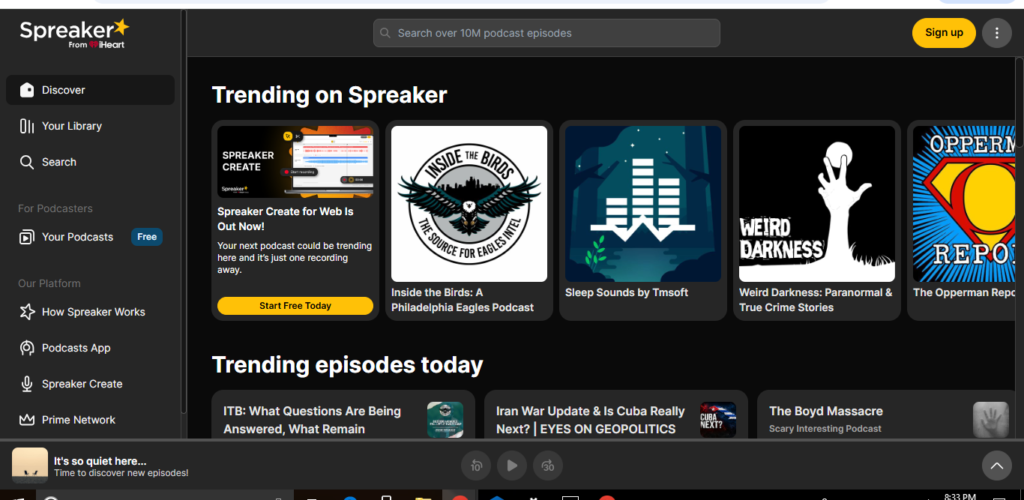
Spreaker provides podcast hosting, distribution, analytics, and monetization.
Its Ad Exchange dynamically inserts advertising into podcast episodes.
Creators can configure:
- pre-roll,
- mid-roll,
- post-roll,
- ad categories,
- and ad placement.
Company Overview
- Founded: 2009
- Headquarters: Milan, Italy / United States operations
- Best For: Independent creators and podcast publishers
- Commission Types: Advertising revenue share
- Cookie Duration: Not applicable
- Minimum Payout: $10 threshold for Ad Exchange payments
- Payment Methods: PayPal
- Payment Frequency: Generally within 60 days after the end of the month in which impressions are processed
- Approval Process: Monetization program approval
- Supported Countries: Global, subject to ad inventory
Spreaker states that creators receive a 60% share of revenue for eligible impressions and that payments generally reach PayPal within 60 days after the applicable month, once the $10 threshold is met.
Key Features
- Dynamic ad insertion
- Pre-roll
- Mid-roll
- Post-roll
- Auto-optimization
- Silence detection
- Ad-category controls
- Revenue reporting
- Global advertising partners
Pros
- Clear monetization process
- Low payout threshold
- Dynamic insertion
- Strong creator controls
- Monetizes across distribution platforms
Cons
- Fill rate is not guaranteed
- Revenue varies by audience and geography
- Automated ads may produce lower CPMs than premium direct sponsorships
Why Choose It?
Spreaker is particularly attractive to creators who want automated monetization without needing to become their own advertising salesperson.
Expert Review
Spreaker’s biggest strength is the balance between automation and creator control.
Final Rating: 8.9/10
7. Podbean Ads Marketplace
Best for podcasters who want automated advertising built directly into their podcast hosting environment.

Overall Rating: 8.8/10
Podbean’s Ads Marketplace automatically matches podcasts with advertising opportunities, dynamically inserts ads, and tracks performance and revenue.
Company Overview
- Founded: 2006
- Headquarters: New York, United States
- Best For: Independent and growing podcasters
- Commission Types: Advertising revenue share
- Cookie Duration: Not applicable
- Minimum Payout: Program/account dependent
- Payment Methods: Account-dependent
- Payment Frequency: Program-dependent
- Approval Process: Eligibility and platform review
- Supported Countries: Market dependent
Key Features
- Programmatic advertising
- Dynamic insertion
- Automatic advertiser matching
- Ad preferences
- Sensitive category controls
- Revenue tracking
- Podcast hosting
Pros
- Easy to use
- Integrated hosting
- Automated advertiser matching
- Useful for smaller publishers
- Minimal manual sales work
Cons
- Programmatic revenue can fluctuate
- Less control than direct sponsorship
- Premium advertisers may prioritize larger shows
Why Choose It?
Podbean is a practical option when convenience matters.
Expert Review
For creators who do not want to build an advertising operation, Podbean’s integrated marketplace removes a significant amount of friction.
Final Rating: 8.8/10
8. Megaphone
Best for professional podcast publishers and networks that need enterprise-level monetization and advertising infrastructure.

Overall Rating: 8.8/10
Megaphone is Spotify’s publishing and monetization technology for professional podcast publishers.
It connects closely with the Spotify Audience Network, allowing participating publishers to access broader audience-based advertising demand.
Spotify states that the Audience Network includes third-party Megaphone publishers and supports advertising both on and off Spotify.
Company Overview
- Founded: 2015
- Acquired by Spotify: 2020
- Headquarters: United States
- Best For: Professional publishers, podcast networks, media companies
- Commission Types: Advertising revenue / negotiated publisher economics
- Cookie Duration: Not applicable
- Minimum Payout: Contract dependent
- Payment Methods: Contract dependent
- Payment Frequency: Contract dependent
- Approval Process: Enterprise onboarding
- Supported Countries: Global, subject to service availability
Key Features
- Dynamic ad insertion
- Audience-based advertising
- Programmatic monetization
- Podcast analytics
- Publisher tools
- Spotify Audience Network integration
- Advertising measurement
- Campaign management
Pros
- Enterprise infrastructure
- Spotify ecosystem
- Strong advertiser demand
- Advanced monetization
- Suitable for podcast networks
Cons
- Not designed primarily for beginners
- Enterprise onboarding
- Pricing and terms are generally not publicly standardized
Why Choose It?
Choose Megaphone when your podcast operation is becoming a media business rather than remaining a single independent show.
Expert Review
Megaphone’s strategic value is its connection to Spotify’s broader advertising infrastructure.
Final Rating: 8.8/10
9. AdvertiseCast
Best for creators and publishers looking for podcast sponsorship sales and host-read advertising opportunities.

Overall Rating: 8.7/10
AdvertiseCast is a podcast advertising and sponsorship business associated with Libsyn.
Its core value proposition is different from pure programmatic monetization.
Instead of simply filling inventory automatically, sponsorship sales can connect advertisers with podcasts that match their campaign requirements.
Company Overview
- Founded: 2016
- Parent: Libsyn
- Headquarters: United States
- Best For: Host-read sponsorships and podcast advertising
- Commission Types: Sponsorship/advertising revenue
- Cookie Duration: Not applicable
- Minimum Payout: Program-specific
- Payment Methods: Account dependent
- Payment Frequency: Campaign/account dependent
- Approval Process: Show submission and advertiser matching
- Supported Countries: Primarily North America with broader campaign capabilities
Key Features
- Podcast sponsorship marketplace
- Host-read campaigns
- Advertiser matching
- Campaign management
- Podcast discovery
- Advertising sales
Pros
- Focused on sponsorships
- Host-read advertising
- Access to advertisers
- Useful for established podcasts
- Part of larger podcast ecosystem
Cons
- Smaller podcasts may have limited premium demand
- Sponsorship availability varies
- Direct deals can provide more control
Why Choose It?
Choose AdvertiseCast when your podcast is ready for sponsorship-driven monetization rather than relying solely on automated programmatic ads.
Expert Review
For podcasts with a commercially attractive audience, sponsorships can be significantly more valuable than treating every impression as commodity inventory.
Final Rating: 8.7/10
10. Audioboom
Best for podcast publishers and networks seeking advertising and sponsorship support alongside podcast distribution.
Overall Rating: 8.5/10
Audioboom is a global podcast and spoken-word audio company with advertising, distribution, and publisher services.
Company Overview
- Founded: 2009
- Headquarters: London, United Kingdom
- Best For: Podcast networks, professional creators, spoken-word publishers
- Commission Types: Advertising/sponsorship revenue
- Cookie Duration: Not applicable
- Minimum Payout: Contract dependent
- Payment Methods: Contract dependent
- Payment Frequency: Contract dependent
- Approval Process: Publisher/network onboarding
- Supported Countries: Global
Key Features
- Podcast hosting/distribution
- Advertising
- Sponsorship
- Dynamic ad insertion
- Podcast network services
- Audience analytics
Pros
- Strong international presence
- Professional publisher support
- Suitable for networks
- Advertising expertise
Cons
- Better suited to established publishers
- Less beginner-oriented
- Commercial terms can vary
Why Choose It?
Audioboom becomes more interesting when you operate multiple shows or have a professionally managed podcast network.
Expert Review
Its strongest use case is not “I have just launched my first podcast.”
It is:
“I am building a scalable podcast publishing operation.”
Final Rating: 8.5/10
11. Podcorn
Best for creator-focused podcast sponsorship opportunities and brand collaborations.

Overall Rating: 8.4/10
Podcorn has positioned itself around connecting creators and brands for podcast sponsorships.
The model is closer to a creator marketplace than a traditional automated programmatic ad exchange.
Company Overview
- Founded: 2019
- Headquarters: United States
- Best For: Independent creators and sponsorship campaigns
- Commission Types: Sponsorship-based
- Cookie Duration: Not applicable
- Minimum Payout: Campaign dependent
- Payment Methods: Platform/account dependent
- Payment Frequency: Campaign dependent
- Approval Process: Creator and campaign matching
- Supported Countries: Market dependent
Key Features
- Brand sponsorship marketplace
- Creator discovery
- Host-read advertising
- Campaign proposals
- Creator-brand matching
- Sponsorship management
Pros
- Creator-friendly
- Sponsorship focused
- Useful for niche audiences
- More personal than programmatic advertising
Cons
- Sponsorship availability depends on brand demand
- Not a replacement for automated fill
- Campaign volume varies
Why Choose It?
Podcorn can be useful when your podcast audience is niche enough that brand relevance matters more than raw scale.
Expert Review
The biggest advantage of creator marketplaces is that they can help smaller shows access sponsorship opportunities that would otherwise require significant outbound sales effort.
Final Rating: 8.4/10
12. iHeartMedia Podcast Network
Best for large-scale podcast advertising through one of the biggest audio and podcast media ecosystems in the United States.

Overall Rating: 8.4/10
iHeartMedia operates a large radio, digital audio, podcast, and advertising ecosystem.
Its podcast business provides advertisers with access to established shows and audiences.
Company Overview
- Founded: 1972 as Clear Channel Communications
- Current Brand: iHeartMedia
- Headquarters: San Antonio, Texas, United States
- Best For: Large advertisers, enterprise podcast campaigns, national audio campaigns
- Commission Types: Advertising/sponsorship
- Cookie Duration: Not applicable
- Minimum Payout: Contract dependent
- Payment Methods: Contract dependent
- Payment Frequency: Contract dependent
- Approval Process: Enterprise sales
- Supported Countries: Primarily United States
Key Features
- Podcast advertising
- Radio advertising
- Digital audio
- Host-read sponsorships
- Programmatic opportunities
- Large podcast network
- National campaigns
Pros
- Huge audience
- Major advertiser relationships
- Strong U.S. presence
- Podcast + radio integration
- Enterprise capabilities
Cons
- Not designed for small independent creators
- Direct access can require sales relationships
- Campaign terms are typically customized
Why Choose It?
For advertisers and large publishers, iHeartMedia is valuable because it can combine podcast inventory with broader audio reach.
Expert Review
Its advantage is scale across audio, not merely podcast inventory.
Final Rating: 8.4/10
13. SiriusXM Media
Best enterprise audio advertising ecosystem for advertisers seeking podcast, streaming, and premium audio inventory.

Overall Rating: 8.3/10
SiriusXM Media operates advertising solutions across SiriusXM, Pandora, podcasts, and other digital audio properties.
Company Overview
- Founded: SiriusXM origins trace to 1990s satellite-radio development
- Headquarters: New York, United States
- Best For: Enterprise audio advertising
- Commission Types: Advertising/sponsorship
- Cookie Duration: Not applicable
- Minimum Payout: Contract dependent
- Payment Methods: Contract dependent
- Payment Frequency: Contract dependent
- Approval Process: Advertiser/publisher sales process
- Supported Countries: Primarily North America
Key Features
- Podcast advertising
- Streaming audio
- Audio targeting
- Podcast sponsorships
- Programmatic buying
- Premium inventory
- Audience measurement
Pros
- Premium audio ecosystem
- Strong advertiser relationships
- Large-scale targeting
- Podcast + streaming integration
Cons
- Enterprise-focused
- Less accessible for small creators
- Commercial terms are usually customized
Why Choose It?
Choose SiriusXM Media when podcast advertising is only one part of a larger audio media strategy.
Expert Review
This is a strong platform for advertisers who want audio reach beyond individual podcast titles.
Final Rating: 8.3/10
14. Triton Digital
Best enterprise technology provider for digital audio monetization, measurement, and programmatic advertising infrastructure.

Overall Rating: 8.2/10
Triton Digital operates more like an audio technology and advertising infrastructure provider than a traditional creator marketplace.
It is particularly relevant to:
- audio publishers,
- radio networks,
- podcast networks,
- broadcasters,
- and large-scale digital audio operations.
Company Overview
- Founded: 2006
- Headquarters: New York, United States
- Best For: Enterprise audio publishers and networks
- Commission Types: Platform/advertising technology economics
- Cookie Duration: Not applicable
- Minimum Payout: Contract dependent
- Payment Methods: Contract dependent
- Payment Frequency: Contract dependent
- Approval Process: Enterprise onboarding
- Supported Countries: Global
Key Features
- Programmatic audio
- Podcast advertising
- Digital audio infrastructure
- Audience measurement
- Ad serving
- Yield management
- Campaign management
Pros
- Enterprise infrastructure
- Strong digital audio technology
- Programmatic capabilities
- Useful for large publishers
Cons
- Not designed for beginners
- Technical implementation
- Enterprise-oriented
Why Choose It?
If you are operating a large audio inventory portfolio, Triton Digital can be more relevant than creator-focused marketplaces.
Expert Review
Triton is a technology choice rather than a “sign up and monetize my podcast tomorrow” solution.
Final Rating: 8.2/10
15. Audacy
Best for advertisers seeking podcast and broader digital-audio inventory through a major U.S. audio publisher.

Overall Rating: 8.1/10
Audacy operates radio, podcast, streaming, and digital audio properties.
Company Overview
- Founded: 1968 origins; current Audacy brand formed through corporate evolution
- Headquarters: Philadelphia, Pennsylvania, United States
- Best For: U.S. advertisers, audio campaigns, podcasts and radio
- Commission Types: Advertising/sponsorship
- Cookie Duration: Not applicable
- Minimum Payout: Contract dependent
- Payment Methods: Contract dependent
- Payment Frequency: Contract dependent
- Approval Process: Advertiser/publisher sales process
- Supported Countries: Primarily United States
Key Features
- Podcast advertising
- Radio
- Streaming audio
- Digital advertising
- Sponsorships
- Audio audience targeting
Pros
- Strong U.S. audio footprint
- Podcast + radio
- Enterprise advertisers
- Large-scale campaigns
Cons
- Less relevant for small independent podcasters
- Primarily U.S.-focused
- Custom sales process
Why Choose It?
Audacy makes more sense for advertisers or publishers operating at a professional media scale.
Expert Review
Its main advantage is the ability to combine podcast inventory with broader audio media.
Final Rating: 8.1/10
Podcast Ad Network Comparison Table
| Platform | Best For | Programmatic | Host-Read | Dynamic Insertion | Targeting | Enterprise |
| Acast | Global creators | ✓ | ✓ | ✓ | Excellent | ✓ |
| Spotify Audience Network | Audience targeting | ✓ | Limited/varies | ✓ | Excellent | ✓ |
| AdsWizz | Enterprise publishers | ✓ | ✓ | ✓ | Excellent | ✓ |
| Libsyn Ads | Independent creators | ✓ | ✓/sales | ✓ | Strong | ✓ |
| RedCircle RAP | Independent shows | ✓ | ✓ | ✓ | Strong | Moderate |
| Spreaker | Automated monetization | ✓ | ✓ | ✓ | Strong | ✓ |
| Podbean | Small/mid podcasts | ✓ | Limited | ✓ | Moderate | Moderate |
| Megaphone | Professional networks | ✓ | ✓ | ✓ | Excellent | ✓ |
| AdvertiseCast | Sponsorships | Limited | ✓ | Campaign dependent | Strong | ✓ |
| Audioboom | Podcast networks | ✓ | ✓ | ✓ | Strong | ✓ |
| Podcorn | Creator sponsorships | Limited | ✓ | No/limited | Campaign-based | Moderate |
| iHeartMedia | Large campaigns | ✓ | ✓ | ✓ | Strong | ✓ |
| SiriusXM Media | Enterprise audio | ✓ | ✓ | ✓ | Excellent | ✓ |
| Triton Digital | Audio infrastructure | ✓ | Publisher-dependent | ✓ | Excellent | ✓ |
| Audacy | U.S. audio campaigns | ✓ | ✓ | ✓ | Strong | ✓ |
CPM and Revenue Comparison
What CPM Should Podcasters Expect?
There is no universal podcast CPM.
The rate can vary according to:
- show category,
- listener location,
- audience demographics,
- ad position,
- season,
- campaign demand,
- advertiser,
- ad format,
- download quality,
- targeting,
- and fill rate.
Spreaker notes that host-read sponsorship CPMs can be substantially higher than automated network or exchange inventory, while programmatic CPMs can vary significantly by topic and demand.
This means a publisher should never evaluate a platform simply by asking:
“What CPM do you pay?”
A better question is:
“What is my effective revenue per available download after fill rate and revenue share?”
Effective Podcast Revenue Formula
A useful simplified calculation is:
Estimated Revenue = Available Impressions × Fill Rate × CPM ÷ 1,000 × Publisher Revenue Share
For example:
- 50,000 available impressions
- 70% fill
- $20 CPM
- 60% publisher share
Estimated revenue:
50,000 × 0.70 × $20 ÷ 1,000 × 0.60 = $420
This demonstrates why a high CPM does not automatically mean higher total revenue.
A lower CPM with a substantially higher fill rate can sometimes produce more money.
Ad Format Comparison
| Format | Revenue Potential | Scalability | Control | Best For |
| Host-read | Very high | Moderate | High | Premium sponsorship |
| Direct sponsorship | Very high | Low | Very high | Established shows |
| Dynamic mid-roll | High | High | Moderate | Most podcasts |
| Dynamic pre-roll | Moderate | High | Moderate | Broad monetization |
| Post-roll | Lower | High | Moderate | Additional inventory |
| Programmatic | Moderate | Very high | Lower | Fill rate |
| Branded segment | Very high | Low | High | Premium publishers |
| Feed drop | High | Moderate | High | Network promotion |
Approval and Eligibility Comparison
| Platform | Smaller Podcasts | Medium Podcasts | Large Networks |
| Acast | ✓ | ✓ | ✓ |
| Spotify Audience Network | Program dependent | ✓ | ✓ |
| AdsWizz | Usually not primary use case | ✓ | ✓ |
| Libsyn Ads | ✓ | ✓ | ✓ |
| RedCircle RAP | 500 weekly downloads threshold | ✓ | ✓ |
| Spreaker | ✓ | ✓ | ✓ |
| Podbean | ✓ | ✓ | ✓ |
| Megaphone | Limited | ✓ | ✓ |
| AdvertiseCast | Depends on demand | ✓ | ✓ |
| Audioboom | Limited | ✓ | ✓ |
| Podcorn | ✓ | ✓ | ✓ |
| iHeartMedia | No typical self-service model | Limited | ✓ |
| SiriusXM Media | No | Limited | ✓ |
| Triton Digital | No | Limited | ✓ |
| Audacy | No | Limited | ✓ |
Payment Comparison
Payment terms vary significantly because many enterprise podcast advertising companies work through negotiated publisher agreements rather than a standardized creator payout system.
| Platform | Payment Model | Public Standard Threshold |
| Acast | Program/account dependent | Not universal |
| Spotify | Spotify Payouts | Program-specific |
| AdsWizz | Contract | No universal threshold |
| Libsyn Ads | Program dependent | Program-specific |
| RedCircle | Platform/payment setup | Program-specific |
| Spreaker | Revenue share | $10 threshold |
| Podbean | Program/account dependent | Program-specific |
| Megaphone | Contract | No universal threshold |
| AdvertiseCast | Campaign/account dependent | Program-specific |
| Audioboom | Contract | No universal threshold |
| Podcorn | Campaign dependent | Campaign-specific |
| iHeartMedia | Contract | Negotiated |
| SiriusXM Media | Contract | Negotiated |
| Triton Digital | Contract | Negotiated |
| Audacy | Contract | Negotiated |
Spreaker publicly states a $10 payment threshold for its Ad Exchange and generally pays through PayPal within its stated payment window.
Spotify’s current Partner Program uses Spotify Payouts and calculates eligible ad revenue monthly, with payment generally made within 30 days after the month ends.
Which Podcast Ad Network Is Best for You?
Best for Small Podcasts
Start with:
- Spreaker
- Podbean
- RedCircle
- Libsyn
- Acast
The main priority should be accessibility, not maximum CPM.
Best for Mid-Sized Podcasts
Consider:
- Acast
- RedCircle
- Libsyn
- Spreaker
- Podbean
- AdvertiseCast
- Spotify ecosystem
At this stage, combining programmatic advertising with direct sponsorships can become especially valuable.
Best for Large Podcast Networks
Prioritize:
- AdsWizz
- Megaphone
- Acast
- Spotify Audience Network
- Triton Digital
- SiriusXM Media
- iHeartMedia
Large publishers should focus on:
- yield,
- fill rate,
- demand diversity,
- campaign management,
- attribution,
- audience targeting,
- and direct-sales integration.
Best Network by Monetization Goal
| Goal | Best Options |
| Overall podcast monetization | Acast |
| Audience-based advertising | Spotify Audience Network |
| Enterprise infrastructure | AdsWizz |
| Automatic monetization | Libsyn |
| Host-read + programmatic | RedCircle |
| Dynamic ad insertion | Spreaker |
| Beginner-friendly marketplace | Podbean |
| Professional publishing | Megaphone |
| Sponsorship sales | AdvertiseCast |
| Podcast network growth | Audioboom |
| Creator sponsorships | Podcorn |
| U.S. national campaigns | iHeartMedia |
| Premium audio campaigns | SiriusXM Media |
| Audio infrastructure | Triton Digital |
| Podcast + radio campaigns | Audacy |
How to Choose a Podcast Ad Network
Step 1: Calculate Your Monthly Inventory
Estimate:
Episodes × Average Downloads × Available Ad Slots
For example:
- 4 episodes/month
- 25,000 downloads per episode
- 2 monetizable ad positions
Potential monthly inventory:
4 × 25,000 × 2 = 200,000 impressions
Step 2: Determine Your Audience Geography
Advertiser demand differs dramatically by market.
A podcast with:
- 50% U.S. listeners
- 20% UK
- 10% Canada
may attract different advertisers than one with:
- 80% India
- 10% Pakistan
- 10% other markets.
This is why CPM should always be evaluated alongside listener geography.
Step 3: Identify Your Ad Format
Ask:
Do I want someone else to automatically insert advertisements?
If yes, use:
- programmatic,
- dynamic insertion,
- ad exchange.
If you want premium sponsorship:
- host-read,
- direct sponsorship,
- creator marketplace.
Step 4: Check Fill Rate
A $30 CPM with 30% fill can be worse than:
$15 CPM × 90% fill.
Always compare effective revenue.
Step 5: Check Revenue Share
A platform might advertise a $20 CPM.
But if your revenue share is 50%, your gross publisher revenue is not $20 per thousand impressions.
It is closer to:
$10 per thousand monetized impressions
before any additional applicable deductions.
How Much Can a Podcast Make From Ads?
There is no universal answer.
A simplified model is:
Monthly Ad Revenue = Downloads × Fill Rate × CPM × Ad Slots ÷ 1,000 × Revenue Share
Suppose you have:
- 30,000 downloads per episode,
- 4 episodes per month,
- 2 ad slots,
- 70% fill,
- $18 CPM,
- 60% publisher share.
Then:
30,000 × 4 × 2 × 0.70 × $18 ÷ 1,000 × 0.60
= $1,814.40 estimated monthly revenue
This is only an illustration.
Actual podcast revenue can be significantly higher or lower.
Why Your CPM May Be Lower Than Another Podcast
Two shows with identical downloads can have very different CPMs.
Factors include:
Audience Location
U.S., UK, Canadian, and Australian audiences may attract different advertiser demand than other markets.
Niche
Finance, business, technology, B2B, and specialized professional audiences can attract valuable advertisers.
Listener Quality
Advertisers care about who listens—not merely how many people listen.
Ad Position
Mid-roll advertisements often provide more opportunity for detailed messaging than short pre-rolls.
Seasonality
Advertising demand can rise around:
- holidays,
- shopping seasons,
- product launches,
- elections,
- major events,
- and annual marketing cycles.
Fill Rate
Not every available slot will necessarily be sold.
Spreaker explicitly notes that fill rates depend on available advertising inventory and can vary over time.
Common Podcast Monetization Mistakes
Mistake 1: Focusing Only on CPM
CPM is only one component.
Track:
- fill rate,
- effective CPM,
- total revenue,
- revenue per episode,
- revenue per listener,
- advertiser retention.
Mistake 2: Putting Too Many Ads in an Episode
More inventory does not always mean more revenue.
If excessive advertising reduces:
- completion rate,
- listener satisfaction,
- subscriptions,
- or audience growth,
you can lose more long-term value than you gain.
Mistake 3: Ignoring Mid-Roll Placement
Mid-roll inventory can be particularly valuable because listeners have already invested time in the episode.
However, the placement should not interrupt the content awkwardly.
Mistake 4: Depending on One Advertiser
If one advertiser represents 80% of your revenue, your podcast business has concentration risk.
Diversify demand.
Mistake 5: Ignoring Direct Sponsorships
Programmatic advertising is convenient.
But premium direct sponsorships can sometimes produce substantially better economics.
Mistake 6: Ignoring Old Episodes
Your back catalog may represent a significant amount of monetizable inventory.
Platforms with dynamic insertion can potentially monetize older episodes when new campaigns become available.
Libsyn specifically markets automatic advertising for both old and new podcast episodes.
Mistake 7: Choosing a Platform Without Checking Eligibility
Some monetization products have:
- minimum download requirements,
- geographic restrictions,
- invitation requirements,
- content restrictions,
- or publisher eligibility requirements.
Spotify’s creator advertising products, for example, vary by market and program.
Real-World Podcast Monetization Scenarios
Scenario 1: A New Podcast With 1,000 Downloads
The priority should not be maximizing CPM.
The priority is:
- audience growth,
- consistent publishing,
- niche positioning,
- direct sponsor outreach,
- affiliate marketing,
- and building a media kit.
Automated monetization can still be useful if the platform permits it.
Scenario 2: A Podcast With 15,000 Downloads
At this level, combine:
- programmatic advertising,
- direct sponsorship,
- host-read ads,
- affiliate partnerships.
This creates multiple revenue sources.
Scenario 3: A Podcast With 100,000+ Downloads
At this level, direct sales become increasingly important.
Consider:
- premium sponsorships,
- annual brand partnerships,
- category exclusivity,
- custom campaigns,
- branded episodes,
- programmatic fill,
- network-level sales.
Enterprise platforms such as AdsWizz and Megaphone become more relevant as operational complexity increases.
Podcast Ad Networks vs Direct Sponsorships
| Factor | Ad Network | Direct Sponsor |
| Ease | High | Low |
| Automation | High | Low |
| Control | Moderate | High |
| Sales effort | Low | High |
| Potential CPM | Moderate | Often higher |
| Scalability | Excellent | Moderate |
| Advertiser selection | Platform-dependent | Publisher-controlled |
| Best for | Fill | Premium inventory |
The strongest publishers often use both.
2027 Podcast Advertising Trends
- Audience-Based Podcast Buying
- Dynamic Ad Insertion Is Becoming Standard
- Programmatic Podcast Advertising Will Continue Growing
- AI Will Improve Audio Targeting
- Podcast Advertising Will Become More Measurable
- Host-Read Ads Will Remain Important
- Podcast Video Will Change Monetization
Expert Strategy: Build a Podcast Revenue Stack
Instead of choosing one monetization method, consider this model:
Layer 1 — Direct Sponsorship
Highest-value inventory.
Layer 2 — Host-Read Ads
Premium creator-led campaigns.
Layer 3 — Programmatic Ads
Automated fill.
Layer 4 — Affiliate Marketing
Performance-based additional revenue.
Layer 5 — Listener Support
Subscriptions, memberships, donations.
Layer 6 — Premium Content
Courses, communities, exclusive episodes, digital products.
This diversification reduces dependence on advertising alone.
Voice Search Questions
What is the best podcast ad network?
Acast is one of the strongest overall podcast monetization platforms because it combines advertising, dynamic insertion, sponsorships, analytics, and global reach.
How can I monetize my podcast with ads?
You can monetize through direct sponsorships, host-read ads, programmatic advertising, podcast ad marketplaces, and dynamically inserted advertising.
What podcast ad network is best for small podcasts?
Spreaker, Podbean, Libsyn, and RedCircle are among the more accessible options, although eligibility requirements vary.
How much do podcast ads pay?
Podcast advertising revenue varies according to downloads, CPM, fill rate, ad position, audience geography, niche, and revenue share.
Frequently Asked Questions (FAQs)
What are podcast ad networks?
Podcast ad networks connect advertisers with podcast publishers and help manage advertising inventory, targeting, insertion, campaign delivery, measurement, and payments.
What is the best podcast ad network in 2027?
Acast is the strongest overall choice in this ranking, while Spotify Audience Network and AdsWizz are particularly strong for large-scale audience-based and enterprise audio advertising.
What is the best podcast ad network for beginners?
Podbean, Spreaker, Libsyn, and RedCircle are among the easiest platforms to investigate because they integrate advertising into podcast publishing and monetization workflows.
How many downloads do I need to monetize a podcast?
There is no universal threshold.
Different platforms have different eligibility requirements.
For example, RedCircle currently requires at least 500 weekly downloads to apply for its Ad Platform.
Can small podcasts make money from advertising?
Yes.
However, small podcasts generally have fewer premium sponsorship opportunities.
They can supplement advertising with:
- affiliate marketing,
- listener subscriptions,
- direct sponsorships,
- memberships,
- digital products,
- and community monetization.
What is the difference between podcast ad networks and podcast hosting?
A podcast host primarily distributes and manages your podcast.
An advertising network connects your available inventory with advertisers.
Some modern platforms provide both services.
What is dynamic ad insertion?
Dynamic ad insertion allows an advertisement to be inserted into an episode without permanently editing the original audio file.
This makes it possible to replace advertisements later or serve different ads to different listeners.
What is programmatic podcast advertising?
Programmatic podcast advertising uses automated technology to match advertiser demand with available podcast inventory.
It can make advertising significantly easier to scale.
What is a host-read podcast ad?
A host-read ad is an advertising message delivered by the podcast host.
The host may read a provided script or create a personalized endorsement.
Are host-read ads more profitable?
They can be.
Host-read sponsorships often command premium rates because advertisers are buying not only audience impressions but also the host’s relationship and credibility with listeners.
The Best Podcast Monetization Strategy in 2027
The strongest strategy is rarely:
“Choose one network and put ads everywhere.”
Instead, use a layered model.
Tier 1: Premium Sponsorship
Sell your most valuable inventory directly.
Tier 2: Host-Read Ads
Use the host’s credibility to create higher-value campaigns.
Tier 3: Programmatic
Fill remaining inventory automatically.
Tier 4: Affiliate Marketing
Promote relevant products with performance-based commissions.
Tier 5: Direct Audience Revenue
Add:
- subscriptions,
- memberships,
- premium episodes,
- courses,
- communities,
- merchandise.
This creates a diversified podcast business.
Final Verdict
There is no single podcast ad network that is best for every creator.
For most publishers, Acast is the strongest overall option because of its combination of global reach, advertising formats, dynamic insertion, sponsorship capabilities, and monetization infrastructure.
Spotify Audience Network is one of the strongest choices for audience-based podcast advertising and global scale.
AdsWizz stands out for enterprise publishers that need sophisticated audio monetization infrastructure.
For independent creators, Libsyn, RedCircle, Spreaker, and Podbean provide more accessible routes into automated podcast advertising.
For sponsorship-focused creators, AdvertiseCast and Podcorn deserve consideration.
For larger media organizations, Megaphone, Audioboom, iHeartMedia, SiriusXM Media, Triton Digital, and Audacy become more relevant because their value comes from scale, sales infrastructure, and enterprise audio capabilities.
The most important lesson is this:
The highest podcast revenue does not necessarily come from the network with the highest CPM. It comes from combining strong audience quality, high fill rate, premium sponsorships, efficient ad placement, and multiple monetization sources.
Read More:
Best Ad Networks for Publishers
Best PPC Ad Networks for Publishers
Best Ad Networks for Advertisers
Key Takeaways
- Acast is our #1 overall podcast monetization platform.
- Spotify Audience Network is excellent for audience-based podcast advertising.
- AdsWizz is strongest for enterprise audio monetization infrastructure.
- Libsyn Ads is a practical choice for independent podcasters.
- RedCircle RAP combines host-read and programmatic advertising.
- Spreaker Ad Exchange offers strong automated monetization and placement controls.
- Podbean Ads Marketplace is convenient for smaller and growing podcasts.
- Megaphone is designed for professional podcast publishers and networks.
- AdvertiseCast is useful for sponsorship-focused monetization.
- Audioboom is better suited to professional podcast publishers and networks.
- Podcorn focuses on creator-brand sponsorships.
- iHeartMedia provides large-scale U.S. audio and podcast advertising.
- SiriusXM Media is a strong enterprise audio advertising ecosystem.
- Triton Digital is primarily an enterprise audio technology and monetization platform.
- Audacy is relevant for U.S. podcast and broader audio campaigns.
- CPM alone should never determine which network you choose.
- Fill rate × CPM × revenue share is more meaningful than headline CPM.
- Host-read ads can provide premium economics.
- Programmatic advertising is valuable for scalable inventory fill.
- Dynamic ad insertion allows publishers to monetize old episodes and update campaigns.
- Audience targeting is becoming increasingly important in podcast advertising.
- AI, attribution, programmatic buying, and video podcasting will continue reshaping audio monetization.
Conclusion
Podcast advertising in 2027 is no longer simply a matter of finding a sponsor and reading an advertisement into an episode.
Modern podcast monetization combines:
audience data + dynamic ad insertion + programmatic demand + direct sponsorships + host-read advertising + attribution + creator relationships.
That gives podcast publishers more ways to turn their audiences into sustainable businesses.
The right platform depends on where you are in that journey.
A new creator may value simplicity.
A growing show may prioritize advertiser access.
A large publisher may prioritize yield optimization and programmatic infrastructure.
An enterprise podcast network may need sophisticated ad serving, audience targeting, measurement, and multiple demand sources.
The best strategy is therefore not to ask:
“Which podcast ad network pays the most?”
Instead, ask:
“Which monetization platform gives my audience the best combination of advertiser demand, fill rate, CPM, control, measurement, and long-term revenue potential?”
That is the question that leads to sustainable podcast monetization in 2027.
